


 1300 164 990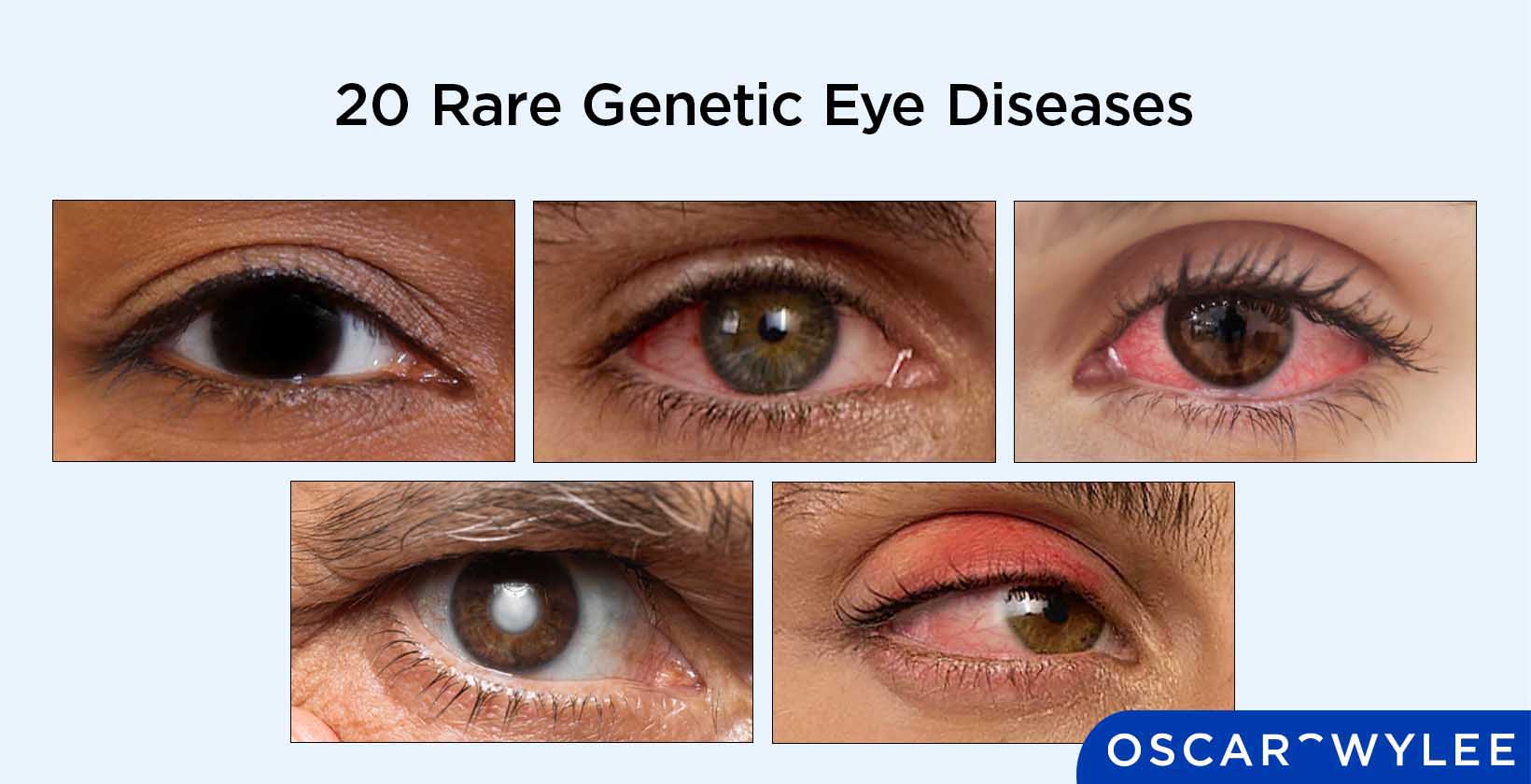

20 Rare Genetic Eye Diseases
Published on April 29th, 2026
 Australia

Rare genetic eye diseases are conditions caused by gene mutations that can lead to vision loss. Rare genetic eye diseases are often inherited, and symptoms may include progressive night blindness, tunnel vision, or colour vision loss, depending on the disease. Glasses and sunglasses can act as essential, non-invasive tools to support people with rare genetic eye diseases, by potentially maximising remaining vision, protecting against further damage, and addressing light sensitivity. This article will detail 20 rare genetic eye diseases to inform and raise awareness.
It is important to note that Oscar Wylee offers optometry services only; this article is solely for educational purposes and is not a substitute for professional medical advice, diagnosis, or treatment. Rare genetic conditions are often complex and require multidisciplinary care from ophthalmologists and geneticists.
1. Retinitis Pigmentosa
Retinitis Pigmentosa is the name given to a rare, inherited, and diverse group of eye disorders that affect the retina at the back of the eye, according to the Macular Disease Foundation Australia. Retinitis Pigmentosa is considered a rare eye disease because it affects a relatively small percentage of the global population. In Australia, it is estimated that around 1 in 3000 people have the disease, equating to about 8,900 individuals, according to Retina Australia.
2. Leber Congenital Amaurosis (LCA)
Leber Congenital Amaurosis (LCA) is an inherited retinal disease that appears at birth or within the first few months of life, according to Retina Australia. The severity of the condition varies, but vision loss can occur in some cases. Leber Congenital Amaurosis (LCA) is considered a rare eye disease because it affects only 2 to 3 per 100,000 newborns, or roughly 1 in 80,000 people, according to Retina Australia. Combined, inherited retinal diseases affect around 1 in 4000 people or over 2 million people worldwide, according to the Centre for Eye Research Australia.
3. Stargardt Disease
Stargardt disease, also known as Stargardt dystrophy or fundus flavimaculatus, is a genetic eye disease that causes dysfunction to the macula (the central part of the retina), according to the Macular Disease Foundation Australia. Stargardt Disease is considered a rare eye disease because it affects about 1 in 10,000 people, according to the Macular Disease Foundation Australia.
4. Usher Syndrome
Usher syndrome (USH) is a rare genetic condition that can affect vision, hearing, and sometimes balance, according to the Centre for Eye Research Australia. Vision loss associated with Usher syndrome is due to retinitis pigmentosa. Usher syndrome is considered a rare eye disease because it affects only 4 to 17 per 100,000 people globally, according to the National Institutes of Health.
5. Choroideremia
Choroideremia is an X-linked inherited retinal disease, meaning that males are more commonly affected, according to Retina Australia. Choroideremia is considered a rare eye disease because it affects a small percentage of the population, approximately 1 in 50,000 people, according to M. Brambati, E. Borelli, R. Sacconi, F. Bandello, and G. Querques's research article titled 'Choroideremia: Update On Clinical Features And Emerging Treatments', published in 2019.
6. Aniridia
Aniridia is the partial or complete absence of the iris, according to K. Tripathy and B. Salini's research paper titled 'Aniridia', published in 2019. Aniridia is a rare, genetic eye disorder. Aniridia is considered a rare eye condition because it occurs in approximately 1 in 40,000 newborns worldwide, according to the National Organisation for Rare Disorders.

7. Achromatopsia
Achromatopsia is a rare inherited disease that affects the cone photoreceptors, according to Retina Australia. Achromatopsia is considered a very rare eye disease because it affects approximately 1 in 30,000 people around the world, or about 880 people in Australia, according to Retina Australia.
8. Genetic Optic Atrophy
Genetic optic atrophy results from degeneration or damage to the optic nerve, which transports visual information from the eye to the brain, according to Vision Australia. Genetic optic atrophy is generally considered to be a rare eye disease, and its prominence depends on the underlying cause of the condition.
9. Best Disease (Best Vitelliform Macular Dystrophy)
Best Disease (Best Vitelliform Macular Dystrophy) is an inherited eye disorder that can cause progressive vision loss, according to the Macular Disease Foundation Australia. Best Disease is considered a rare eye condition, as it is estimated to affect between 1 in 10,000 and 1 in 21,000 people, according to the National Institutes of Health.
10. Bardet-Biedl Syndrome
Bardet-Biedl Syndrome (BBS) is an inherited retinal disease that affects several parts of the body, according to Retina Australia. Bardet-Biedl Syndrome is considered a rare syndrome, affecting an estimated 1 in 160,000 newborns in North America and Europe, and similar numbers are estimated in Australia.
11. Cone-Rod Dystrophy
Cone-Rod Dystrophy is a group of genetic or inherited eye diseases that affect the retina and can cause vision loss, according to the Centre for Eye Research Australia. Cone-rod dystrophy is considered a rare eye disease, affecting an estimated 1 in 30,000 to 40,000 individuals, according to the National Institutes of Health.
12. Juvenile X-Linked Retinoschisis
Juvenile X-linked retinoschisis is a rare inherited retinal disease that primarily affects young boys and young men, according to Retina Australia. Juvenile X-linked retinoschisis is considered a rare eye disease because it affects approximately 1 in 5,000 to 25,000 people worldwide, according to Retina Australia.
13. Norrie Disease
Norrie Disease is a rare, genetic condition that causes congenital blindness (significant vision loss or total blindness present at birth), progressive hearing loss, and sometimes, developmental delays, according to the Norrie Disease Foundation Australia. Norrie Disease is considered a rare eye disease because it is estimated to affect approximately 1 in 100,000 people, primarily males, due to its X-linked inheritance pattern.
14. Ocular Albinism
Ocular albinism is a rare, inherited genetic condition that mainly affects the pigmentation of the eyes and can cause low vision, according to Vision Australia. Ocular albinism is X-linked, making it a lot less common in women. Ocular albinism is considered a rare condition, affecting about 1 in every 50,000 to 60,000 men.
15. Primary Congenital Glaucoma
Primary congenital glaucoma is a rare type of childhood glaucoma caused by abnormal development of the eye's draining system, leading to increased intraocular pressure, according to K. Kaur, M. Zeppieri, and B. Gurnani's research paper titled 'Primary Congenital Glaucoma', published in 2024. Primary congenital glaucoma is considered to be a rare disease, affecting approximately 1 in 5,000 to 10,000 children under 2.
16. Congenital Cataracts
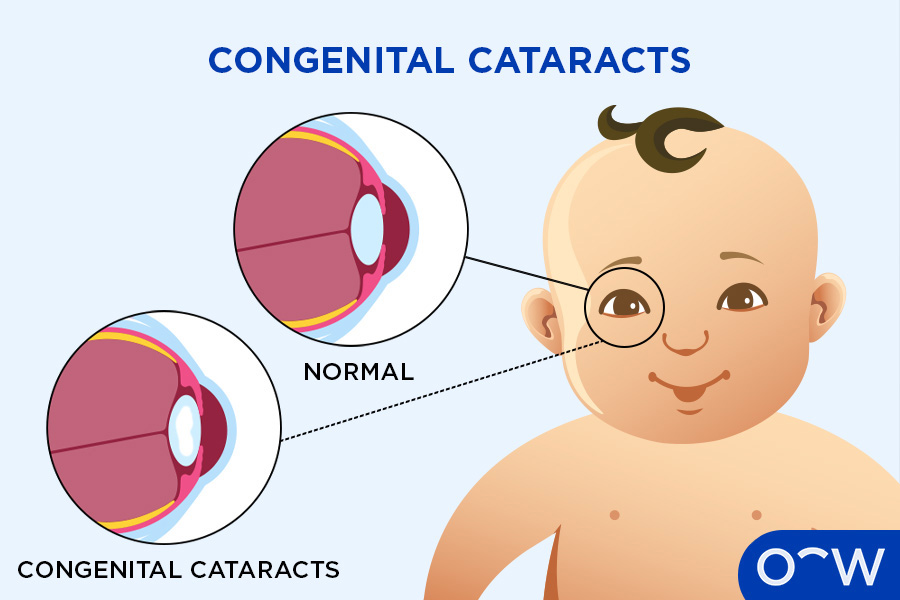
Congenital cataracts are a condition in which the lens inside the eye is cloudy instead of clear, according to the Sydney Children's Hospitals Network. Babies may be born with cataracts, or they may develop cataracts in the first year of life, according to the Sydney Children's Hospitals Network. Congenital cataracts are considered a rare condition, affecting approximately 1 to 15 per 10,000 live births worldwide.
17. Microphthalmia
Microphthalmia is a rare congenital developmental eye disorder, according to P. Harding, D. L. Cunha, and M. Moosajee's research paper titled 'Animal and cellular models of microphthalmia', published in 2021. Microphthalmia is rare, affecting approximately 1 in 7000 births, according to P. Harding, D. L. Cunha, and M. Moosajee.
18. Coloboma
Colobomas are congenital ocular defects that may affect the iris, the lens, the choroid, the retina, and the optic nerve, according to S. Vegunta and B. C. Patel's research paper titled 'Optic Nerve Coloboma', published in 2023. Coloboma is rare, affecting approximately 1 in every 10,000 births.
19. Keratoconus
Keratoconus is a progressive corneal disorder that may involve cone-like steepening of the cornea, irregular stromal (tissue) thinning, and significant vision loss, according to G. Asimellis and E. J. Kaufman's research paper titled 'Keratoconus', published in 2024. Keratoconus used to be considered a rare disorder, with estimates published as 1 in every 2000 people in the general population in the 1980s, according to Keratoconus Australia. However, improved screening techniques now indicate it may be as high as 1 in every 750 people worldwide, according to Keratoconus Australia. While historically rare, it is now considered a relatively common corneal dystrophy in modern optometry. Keratoconus still requires specialised monitoring, even if its prevalence is higher than previously thought.
20. Familial Exudative Vitreoretinopathy (FEVR)
Familial Exudative Vitreoretinopathy (FEVR) is an inherited disorder involving deficient vascularisation (the biological process where tissues or organs develop blood vessels) of the peripheral retina, which leads to retinal ischemia, according to J. R. Luvisi and K. Blair's research paper titled 'Familial Exudative Vitreoretinopathy (FEVR)', published in 2025. Familial Exudative Vitreoretinopathy is considered to be a rare disorder, and its prevalence is currently unknown at the time of writing.
How are Rare Genetic Eye Diseases Defined in Ophthalmology?
Rare genetic eye diseases are defined as inherited or gene-related disorders that affect eye structure or function and occur in a small percentage of the population in ophthalmology. They often involve retinal, corneal, or optic nerve abnormalities that lead to vision impairment. In ophthalmology, they are defined by low prevalence and genetic origin, often requiring specialised diagnosis and care.
Are Rare Genetic Eye Diseases Always Inherited?
No, rare genetic eye diseases are not always inherited, according to the Prevent Blindness Organisation. Rare genetic eye diseases are caused by DNA mutations, but sometimes these changes can occur spontaneously in a patient, meaning neither of their parents carries the gene.
What Causes Rare Genetic Eye Diseases?
Rare genetic eye diseases are mainly caused by mutations or changes in one or more genes that are responsible for the structure or function of the eye, according to the Centre for Eye Research Australia. The causes of rare genetic eye diseases vary case by case, but may include gene mutations, inherited genetic defects, new genetic mutations, chromosomal abnormalities, disruption of retinal cell function, defects in cellular structures, errors in visual signal processing pathways, abnormal eye development, and rare multifactorial gene interactions. These possible causes of rare genetic eye diseases are explained below.
- Gene mutations affecting retinal or eye development: Gene mutations affecting retinal or eye development can be described as 'mistakes' in one or more genes that are essential for the correct structure, function, and development of retinal cells, according to Retina Australia.
- Inherited genetic defects: Inherited genetic defects in the DNA that affect the structure or function of retinal or optic nerve cells are the primary cause of rare genetic eye diseases. Inherited genetic defect patterns include autosomal dominant, autosomal recessive, X-linked, and mitochondrial inheritance.
- New (de novo) genetic mutations: New (de novo) genetic mutations can cause rare genetic diseases in the same way inherited genetic mutations do, by disrupting retinal or optic nerve cells, according to Retina Australia.
- Chromosomal abnormalities: Chromosomal abnormalities, specifically deletions, duplications, and rearrangements, physically disrupt, remove, or duplicate genes that are essential for normal eye development and function, according to M. Mihelec's research paper titled 'Chromosomal rearrangements and novel genes in disorders of eye development, cataract and glaucoma', published in 2008.
- Disruption of retinal cell function: Disruption of retinal cell function happens when there are faults or variants in genes, leading to progressive degeneration of photoreceptors (rods and cones) and the retinal pigment epithelium (RPE), ultimately leading to significant vision loss, according to H. Chawla, K. Tripathy, and V. Vohra's research paper titled 'Retinal Dystrophies', published in 2024.
- Defects in cellular structures like cilia: Defects in cellular structures like cilia often cause rare genetic eye diseases, which are known specifically as ocular ciliopathies, according to M. Shivanna, M. Anand, S. Chakrabarti, and H. Khanna’s research paper titled ‘Ocular Ciliopathies: Genetic and Mechanistic Insights into Developing Therapies’, published in 2020. This happens when genes are mutated that affect the formation, maintenance, or function of cilia, which are microscopic, hair-like structures found on the surface of most cells, according to H. May-Simera, K. Nagel-Wolfrum, and U. Wolfrum’s research paper titled ‘Cilia - The sensory antennae in the eye’, published in 2017.
- Errors in visual signal processing pathways: Errors in visual signal processing pathways can cause rare genetic eye diseases, referring to genetic errors that can specifically disrupt the visual signal processing pathways, which leads to the death of photoreceptor cells (rods and cones) and possible vision loss, according to H. Chawla, K. Tripathy, and V. Vohra's research paper titled 'Retinal Dystrophies', published in 2024.
- Abnormal eye development during embryonic growth: Abnormal eye development during embryonic growth can cause rare genetic eye diseases, as mutations in genes can disturb the eye formation process, according to the Fight for Sight Organisation.
- Rare multifactorial gene interactions: Rare multifactorial gene interactions can cause rare genetic eye diseases, which involve rare genetic mutations, complex interactions between multiple genes, and environmental or lifestyle influences. The relative contribution of environmental factors is recognised but currently unknown, according to A. Gordon-Shaag, M. Millodot, E. Shneor, and Y. Liu's research paper titled 'The Genetic and Environmental Factors for Keratoconus', published in 2015.
Which Gene Mutations Lead to Rare Eye Conditions?
Rare genetic eye conditions are caused by mutations in over 300 different genes, according to Retina Australia. Key mutations include genes such as RPE65, ABCA4, RPGR, RP2, and USH2A, according to Retina Australia. These genes are essential for retinal cell function and visual processing. Different mutations produce different conditions and severity levels, and differ widely depending on the condition.
Can a Single Mutation Cause Severe Vision Loss?
Yes, a single gene mutation can cause severe vision loss. Some mutations strongly disrupt retinal function or eye structure, which can lead to early-onset or rapidly progressive visual impairment.
What Symptoms do Rare Genetic Eye Diseases Cause?
The symptoms of rare genetic eye diseases are varied and are different depending on the disease, but commonly include gradual or sudden vision loss, night blindness, tunnel vision, blurred or distorted vision, blind spots, light sensitivity, colour vision problems, eye pain or discomfort, rapid eye movements, crossed or misaligned eyes, poor depth perception, difficulty focusing or tracking objects, vision loss present from birth or early childhood, progressive worsening of vision over time, and floaters or visual distortions. A list of the symptoms that may be caused by rare genetic eye diseases can be read below.
- Gradual or sudden vision loss: Gradual or sudden vision loss is common in rare genetic eye diseases, often involving a slow, progressive decline in vision.
- Night blindness: Night blindness is a common symptom caused by retinitis pigmentosa, including difficulty seeing in dim environments and tunnel vision.
- Tunnel vision (loss of peripheral vision): Tunnel vision, or loss of peripheral vision, is a common symptom of retinitis pigmentosa. This involves deterioration of, or complete loss of 'side' vision.
- Blurred or distorted vision: Blurred or distorted vision is a symptom of rare genetic eye diseases, involving blurry spots or wavy vision.
- Blind spots in central or peripheral vision: Blind spots in central or peripheral vision are associated with rare genetic eye diseases, involving progressive blind areas in central and/or peripheral vision.
- Light sensitivity (photophobia): Light sensitivity, or photophobia, is commonly associated with rare genetic eye diseases. Light sensitivity is defined as an abnormal sensitivity to light, according to K. B. Digre and KC. Brennan's research paper titled 'Shedding Light on Photophobia', published in 2013.
- Colour vision problems: Colour vision problems are a symptom of rare genetic diseases, which are described as a reduced perception of colour, according to Vision Australia.
- Eye pain or discomfort: Eye pain or discomfort is a symptom of some rare genetic conditions. Eye pain or discomfort can include chronic aching, stabbing, or throbbing pain.
- Rapid eye movements (nystagmus): Rapid eye movements, or nystagmus, are associated with some rare genetic eye diseases. Rapid eye movements are rapid, involuntary eye movements that cause the eyes to flicker, according to Vision Australia.
- Crossed or misaligned eyes (strabismus): Crossed or misaligned eyes, or strabismus, is a symptom of some rare genetic eye diseases. Strabismus is classified by how the eyes align relative to each other, according to M. M. Sanchez and M. C. Whitman's research paper titled 'Genetics of strabismus', published in 2023. One eye could be fixated, and the other eye can deviate inwards, outwards, or vertically, according to M. M. Sanchez and M. C. Whitman.
- Poor depth perception: Poor depth perception is a common symptom of rare genetic eye diseases. Poor depth perception refers to the reduced ability to judge changes in surface levels, according to the Centre for Eye Research Australia.
- Difficulty focusing or tracking objects: Difficulty focusing or tracking objects is a side effect of rare genetic eye diseases, involving farsightedness, difficulty or inability to focus on close objects, and impaired ability to track moving objects, often caused by nystagmus or strabismus.
- Vision loss present from birth or early childhood: Vision loss present from birth or early childhood is a symptom of rare genetic eye diseases that manifest in early childhood.
- Progressive worsening of vision over time: Progressive worsening of vision over time is a primary symptom of rare genetic eye diseases, according to Retina Australia. Progressive, gradual worsening of vision over time can result in significant visual impairment, and sometimes, legal blindness, according to Retina Australia.
- Floaters or visual distortions: Floaters or visual distortions are a symptom present in some retinal disorders. Eye floaters are characterised by small moving spots that appear in the field of vision, according to the Better Health Channel, Victoria. Visual distortions are commonly seen as wavy lines in the field of vision.
If you are experiencing any of the above symptoms, it is important to consult an optometrist or other medical professional for proper care and advice.

How do Vision Problems Develop in Rare Eye Conditions?
Vision problems in rare genetic eye conditions develop gradually or are present from birth, depending on the mutation. Retinal cells or components of the optic pathways may progressively dysfunction over time, which can lead to worsening visual clarity and/or visual field loss.
Are Early Symptoms Easy to Miss in Genetic Eye Disorders?
Yes, early symptoms are often easy to miss in genetic eye disorders. Initial symptoms such as mild night blindness or blurred vision can be subtle and hard to notice. Many patients are diagnosed only after noticeable progression. Because these early changes are gradual, many patients are not diagnosed until the condition has progressed further, according to N. Cross, C. van Steen, Y. Zegaoui, A. Satherley, and L. Angelillo's research paper titled 'Retinitis Pigmentosa: Burden of Disease and Current Unmet Needs', published in 2022.
How are Rare Eye Diseases Diagnosed?
Rare eye diseases are diagnosed using eye tests, imaging tests, and genetic testing. A standard eye test is the first step in detecting rare genetic eye diseases, but they often require further testing, including imaging tests and genetic testing. Key imaging tests include Optical Coherence Tomography (OCT), Fundus Autofluorescence (FAF), and Fluorescein Angiography. Patients will often be asked about their general health, and if anyone in their family has vision problems, according to the Centre for Eye Research Australia. In these tests, retinal structure and visual function can be tested. Genetic testing involves having a small blood or saliva sample collected and sent to a laboratory, according to the Centre for Eye Research Australia. Often, a combination of tests can confirm the exact condition a patient has. Optometrists can detect signs of rare eye diseases during an eye test, but may refer you to an ophthalmologist for a definitive diagnosis.
Oscar Wylee provides primary eye care and optical solutions; medical or surgical treatments for genetic eye diseases must be managed by specialist medical practitioners. To learn more about Oscar Wylee eye tests, visit our eye test page or book an eye test here.
What Tests are Used to Detect Rare Eye Disorders?
The tests used to detect rare eye disorders are varied, and include comprehensive eye tests, visual acuity tests, slit-lamp examinations, dilated fundus examinations, optical coherence tomography (OCT), fundus photography, fluorescein angiography, electroretinography (ERG), electrooculography (EOG), visual field testing, colour vision testing, genetic testing, corneal topography, ultrasound of the eye, and magnetic resonance imaging (MRI) or CT scans. A list of the tests that may be used to detect rare genetic eye diseases can be read below.
- Comprehensive eye tests: Comprehensive eye tests involve specialised imaging and functional testing to detect rare genetic eye diseases, according to the Macular Disease Foundation Australia.
- Visual acuity test: Visual acuity tests are usually a starting point for rare genetic disease detection, measuring central vision clarity. Visual acuity tests are also known as eye chart tests, and are only one part of a comprehensive ophthalmologic examination, according to H. F. Dalber and D. M. Gnugnoli’s research paper titled ‘Visual Acuity’, published in 2023.
- Slit-lamp examination: A slit-lamp examination is a fundamental test to detect a range of rare eye disorders, as it provides a 3D, cross-sectional view of the structure of the eye.
- Dilated fundus examination: A dilated fundus examination is an integral part of a comprehensive eye examination. A dilated fundus examination can detect, diagnose, and monitor rare eye disorders by providing a view of the back of the eye, including the retina, optic nerve, and macula.
- Optical coherence tomography (OCT): Optical coherence tomography is a non-invasive technique for cross-sectional tissue imaging, according to S. Aumann, S. Donner, J. Fischer, and F. Müller’s book titled ‘High Resolution Imaging in Microscopy and Ophthalmology: New Frontiers in Biomedical Optics’, published in 2019. Optical coherence tomography is a foundational test in detecting and monitoring several rare genetic eye diseases.
- Fundus photography: Fundus photography takes an image of the retina, optic nerve head, macula, retinal blood vessels, choroid, and the vitreous, according to C. Mishra and K. Tripathy’s research paper titled ‘Fundus Camera’, published in 2023.
- Fluorescein angiography: Fluorescein angiography refers to an invasive diagnostic procedure that helps assess retinal and choroidal circulation, according to S. Ruia and K. Tripathy's research paper titled 'Fluorescein Angiography', published in 2023.
- Electroretinography (ERG): Electroretinography is a test used to assess the retina in eye diseases, according to D. J. Creel's book titled 'Webvision: The Organisation of the Retina and Visual System', published in 2015.
- Electrooculography (EOG): Electrooculography is a test that measures the resting electrical potential between the cornea and the retina, specifically testing how the retinal pigment epithelium (RPE) is functioning.
- Visual field testing: Visual field testing is used to measure how well a patient can see throughout visual space, according to Glaucoma Australia.
- Colour vision testing: Colour vision testing is a non-invasive method that can aid in diagnosing rare genetic eye diseases. Colour vision testing involves a variety of tests, including checking for blue-yellow defects and red-green defects.
- Genetic testing: Genetic testing is the primary method to confirm a rare genetic eye disease. It involves analysing a patient's DNA through a blood or saliva sample, according to C. Méjécase's research paper titled 'Practical guide to genetic screening for inherited eye diseases', published in 2020.
- Corneal topography: Corneal topography is a non-invasive imaging test that maps the cornea and is an important tool for corneal-related disorders.
- Ultrasound of the eye: Ultrasound of the eye, or an ocular ultrasound, is a non-invasive imaging test that visualises the eye's interior.
- Magnetic resonance imaging (MRI) or CT scan: Magnetic resonance imaging (MRI) or CT scans are an important tool for detecting rare genetic eye diseases, particularly their structural or neurological cause.
Oscar Wylee provides primary eye care and optical solutions; medical or surgical treatments for genetic eye diseases must be managed by specialist medical practitioners. To learn more about Oscar Wylee eye tests, visit our eye test page or book an eye test here.
Is Genetic Testing Required for Rare Eye Disease Diagnosis?
Genetic testing is not always strictly 'required' for an initial clinical diagnosis of a rare eye disease, but it has become a critical standard of care for the definitive diagnosis and management of rare genetic eye diseases, according to D. Mustafi, F. M. Hisama, J. Huey, and J. R. Chao's research paper titled 'The current state of genetic testing platforms for inherited retinal diseases', published in 2023.
What Vision Support Options are Available for Rare Genetic Eye Diseases?
There are various vision support options available for patients with rare genetic eye diseases. These vision support options include prescription glasses or specialised lenses, high-powered magnifiers, electronic magnification devices, screen readers and text-to-speech software, Braille devices and Braille displays, large-print books and materials, smartphone accessibility features, adaptive lighting and high-contrast settings, mobility aids, low vision rehabilitation therapy, occupational therapy for daily living skills, tinted lenses or filters for light sensitivity, adaptive devices for writing, reading, and daily tasks, vision assistance apps, and support services and counselling for visual impairment adaptation. A list of vision support options available for patients with rare genetic eye diseases can be read below.
- Prescription glasses or specialised lenses: Prescription glasses or specialised lenses can help support patients with rare genetic diseases. Prescription glasses can improve clarity and reduce visual strain, optimising remaining vision; however, they can not correct vision loss from these conditions. Specialised lenses, such as magnifying spectacles and telescopic glasses, can significantly aid in daily functioning for patients with rare genetic eye diseases.
- High-powered magnifiers: High-powered magnifiers, including handheld or stand magnifiers, are designed to maximise remaining vision in several rare genetic eye diseases, according to the Macular Disease Foundation Australia. High-powered magnifiers are commonly used by patients with rare genetic eye diseases such as retinitis pigmentosa and ocular albinism.
- Electronic magnification devices: Electronic magnification devices can support patients with rare genetic eye diseases, as they can zoom in with the click of a button, according to Vision Australia. Electronic magnification devices are especially useful for people using computers, according to the Macular Disease Foundation Australia.
- Screen readers and text-to-speech software: Screen readers and text-to-speech software are assistive technologies that can support patients with rare genetic eye diseases. Screen readers allow users to navigate computer operating systems more easily, according to the Australian Disability Clearinghouse on Education and Training. Text-to-speech software, or screen reading systems, consist of a voice synthesiser and a screen reading program, according to Vision Australia.
- Braille devices and Braille displays: Braille devices and Braille displays include Braille embossers, Braille translation software, and electronic or refreshable Braille displays, which can help patients with rare genetic eye diseases with low vision or blindness and can read Braille on access computers, according to Vision Australia.
- Large-print books and materials: Large-print books and materials are specialised resources to help support patients with rare genetic eye diseases, including converted, accessible documents to make reading easier.
- Smartphone accessibility features: Smartphone accessibility features are beneficial for patients with rare genetic eye diseases experiencing low vision or blindness, according to Vision Australia. These accessibility features include keypad buttons that make a noise when pressed, display settings allowing improved contrast, and speed dials for commonly used numbers, according to Vision Australia.
- Adaptive lighting and high-contrast settings: Adaptive lighting and high-contrast settings are key supports for daily function for people with rare genetic eye diseases, according to the Centre for Eye Research Australia. Adaptive lighting refers to enhanced lighting, glare management, and lighting tools for patients. High-contrast settings are tools such as electronic video magnifiers (CCTVs) and apps that allow increased contrast, as well as general use of bold-lined paper and high-contrast kitchen items for everyday use.
- Mobility aids: Mobility aids offer vision support for patients with rare genetic eye diseases through tools such as white canes, guide dogs, electronic travelling aids (ETAs), and sighted guides.
- Low vision rehabilitation therapy: Low vision rehabilitation therapy for patients with rare genetic eye diseases focuses on maximising remaining vision and maintaining independence, according to Vision Australia. Low vision rehabilitation therapy involves assistive technology training, optical devices, orientation and mobility training, visual training, daily living skills training, and counselling and support groups.
- Occupational therapy for daily living skills: Occupational therapy for daily living skills provides new strategies and different methods of completing daily tasks for people who have low vision or blindness, according to the Better Health Channel, Victoria.
- Tinted lenses or filters for light sensitivity: Tinted lenses or filters for light sensitivity are important tools to manage light sensitivity symptoms experienced by some patients with rare genetic diseases, such as Retinitis Pigmentosa, Stargardt disease, and Aniridia. Tinted lenses or filters help to enhance contrast and reduce glare.
- Adaptive devices for writing, reading, and daily tasks: Adaptive devices for writing, reading, and daily tasks involve tools such as electronic video magnifiers (CCTVs), signature and writing guides, and household aids, designed to maximise remaining vision for some patients with rare genetic eye diseases.
- Vision assistance apps: Vision assistance apps include AI and remote assistance apps, navigation and environmental apps, and reading and identification apps to support patients with rare genetic eye diseases.
- Support services and counselling for visual impairment adaptation: Support services and counselling for visual impairment adaptation are a key resource with patients with rare genetic eye diseases. Whether patients completely lose their sight or are blind, support services are available to help individuals and families cope, according to Retina Australia.
How can Prescription Glasses Help Manage Vision Problems Caused by Rare Eye Conditions?
Prescription glasses can improve clarity and reduce visual strain, optimising remaining vision in rare genetic eye conditions. However, prescription glasses can not cure the disease; instead, they may help to improve daily visual performance.
Can Updated Lenses Improve Daily Vision Comfort?
Yes, updated lenses may improve daily visual comfort. Updated lenses, correct to an updated prescription, correct refractive errors, and enhance clarity. This reduces eye strain and maximises remaining vision.
How can Glasses Support People With Rare Genetic Eye Diseases?
Glasses can support vision in patients with rare genetic eye diseases by enhancing focus, contrast, and clarity. Glasses can help people perform daily tasks more easily. It is important to remember that they are part of broader low vision management. Specialised glasses and low-vision aids can improve the quality of life for patients with rare genetic eye diseases, because they help maximise remaining vision, enhance contrast, and reduce light sensitivity. While prescription glasses cannot halt the progression of genetic diseases, they are essential for optimising functional vision.
How can Sunglasses Support People With Rare Genetic Eye Diseases?
Sunglasses can reduce glare and protect sensitive eyes from bright light, which can support people with rare genetic diseases. Sunglasses can improve comfort in outdoor environments, which is especially helpful for patients who experience light sensitivity as a result of their condition.
What is the Treatment for Rare Genetic Eye Diseases?
The treatment options for rare genetic diseases differ widely depending on the specific condition, but include gene therapy, retinal gene replacement therapy, pharmacological treatments, anti-VEGF injections, retinal implants or bionic eye devices, stem cell therapy, surgery, management of associated conditions, and clinical trial participation for emerging therapies. A list of possible treatment options for rare genetic diseases can be read below.
- Gene therapy: Gene therapy is available as a treatment for patients with specific inherited retinal diseases. Gene therapy is available as a broad range of treatment methods, including retinal gene replacement therapy. It is important to note that gene therapy is an emerging, specialist treatment.
- Retinal gene replacement therapy: Retinal gene replacement therapy can treat rare genetic eye diseases by the delivery of a functional gene to retinal cells via subretinal injection, according to R. Jain and S. Daigavane's research paper titled 'Advances and Challenges in Gene Therapy for Inherited Retinal Dystrophies: A Comprehensive Review', published in 2024. It is important to note that gene therapy is an emerging, specialist treatment.
- Pharmacological treatments: Pharmacological treatments for patients with rare genetic eye diseases include eye drops and oral medications to manage symptoms.
- Anti-VEGF injections: Anti-VEGF (anti-vascular endothelial growth factor) injections can stop the growth of abnormal blood vessels and fluid leakage, which is beneficial for some retinal conditions, according to the Macular Disease Foundation Australia.
- Retinal implants or bionic eye devices: Retinal implants or bionic eye devices give patients a ‘sense of sight’, including lights and flashes that can help them navigate spaces independently, according to the Centre for Eye Research Australia. It is important to note that there may be limited availability of these devices. It is important to note that retinal implants are an emerging, specialist treatment.
- Stem cell therapy: Stem cell therapy is being explored for developing treatments for people with inherited retinal diseases, including age-related macular degeneration, Stargardt disease, and retinitis pigmentosa, according to Retina Australia. There are no stem cell treatments currently available commercially, according to Retina Australia.
- Surgery: Surgery for rare genetic eye diseases involves surgical interventions for related complications such as cataracts and retinal detachment, according to Retina Australia.
- Management of associated conditions: Management of associated conditions related to rare genetic eye diseases involves helping patients preserve vision and address conditions such as hearing loss and neurological symptoms through specialised interventions, according to the Centre for Eye Research Australia.
- Clinical trial participation for emerging therapies: Clinical trial participation for emerging therapies involve patients being involved in clinical trials that are exploring innovative treatment approaches to rare genetic eye diseases, which are mostly related to gene therapies and regenerative medicine, according to the Fighting Blindness Foundation.
Oscar Wylee provides primary eye care and optical solutions; medical or surgical treatments for genetic eye diseases must be managed by specialist medical practitioners. To learn more about Oscar Wylee eye tests, visit our eye exam page or book an eye test here.
It is important to note that Oscar Wylee offers optometry services only; this article is solely for educational purposes and is not a substitute for professional medical advice, diagnosis, or treatment.
Read 20 Rare Genetic Eye Diseases in other Oscar Wylee regions and their languages.
Australia