


 1300 164 990
Orbital Cellulitis: Infection, Treatment, and Stages
Published on August 24th, 2026
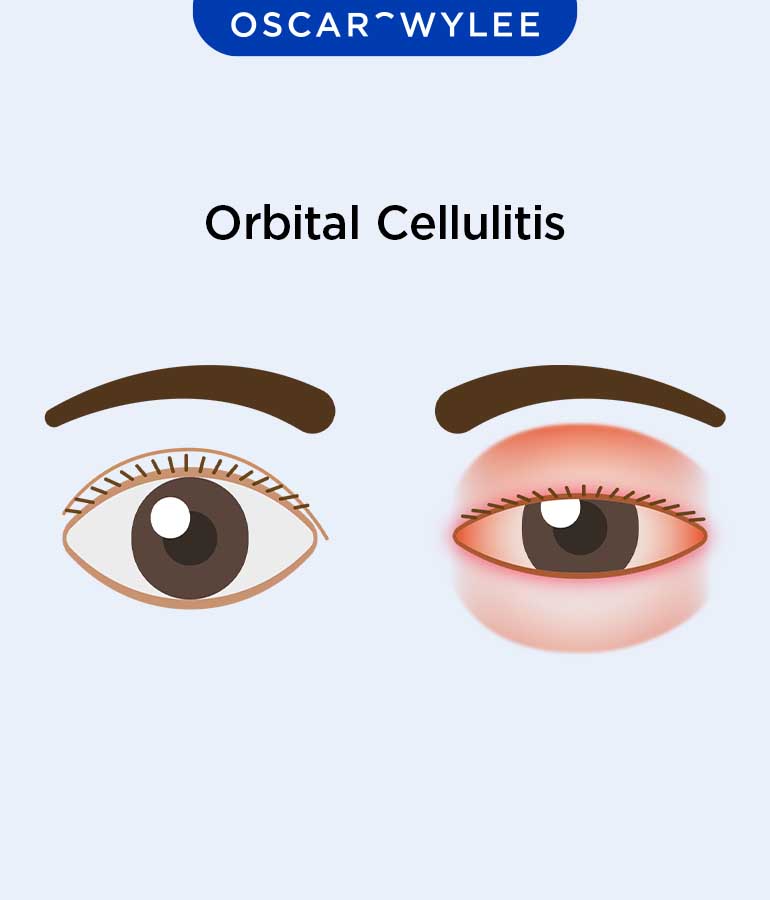
Orbital Cellulitis is a bacterial infection that occurs in the soft tissues that surround your eye, particularly inside the eye socket, according to the Cleveland Clinic. More than 80% of cases are caused by a localised sinus disease, according to Optometry Australia. Orbital cellulitis is a serious condition causing rapid progression of symptoms such as reduced visual acuity, proptosis and painful eye movements. It is important to seek help immediately if you experience these symptoms.
It is important to note that Oscar Wylee offers optometry services only; this article is for educational purposes only and is not a substitute for professional medical advice, diagnosis, or treatment. Orbital cellulitis requires urgent medical evaluation, and you should seek immediate medical attention if you experience eyelid swelling, redness, pain, or fever.
What is Orbital Cellulitis?
Orbital cellulitis is a serious condition involving a spread of infection beyond the eye’s orbital septum, which is a thin connective tissue membrane separating the eyelid from deeper parts of the eye, according to the Royal Australian College of General Practitioners (RACGP).
How does Orbital Cellulitis Affect the Eye?
Orbital cellulitis affects the orbit of the eye, which is situated behind the orbital septum, through infection, according to The Royal Children's Hospital, Melbourne. It affects the eye through a range of symptoms such as blurred vision, double vision and proptosis.
What Causes Orbital Cellulitis?
Orbital cellulitis is typically caused by sinus infections or infection of the eyelids or face, according to Tsirouki et. al in a research paper titled ‘Orbital Cellulitis’ published in 2017 in the Survey of Ophthalmology.
Can a Sinus Infection Cause Orbital Cellulitis?
Yes, a sinus infection can cause orbital cellulitis. In fact, a paranasal sinus infection is the most common cause of orbital cellulitis, according to Haider et. al in a research paper titled ‘The root cause of periorbital lid oedema’ published in 2022 in the Royal Australian College of General Practitioners.
What are the Main Symptoms of Orbital Cellulitis?
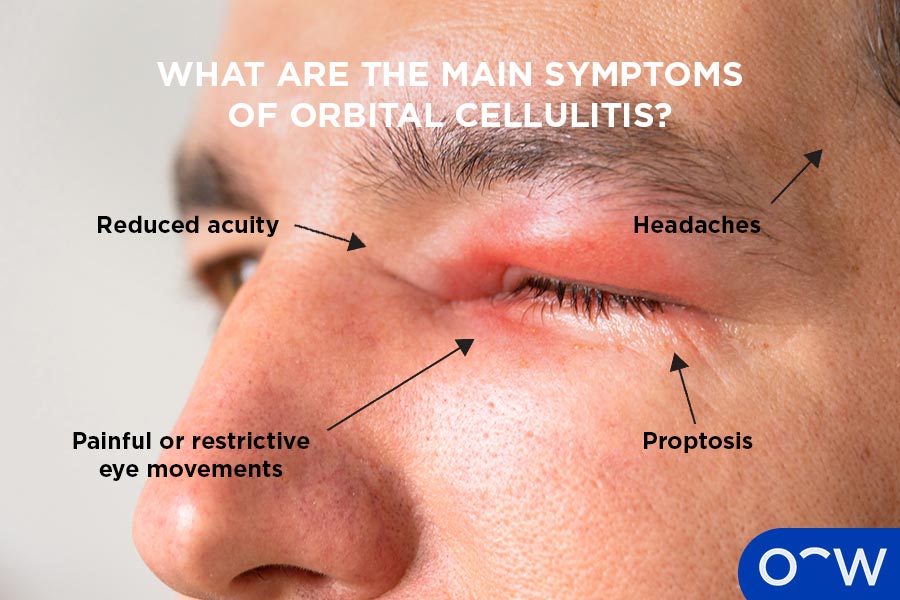
The main symptoms of orbital cellulitis include painful or restricted eye movements, reduced visual acuity, proptosis, and headaches. Read more about these main symptoms of orbital cellulitis below.
- Painful or restricted eye movements: Painful or restricted eye movements are common amongst those with orbital cellulitis, making actions such as moving your eyes in different directions difficult.
- Reduced visual acuity: Reduced visual acuity is a main symptom that can lead to blindness if not treated effectively.
- Proptosis: Proptosis is when the eyeball bulges out more than average from its socket.
- Headaches: Headaches, particularly severe ones, are a main symptom of orbital cellulitis.
How Can You Recognise Early Orbital Cellulitis Symptoms?
Early orbital cellulitis symptoms often progress rapidly. Changes to your appearance may include discolouration, bulging of the eye and swelling from your eyebrow to your cheekbone, according to the Cleveland Clinic. You may experience a fever and start to feel the onset of vision-related symptoms such as reduced visual acuity and difficulty moving your eyes.
Can Orbital Cellulitis Cause Vision Problems?
Yes, orbital cellulitis can cause vision problems. A common symptom of orbital cellulitis is blurred vision and reduced visual acuity.
How does Orbital Cellulitis Progress Over Time?
Orbital cellulitis progresses quite rapidly over time. Symptoms escalate quickly, such as restricted eye movements, reduced visual acuity and proptosis. That is why seeking medical help immediately is important.
Can Orbital Cellulitis Get Worse Without Treatment?
Yes, orbital cellulitis can get much worse without treatment. Urgent medical care and treatment are essential, or else your vision could be damaged completely, or the infection could spread to your brain, leading to life-threatening complications, according to the Cleveland Clinic.
How is Orbital Cellulitis Diagnosed?
Orbital cellulitis is diagnosed through imaging and surgical consultation, namely through an ear, nose, and throat specialist and an ophthalmologist, according to The Royal Children's Hospital, Melbourne.
What Tests Can Confirm an Orbital Cellulitis Infection?
The test that confirms an orbital cellulitis infection is an enhanced computed tomography (CT) scan of the orbits of the eyes, sinuses and brain, according to The Royal Children's Hospital, Melbourne. There will also be a full blood examination conducted.
Is a CT Scan Needed for Orbital Cellulitis?
Yes, a CT scan is one of the most common ways to diagnose orbital cellulitis. A CT Scan for the eye aims to examine the area and surrounding structures, according to the South Western Sydney Local Health District. It should be noted that CT scans are not performed by Optometrists, rather they are performed by medical specialists in hospitals.
How is Orbital Cellulitis Treated?
Orbital cellulitis is treated with both intravenous and oral antibiotics, according to The Royal Children's Hospital, Melbourne.
Does Orbital Cellulitis Always Require Hospital Treatment?
Yes, orbital cellulitis will always require hospital treatment. It is a serious condition that needs immediate medical attention as it can lead to complete vision loss.
How Does Orbital Cellulitis Differ From Other Eye Infections?
Orbital cellulitis differs from other eye infections due to where the infection occurs. Orbital cellulitis refers to an infection of the soft tissues located in the area of the orbit posterior to the orbital septum. It can have serious complications, and blindness can occur in around 11% of cases, according to a research paper written by Gushchin et. al in a research paper titled ‘Orbital Cellulitis’ published in 2023 in Medscape.
What is the Difference Between Periorbital and Orbital Cellulitis?
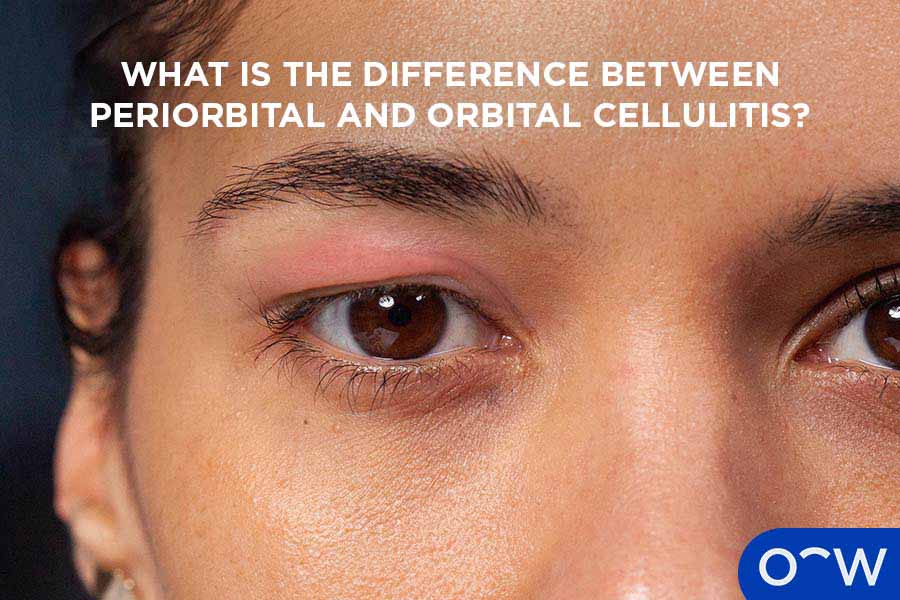
The difference between periorbital cellulitis and orbital cellulitis is that periorbital cellulitis involves the eyelids and does not extend into the bony orbit, whereas orbital cellulitis is a more serious infection affecting deeper layers of the eye, leading to impaired vision and eye movements, according to Australian Prescriber.
Can Periorbital Cellulitis Turn Into Orbital Cellulitis?
Yes, periorbital cellulitis can turn into orbital cellulitis. This can occur if the infection spreads beyond the septum, to the deeper layers of skin and other tissues in your eye orbit, according to Cleveland Clinic.
What Complications Can Orbital Cellulitis Cause?
Orbital cellulitis can lead to serious complications if not correctly treated. It can lead to blindness, meningitis and a serious disorder called cavernous sinus thrombosis, which affects the large vein at the back of the skull, according to the MSD Manual.
When Does Orbital Cellulitis Require Surgery?
Orbital cellulitis will rarely require surgery, only if antibiotics as prescribed by health professionals do not work.
Can Orbital Cellulitis Spread to the Brain?
Yes, orbital cellulitis spreads infection to the eye, which can then lead to it spreading to the skull and brain, according to the Raising Kids Network, a resource funded by the Australian Government.
How to Prevent Getting Orbital Cellulitis?
To prevent getting orbital cellulitis, you should exercise good hygiene and treat potential infections quickly. If there are any changes to your eye’s appearance or vision ability, you should get it checked by a healthcare professional immediately.