


 1300 164 990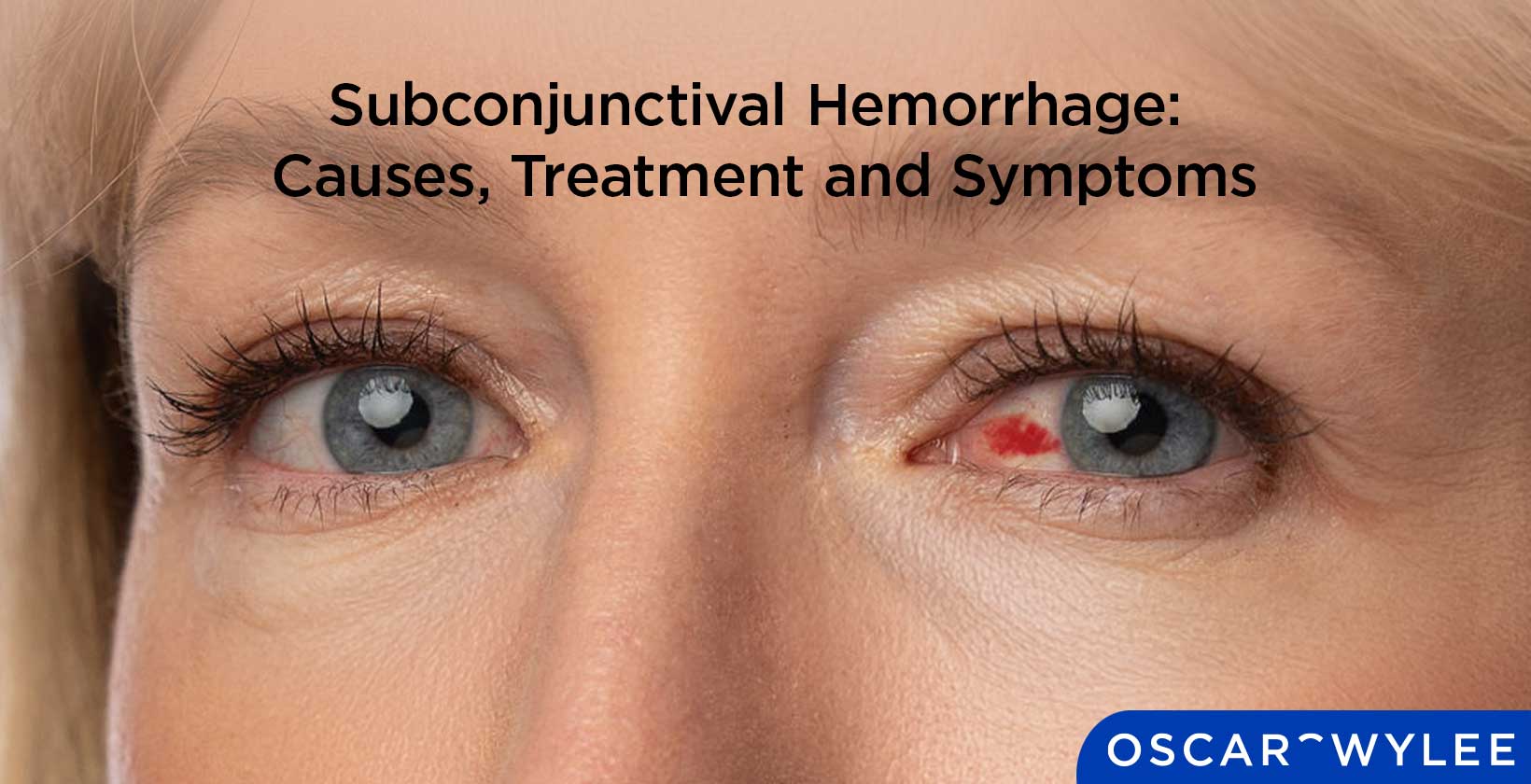
Subconjunctival Hemorrhage: Causes, Treatment and Symptoms
Published on July 9th, 2026
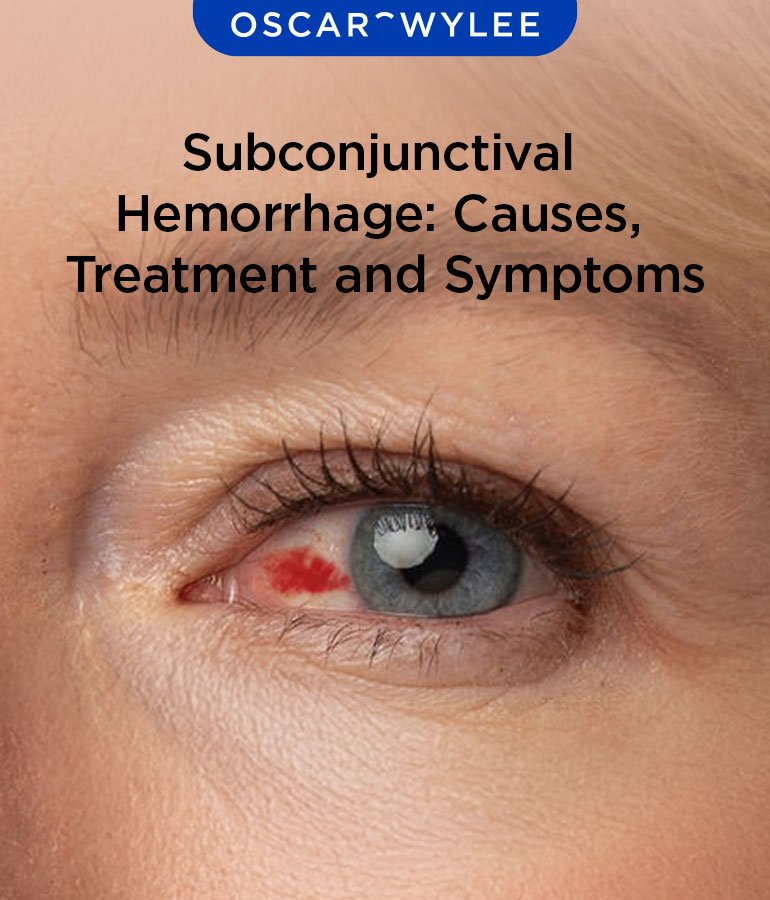
A subconjunctival hemorrhage is a broken blood vessel in the eye that leads to bleeding just below the eye's surface. A subconjunctival hemorrhage can be caused by physical strain, trauma, underlying health conditions, and certain medications. The main symptom of a subconjunctival hemorrhage is a bright red patch on the white of the eye. Although it may look alarming, a subconjunctival hemorrhage is typically painless and will clear up within 1 to 3 weeks.
It is important to note that Oscar Wylee offers optometry services only; this article is for educational purposes only and is not a substitute for professional medical advice, diagnosis, or treatment. You should seek immediate medical attention if you experience eye pain or vision changes, discharge, light sensitivity, or visible blood over the iris (the coloured part of the eye).
What is a Subconjunctival Hemorrhage?
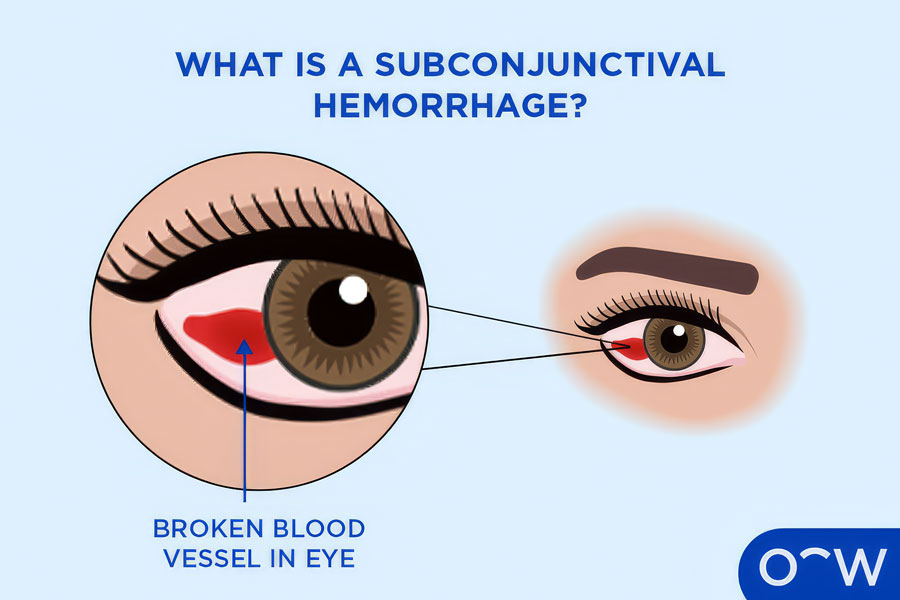
A subconjunctival hemorrhage is bleeding beneath the conjunctiva that appears as a bright red spot on the eye, according to the South Eastern Sydney Local Health District (SESLHD). When a small blood vessel breaks in the eye, blood collects under the conjunctiva, which is a layer of tissue that covers the sclera, the white part of the eye. This leads to a subconjunctival hemorrhage, which appears as a patch of blood on the white part of the eye, according to KindSight Eye Specialists, Brisbane. A subconjunctival hemorrhage is almost always harmless and resolves naturally, according to the SESLHD.
What Causes a Blood Vessel to Break in the Eye?
A blood vessel in the eye can break due to straining, physical exertion, or eye irritation. Straining can involve coughing, sneezing, or vomiting, which can lead to a blood vessel in the eye breaking. Physical exertion refers to things such as heavy lifting or bending forward, and eye irritation can involve eye rubbing or a foreign object in the eye.
Is a Subconjunctival Hemorrhage the Same as a Bloodshot Eye?
Yes, a subconjunctival hemorrhage is a specific type of bloodshot eye. A subconjunctival hemorrhage refers to a localised patch of blood on the eye caused by a singular burst blood vessel, whereas a bloodshot eye refers to generalised redness caused by widened blood vessels.
What are the Common Symptoms of a Subconjunctival Hemorrhage?
The common symptoms of a subconjunctival hemorrhage are a red spot, no pain, normal vision, and mild irritation. These common symptoms of a subconjunctival hemorrhage are explained below.
- Red Spot: A bright red spot on the eye is the primary symptom of a subconjunctival hemorrhage.
- No Pain: No pain is a normal symptom of a subconjunctival hemorrhage.
- Normal Vision: Normal vision is a normal symptom of a subconjunctival hemorrhage, and vision changes are uncommon.
- Mild Irritation: Mild irritation is the only other common symptom associated with a subconjunctival hemorrhage, apart from a red spot on the eye. This can present as a slight, scratchy, gritty, or itchy sensation, according to KindSight Eye Specialists, Brisbane.
How Can You Tell If It Is More Than a Broken Blood Vessel?
You can tell if it is more than a broken blood vessel if you experience accompanying symptoms such as eye pain, vision changes, discharge, light sensitivity, or visible blood over the iris (the coloured part of the eye), according to Bright Sight Eye Specialists, Sydney.
Does a Subconjunctival Hemorrhage Usually Cause Pain?
No, a subconjunctival hemorrhage does not usually cause pain. The only other symptom you may experience is mild irritation, in the form of a minor scratchy, gritty, or itchy sensation.
What Causes a Subconjunctival Hemorrhage?
A subconjunctival hemorrhage can be caused by physical strain, trauma, underlying health conditions, and certain medications. These subconjunctival hemorrhage causes are explained below.
- Physical Strain: Physical strain, such as coughing, sneezing, lifting heavy objects, or intense laughing or crying, can cause a blood vessel to burst in your eye and cause a subconjunctival hemorrhage.
- Trauma: Trauma, such as eye rubbing, a foreign object in the eye, friction from contact lenses, and physical injury, can cause a subconjunctival hemorrhage.
- Underlying Health Conditions: Underlying health conditions, such as high blood pressure, diabetes, and blood clotting disorders, can increase the risk of developing a subconjunctival hemorrhage.
- Certain Medications: Certain medications, such as blood-thinning medications, can make blood vessels burst more easily and put you at an increased risk of developing a subconjunctival hemorrhage.
Which Health Conditions Increase the Risk?
The health conditions that can increase the risk of developing a subconjunctival hemorrhage include high blood pressure, diabetes, and blood-clotting disorders. These health conditions are explained below.
- High Blood Pressure: High blood pressure puts more stress on blood vessels, which can make them more prone to bursting, according to Bright Sight Eye Specialists.
- Diabetes: Diabetes can weaken blood vessels due to chronically elevated blood sugar, according to Bright Sight Eye Specialists.
- Blood-Clotting Disorders: Blood-clotting disorders can increase bleeding tendency, according to Bright Sight Eye Specialists.
Can Coughing or Sneezing Burst a Blood Vessel in the Eye?
Yes, coughing or sneezing can burst a blood vessel in the eye. The sudden pressure of coughing or sneezing is enough to cause a rupture in a blood vessel and lead to the development of a subconjunctival hemorrhage.
How Is a Subconjunctival Hemorrhage Diagnosed?
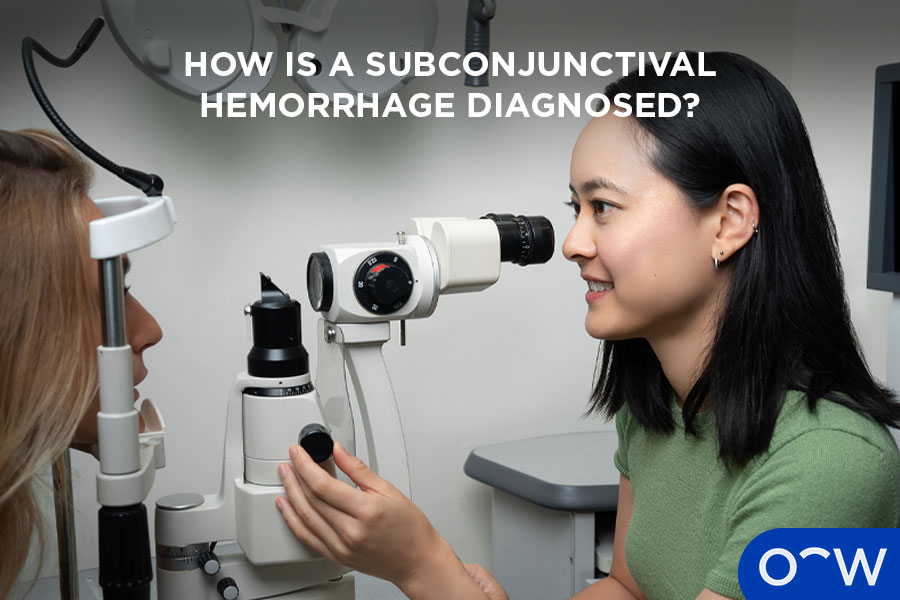
A subconjunctival hemorrhage is diagnosed through an eye test by an optometrist or physical examination by another healthcare provider. Further testing is usually not necessary, as the red spot on the eye is distinct. An optometrist may perform a slit lamp examination to get a magnified image of the subconjunctival hemorrhage.
When Should You See an Eye Doctor?
You should see an eye doctor for a subconjunctival hemorrhage if it does not clear in 3 weeks, or if you experience pain, vision changes, or eye swelling, according to Bright Sight Eye Specialists, Sydney. You should also seek immediate emergency care if the subconjunctival hemorrhage was caused by trauma to the head. In most cases, a subconjunctival hemorrhage is harmless and will resolve within 1 to 3 weeks.
Is a Red Spot on the Eye Ever an Emergency?
Yes, a red spot on the eye may be an emergency if it is accompanied by certain symptoms, including sudden vision changes, severe pain or headache, extreme light sensitivity (photophobia), eye trauma, discharge, or swelling. You should seek immediate emergency care if you experience these symptoms.
How Is a Subconjunctival Hemorrhage Treated?
Most subconjunctival hemorrhages do not need specific treatment, as the blood spot will be reabsorbed into the body within 1 to 3 weeks, according to the Cleveland Clinic. Over-the-counter artificial tears may relieve mild irritation, according to Bright Sight Eye Specialists, Sydney. You should avoid rubbing the area, and switch from contact lenses to glasses for a few days if possible to minimise discomfort.
Which Eye Drops Can Help With Recovery?
Eye drops cannot speed up recovery of a subconjunctival hemorrhage, but over-the-counter artificial tears such as preservative-free eye drops can relieve irritation if the eyes feel gritty or dry, according to the Cleveland Clinic.
Can UV400 Sunglasses Improve Comfort During a Subconjunctival Hemorrhage?
Yes, UV400 sunglasses can improve comfort during a subconjunctival hemorrhage by reducing bright light exposure. UV400 sunglasses can not speed up healing, but they can reduce light sensitivity and protect the affected area.

Can You Wear Prescription Glasses While Recovering From a Subconjunctival Hemorrhage?
Yes, prescription glasses can be worn while recovering from a subconjunctival hemorrhage. It is often recommended to temporarily switch from contact lenses to prescription glasses while healing from a subconjunctival hemorrhage, according to Bright Sight Eye Specialists, Sydney.
Do You Need Treatment for Every Subconjunctival Hemorrhage?
No, treatment is rarely needed for a subconjunctival hemorrhage, as it will usually resolve on its own over time, according to the SESLHD.
How Long Does a Subconjunctival Hemorrhage Last?
A subconjunctival hemorrhage usually lasts 1 to 3 weeks. The subconjunctival hemorrhage may change colour from red to orange or yellow as it heals, which is perfectly normal, according to Bright Sight Eye Specialists, Sydney.
What Happens During the Healing Process?
During the healing process, the trapped blood will be reabsorbed into the body and gradually fade, according to Bright Sight Eye Specialists, Sydney.
Can Blue Light Glasses Help Reduce Eye Strain During Recovery?
Yes and no; blue light glasses may help improve daily visual comfort, minimise glare, and reduce eye fatigue, which could be useful during subconjunctival hemorrhage recovery. However, blue light glasses cannot treat the subconjunctival hemorrhage itself, and evidence supporting their effectiveness is limited. To reduce eye strain, try practising the 20-20-20 rule, or use lubricating eye drops if your eyes feel scratchy or dry.
How does a Subconjunctival Hemorrhage Compare With Other Eye Problems?
A subconjunctival hemorrhage is usually harmless compared with many other eye problems. It rarely affects vision and causes no pain or discharge. Serious complications are uncommon with subconjunctival hemorrhage, and it usually clears up on its own.
What is the Difference Between a Subconjunctival Hemorrhage and Hyphema?
A subconjunctival hemorrhage is bleeding under the conjunctiva, while hyphema is a serious medical emergency involving bleeding inside the front of the eye. Hyphema is generally more serious. A hyphema also causes pain and blurred vision, whereas a subconjunctival hemorrhage usually has no other symptoms.
Can a Subconjunctival Hemorrhage Come Back?
Yes, a subconjunctival hemorrhage can come back. Frequent recurrences of a subconjunctival hemorrhage often point to an underlying health condition and should be assessed by a doctor.
It is important to note that Oscar Wylee offers optometry services only; this article is for educational purposes only and is not a substitute for professional medical advice, diagnosis, or treatment.