


 1300 164 990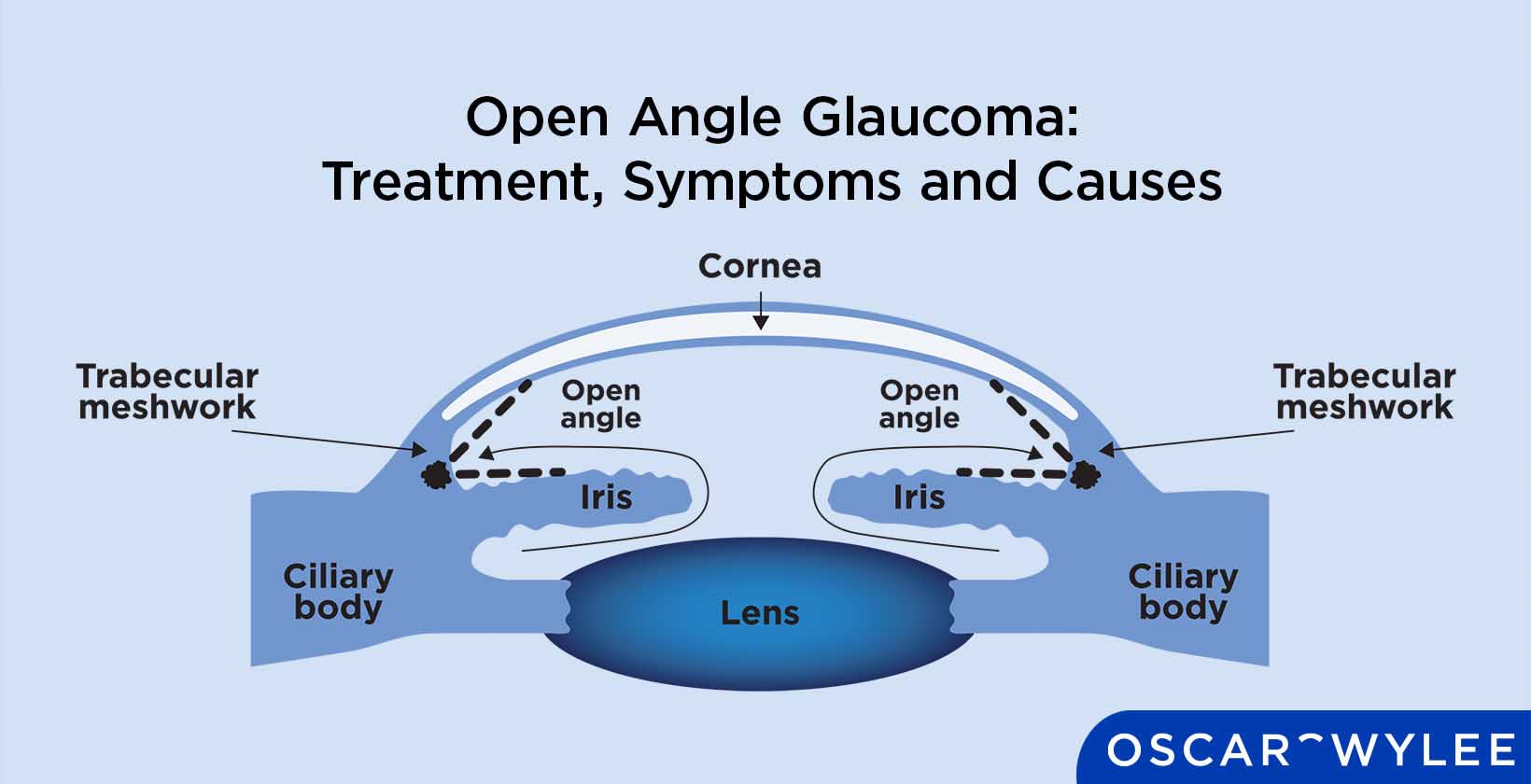
Open Angle Glaucoma: Treatment, Symptoms and Causes
Published on July 21st, 2026
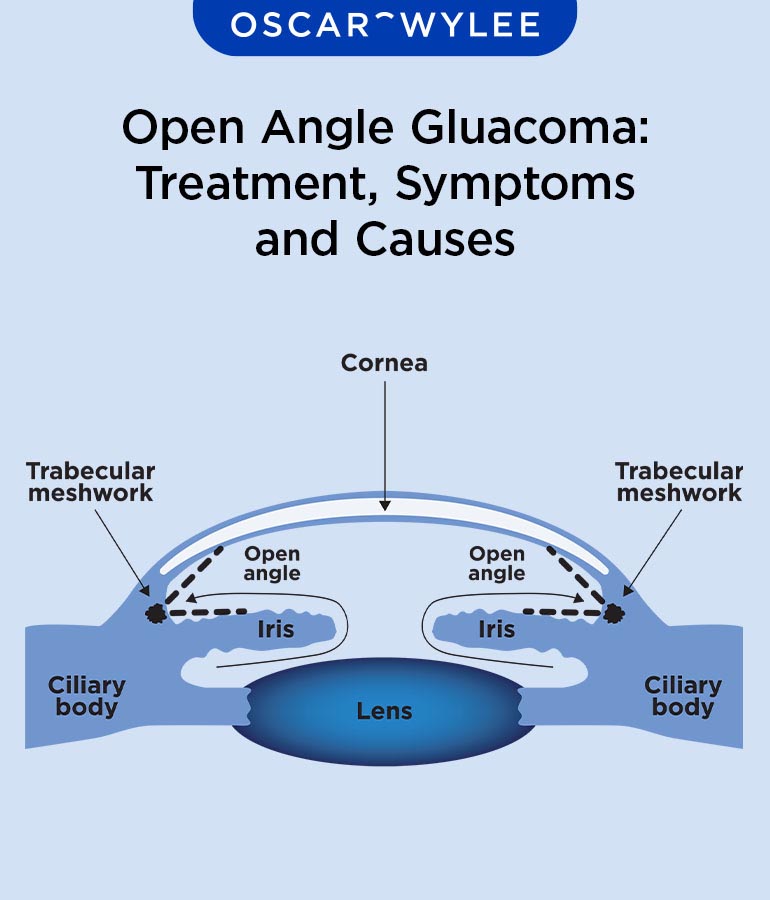
Open angle glaucoma is the most common type of glaucoma in Australia, an eye disease that affects the optic nerve. Open angle glaucoma is caused by the eye's drainage system becoming blocked, which leads to fluid draining too slowly. This causes increased eye pressure, which damages the optic nerve over time. Most patients with open angle glaucoma experience no early symptoms or warning signs. Treatment for the disease can control the condition from leading to blindness, and usually involves prescription eye drops, laser therapy, and surgery if necessary. Open angle glaucoma differs from angle closure glaucoma because the eye drain remains open, but the microscopic drain becomes blocked over time. In angle closure glaucoma, the eye drain becomes completely blocked by the iris, which causes a sudden and dangerous spike in eye pressure.
It is important to note that Oscar Wylee offers optometry services only; this article is for educational purposes only and is not a substitute for professional medical advice, diagnosis, or treatment.
What is Open Angle Glaucoma?
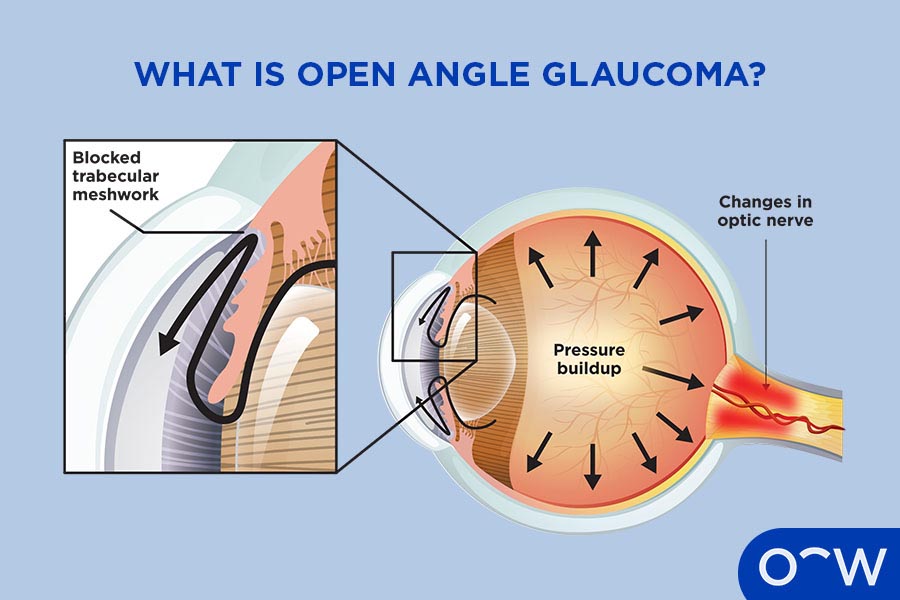
Open angle glaucoma is a chronic eye disease that damages the optic nerve, usually developing from poor fluid drainage, which leads to increased eye pressure over time, according to Glaucoma Australia. Open angle glaucoma develops slowly without symptoms, and therefore is often named the 'silent thief of sight', according to Glaucoma Australia. If open angle glaucoma goes untreated, it can lead to permanent blindness, meaning early detection is crucial.
How is Primary Open Angle Glaucoma Different From Other Types?
Primary open-angle glaucoma differs from other types due to its slow progression without obvious symptoms, according to the Vision Eye Institute, Australia. In open angle glaucoma, vision stays intact until the later stages.
Is Open Angle Glaucoma the Most Common Type of Glaucoma?
Yes, open angle glaucoma is the most common type of glaucoma, according to the Centre for Eye Research, Australia (CERA). Open angle glaucoma makes up 90% of all reported glaucoma cases, according to CERA.
Can Open Angle Glaucoma Affect One Eye or Both Eyes?
Yes, open-angle glaucoma can affect one eye or both eyes, but typically affects both eyes. It is a progressive condition, and usually one eye is affected first, according to ophthalmologist Dr. Parth Shah.
What Causes Open Angle Glaucoma?
Open angle glaucoma is caused when the eye's drainage system becomes blocked, which causes fluid to drain too slowly, according to Glaucoma Australia. This causes the eye to build up pressure, causing an unhealthy intraocular pressure (IOP), which slowly damages the optic nerve.
Who is Most at Risk of Developing Open Angle Glaucoma?
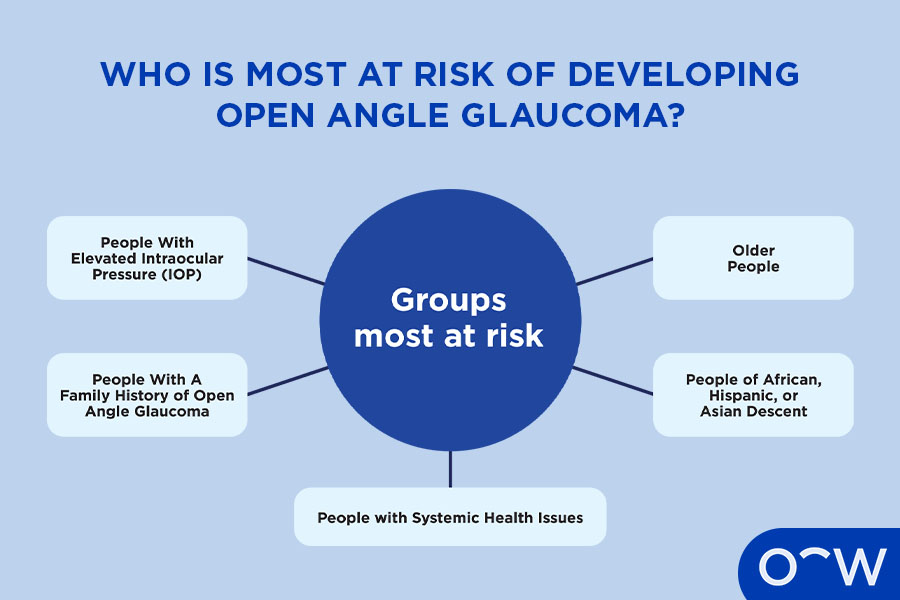
The people most at risk of developing open angle glaucoma are people with elevated intraocular pressure (IOP), older people, people with a family history of open angle glaucoma, people of African, Hispanic, or Asian descent, and people with systemic health issues. These groups most at risk of developing open-angle glaucoma are explained below.
- People With Elevated Intraocular Pressure (IOP): People with elevated intraocular pressure are at an increased risk of developing open angle glaucoma.
- Older People: Older people are at a higher risk of developing open angle glaucoma, as its risk increases with age. 1 in 8 people have glaucoma over 80, according to Glaucoma Australia.
- People With A Family History of Open Angle Glaucoma: People with a family history of open angle glaucoma are at a higher risk, as genetics contribute. You are 10x more likely to develop glaucoma if you have a direct family member with glaucoma, according to Glaucoma Australia.
- People of African, Hispanic, or Asian Descent: People of African, Hispanic, or Asian descent are at a significantly higher risk compared to other ethnicities.
- People With Systemic Health Issues: Diabetes, abnormally high or low blood pressure, or vascular diseases can put individuals at a higher risk of developing open angle glaucoma.
Can Open Angle Glaucoma Be Prevented?
Open angle glaucoma cannot be prevented because it develops without symptoms, but its progression to blindness can be, according to Glaucoma Australia. Patients diagnosed with open angle glaucoma can take steps to halt its progression and reduce their risk of blindness by lowering eye pressure levels, according to the Royal Australian College of Practitioners (RACGP). These ways to halt disease progression include prescription eye drops, laser therapy, and surgery, according to Glaucoma Australia.
What are the Early Symptoms of Open Angle Glaucoma?
Open angle glaucoma has no early warning signs or symptoms, according to Glaucoma Australia. Open angle glaucoma develops gradually, and patients slowly lose their peripheral vision. Central vision is unaffected until the disease progresses further.
How Does Open Angle Glaucoma Affect Vision Over Time?
Open angle glaucoma gradually damages peripheral vision before causing permanent central vision loss if left untreated, according to Glaucoma Australia. Vision loss due to open angle glaucoma is permanent; however, early diagnosis and treatment such as eye drops can halt the progression of the disease, according to CERA.
Can You Have Open Angle Glaucoma Without Noticeable Symptoms?
Yes, you can have open angle glaucoma without noticeable symptoms, according to Glaucoma Australia. Open angle glaucoma most commonly has no noticeable symptoms, which has given it the nickname 'the silent thief of sight.' This is one of the reasons why eye tests are so important.
How is Open Angle Glaucoma Diagnosed?
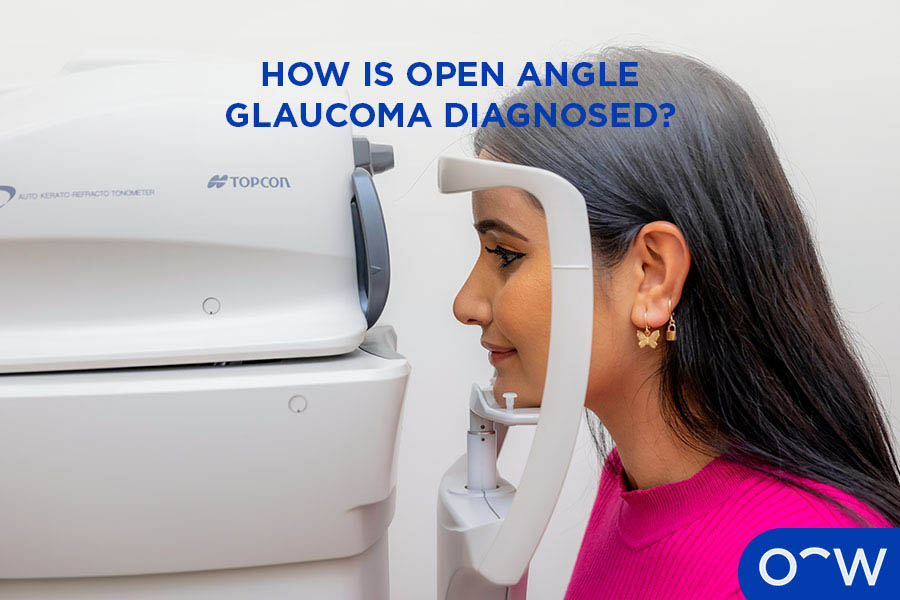
Open angle glaucoma is diagnosed through a comprehensive eye test by an optometrist or ophthalmologist, according to Glaucoma Australia. Several tests are used to determine the eye pressure, drainage angle, optic nerve health and any early visual field loss. As glaucoma is a progressive condition, it is important to monitor for any changes over time. The optometrist or practitioner determines how regularly a patient at risk of glaucoma needs to be reviewed.
What Eye Tests are Used to Detect Open Angle Glaucoma?
The eye tests used to detect open angle glaucoma are a tonometry test, an optical coherence tomography (OCT), a visual field test, an ophthalmoscopy, a gonioscopy, and a pachymetry, according to Glaucoma Australia. These tests used to detect open angle glaucoma are explained below.
- Tonometry Test: A tonometry test measures eye pressure and is important in detection, as the highest risk factor for glaucoma is high eye pressure, according to Glaucoma Australia.
- Optical Coherence Tomography (OCT): An optical coherence tomography (OCT) is a non-invasive laser scan that creates a detailed image of the optic nerve to spot tissue damage and any deterioration over time.
- Visual Field Test: A visual field test maps your field of vision to detect peripheral vision loss, according to Glaucoma Australia.
- Ophthalmoscopy: An ophthalmoscopy examines the optic nerve. Glaucoma is a disease of the optic nerve, meaning this is a vital test, according to Glaucoma Australia.
- Gonioscopy: A gonioscopy evaluates the drainage angle of intraocular fluid. A gonioscopy can determine whether high eye pressure is caused by a closed or blocked angle (angle closure glaucoma), or if the angle is open but not working well (open angle glaucoma), according to Glaucoma Australia.
- Pachymetry: A pachymetry test measures the thickness of a person's cornea. This test result is used with the tonometry eye pressure check to determine if a person's eye pressures are being overestimated or underestimated.
Oscar Wylee provides comprehensive eye tests which include tonometry and OCT, as well as visual field testing if requested by the optometrist. If open angle glaucoma is detected by an optometrist during these tests, you will be referred to an ophthalmologist for further evaluation, which may include an ophthalmoscopy, gonioscopy, and pachymetry test. The type of tests you can expect to get at Oscar Wylee will depend on the optometrist and the location.
Should You Have Regular Eye Checks if You Are at Higher Risk?
Yes, you should have regular eye checks if you are at higher risk of developing open angle glaucoma, according to Glaucoma Australia. Open angle glaucoma most commonly develops without noticeable symptoms, meaning regular eye tests are crucial, especially if you are at a higher risk of developing the disease, according to Vision Australia.
What Treatments are Available for Open Angle Glaucoma?
The treatments available for open angle glaucoma include prescription eye drops, laser therapy, surgery, and combination therapy, according to Glaucoma Australia. These treatments for open angle glaucoma are explained below.
- Prescription Eye Drops: Prescription eye drops are the most common treatment for open angle glaucoma. Prescription eye drops work by reducing the amount of fluid created by the eye, or increasing the drainage, according to Glaucoma Australia.
- Laser Therapy: Laser therapy, specifically Selective Laser Trabeculoplasty (SLT), utilises painless low energy light pulses aimed to improve eye drainage and lower eye pressure, according to Glaucoma Australia.
- Surgery: Surgery is usually a second choice open angle glaucoma treatment, used when eye drops and laser therapy are not effective.
- Combination therapy: Combination therapy refers to some advanced cases of glaucoma that may need a combination of treatments.
Which Eye Drops are Commonly Used to Treat Open Angle Glaucoma?
The eye drops most commonly used to treat open angle glaucoma in Australia are prostaglandin analogues (PGAs), according to RACGP. Other common eye drops include beta-blockers, alpha-agonists, carbonic anhydrase inhibitors (CAIs), and combination eye drops. These eye drops, commonly used to treat open angle glaucoma, are explained below.
- Prostaglandin Analogues (PGAs): PGAs help reduce intraocular pressure (IOP) in the eye by increasing fluid outflow, according to RACGP.
- Beta-blockers: Beta-blockers decrease the production of fluid in the eye.
- Alpha-agonists: Alpha-agonists increase fluid outflow and decrease fluid production.
- Carbonic anhydrase inhibitors (CAIs): CAIs decrease fluid production in the eye.
- Combination eye drops: Combination eye drops refer to eye drops containing a combination of two eye drops from different categories to maximise the effectiveness and pressure-lowering power.
When is Laser or Surgery Recommended for Open Angle Glaucoma?
Laser or surgery is recommended for open angle glaucoma when prescription eye drops do not control eye pressure or cause considerable side effects, according to Glaucoma Australia.
Can Prescription Glasses Help People With Open Angle Glaucoma?
Yes, prescription glasses can help people with open angle glaucoma maximise their remaining vision; however, they cannot cure or treat the disease.
What Is the Difference Between Open Angle and Angle Closure Glaucoma?
The difference between open angle glaucoma and angle closure glaucoma refers to the drainage system of the eye. In open angle glaucoma, the drain remains open but does not work efficiently, causing a slow build-up of pressure. In angle closure glaucoma, the drain is physically blocked by the iris, meaning pressure builds much more rapidly, according to Health Direct, Australia's virtual health information service. Angle closure glaucoma is an emergency that requires immediate referral to an ophthalmologist or hospital.
Can Open Angle Glaucoma Lead to Blindness if Left Untreated?
Yes, open angle glaucoma can lead to vision impairment and blindness if left untreated, according to CERA. Open angle glaucoma slowly damages the optic nerve, affecting peripheral vision first and progressing to permanent blindness if left untreated.
Can You Live a Normal Life With Open Angle Glaucoma?
Yes, you can live a normal life with open angle glaucoma, according to ophthalmologist Dr. Simon Skalicky. When open angle glaucoma is treated early on and consistently with ongoing monitoring, vision can be preserved. Some parts of your daily life may need minor changes, but general activities such as work and hobbies are able to stay largely unchanged.
How Can You Help Protect Your Vision After Diagnosis?
You can protect your vision after an open angle glaucoma diagnosis by adhering strictly to the medication prescribed by your health practitioner, receiving regular eye tests to check eye pressure, and practising healthy lifestyle habits such as consuming a healthy diet and getting regular exercise, according to Glaucoma Australia.
What Complications Can Open Angle Glaucoma Cause if It Progresses?
The complications open angle glaucoma can cause if it progresses are permanent peripheral vision loss, tunnel vision, and irreversible blindness, according to Glaucoma Australia. These complications are explained below.
- Permanent Peripheral Vision Loss: Permanent peripheral vision loss refers to blind spots in the peripheral or side vision.
- Tunnel Vision: Tunnel vision is when blind spots merge, and the visual field shrinks, meaning a patient can only see straight on, according to the Mornington Peninsula Eye Clinic, Victoria.
- Irreversible Blindness: Irreversible blindness is the most severe complication caused by untreated open angle glaucoma.
How Fast Does Open Angle Glaucoma Progress?
Open angle glaucoma usually progresses slowly over several years, according to Glaucoma Australia. On average, untreated open angle glaucoma progresses to blindness in 23 years, and treated open angle glaucoma takes 35 years, according to the Australian Government National Health and Medical Research Council (NHMRC).
Can Vision Loss From Open Angle Glaucoma Be Reversed?
No, vision loss from open angle glaucoma cannot be reversed, according to the Mornington Peninsula Eye Clinic, Victoria. This is because once the optic nerve is damaged, it cannot be healed.
What Lifestyle Changes Can Help Manage Open Angle Glaucoma?
Lifestyle changes such as getting regular exercise, consuming a healthy diet, and stress management can be complementary in managing open angle glaucoma, although they do not replace treatments like eye drops, laser therapy, or surgery, according to Glaucoma Australia. These lifestyle changes are explained below.
- Getting Regular Exercise: Getting regular exercise is part of a healthy lifestyle and can help reduce intraocular pressure (IOP) and improve blood flow to the eyes.
- Consuming a Healthy Diet: Consuming a healthy diet supports eye health by providing essential vitamins to the body.
- Stress Management: Stress management involves avoiding activities that may increase intraocular pressure (IOP) and stress relief methods such as meditation and mindfulness, according to Glaucoma Australia.
How Often Should People With Open Angle Glaucoma Have Follow Up Eye Exams?
People with open angle glaucoma should have follow up eye exams every 3 to 6 months, according to Glaucoma Australia. This is an ongoing schedule to ensure stable intraocular pressure (IOP) and vision loss is not progressing. Patients' reviews may be shorter if it is a complicated case or if the patient is not compliant with treatment. The exact follow up schedule will be determined by your ophthalmologist, and may be less frequent if your condition is stabilised, according to Northern Beaches Cataract Retina Glaucoma. Optometrists and ophthalmologists work together to co-manage glaucoma patients.