


 1300 164 990
Achromatopsia: Definition and Symptoms
Published on May 13th, 2026
Achromatopsia is a rare inherited retinal disease wherein the cone photoreceptors do not function properly, which results in little to no colour vision according to Retina Australia. Achromatopsia can also lead to light sensitivity and poor vision, and will be detected during early childhood. Read more about Achromatopsia, such as diagnosis, rarity and treatment options. It should be noted that this information is general in nature and does not replace professional medical advice. Please consult a qualified healthcare provider.
What is Achromatopsia?
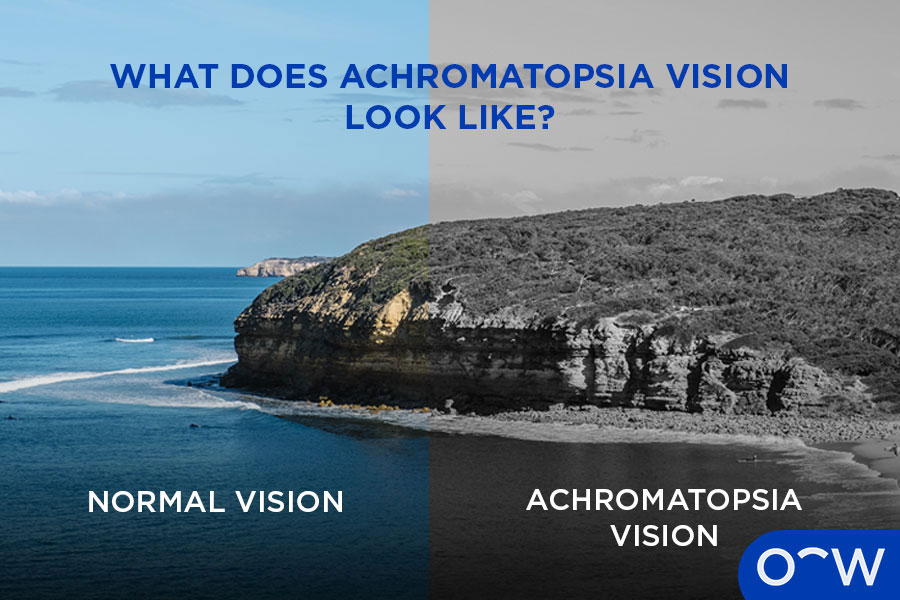
Achromatopsia is an inherited retinal condition causing reduced colour differentiation, visual acuity and heightened light sensitivity. People with this condition can only see in greyscale, which is made up of black, white and shades of grey.
How is Achromatopsia Defined in Medical Terms?
Achromatopsia can be defined in medical terms as a rare autosomal recessive retinal disorder, where a child inherits a mutated copy of a gene from both parents according to the Rare Diseases Organisation. The mutated genes that are most commonly associated with Achromatopsia are CNGB3 and CNGA3 according to Retina Australia. The common symptoms of Achromatopsia include colour blindness, nystagmus, photophobia, and reduced visual acuity.
Is Achromatopsia a Type of Complete Colour Blindness?
Yes, achromatopsia is a type of complete colour blindness as the individual will only be able to see in greyscale if they are affected by the condition.
What Does Achromatopsia Vision Look Like?
Is Achromatopsia Present From Birth?
Yes, achromatopsia is an eye condition that is present from birth.
How Rare is Achromatopsia?
Achromatopsia is very rare, affecting 1 in 30,000 people around the world which in Australia, is roughly 880 people, according to Retina Australia.
How Many People Have Achromatopsia Worldwide?
The number of people with Achromatopsia worldwide is expected to be 1 in 30,000 people, according to Retina Australia.
How does Black and White Vision Affect Daily Activities?
Black and white vision affects daily activities as it leads to difficulty interpreting colours in daily tasks, such as choosing clothes and understanding traffic lights. Distinguishing between objects is also more difficult due to vision being limited to black, white and grey tones.
Do People With Achromatopsia See Only in Grayscale?
Yes, people with achromatopsia see only in grayscale which encompasses black, white and varying shades of grey according to Colour Blind Awareness Organisation. An electroretinography (ERG) assists in the diagnosis and monitoring of retinal and optic nerve diseases, according to the Royal Victorian Eye and Ear Hospital.
What Causes Achromatopsia Color Blindness?
The cause of Achromatopsia colour blindness is a mutation in one of six potential genes, notably CNGB3 and CNGA3, which account for 75% of achromatopsia cases according to Retina Australia. It is an autosomal recessive condition which means each parent is a carrier but unaffected by the disease.
How do Cone Cells Affect Achromatic Vision?
Cone cells affect achromatic vision as they are responsible for detecting light and colour. If cone cells are affected from a genetic mutation, then achromatic vision, or colour blindness, can occur according to CSIRO.
Is Achromatopsia Considered a Rare Colour Blindness?
Yes, Achromatopsia is considered a rare colour blindness condition, occurring in only 1 person in 33,000 people according to Colour Blind Awareness Organisation.
What are the Symptoms of Achromatopsia?
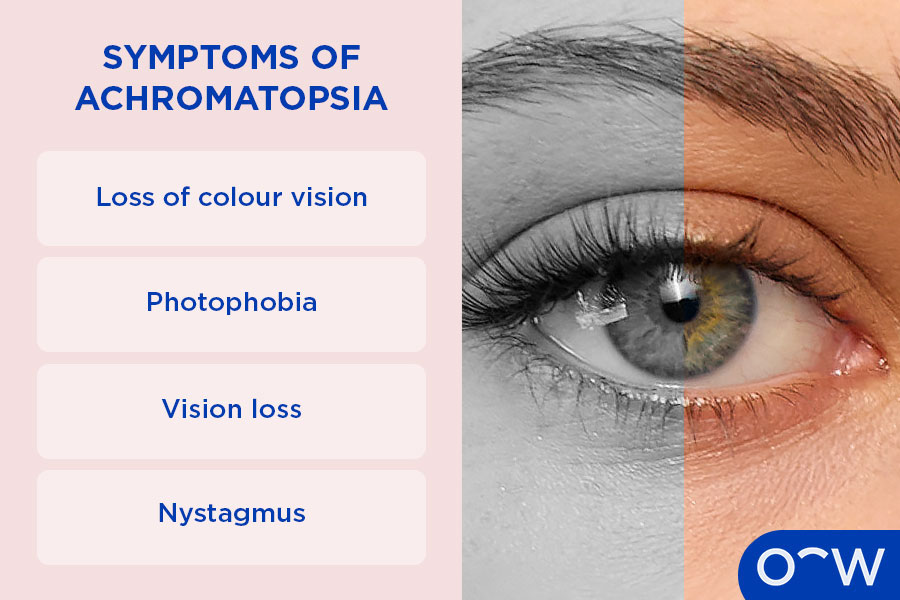
The symptoms of Achromatopsia include colour blindness, light sensitivity and reduced vision acuity. Read more about these symptoms of Achromatopsia below.
- Colour blindness: Colour blindness is a main symptom of achromatopsia where those affected will only be able to see in grayscale.
- Light sensitivity: Light sensitivity will emerge as a result of Achromatopsia, where an individual might find the need to squint in normal light settings.
- Vision acuity: Vision acuity will be affected due to Achromatopsia as this may be reduced, resulting in blurry vision.
- Nystagmus: Nystagmus refers to involuntary eye movements which can happen as a result of Achromomatopsia.
How do Achromatopsia Eyes React to Bright Light?
Those with achromatopsia may have discomfort or sensitivity in reaction to bright light. A common symptom of Achromatopsia is photophobia, which is an eye condition wherein the individual has light sensitivity.
Is Day Blindness Common in Achromatopsia?
Yes, day blindness is common for those with Achromotopsia. Day blindness is another term for photophobia, which is light sensitivity.
How is Achromatopsia Diagnosed?
Achromatopsia is diagnosed by an eye care professional such as an ophthalmologist. They will review your family history and symptoms, conduct vision testing, do an ophthalmic electrophysiology, an OCT test and an Electroretinography test according to Cleveland Clinic.
What Tests Confirm Total Colour Blindness?
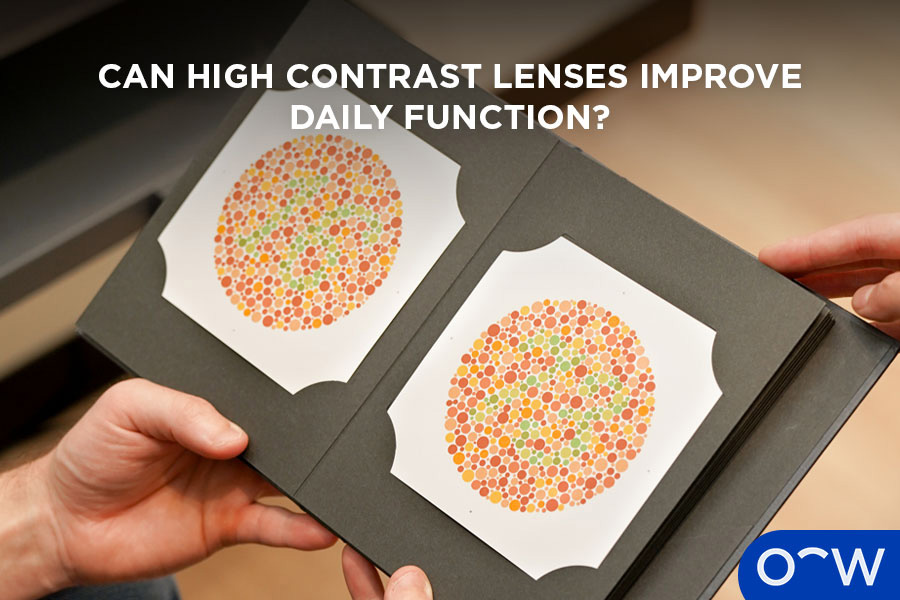
The most common test that confirms total colour blindness is the Ishihara Plate test. This test assesses whether the individual has red/green colour blindness, according to Colour Blind Awareness Organisation.
Is Genetic Testing Used to Diagnose Achromatopsia?
Yes, genetic testing can be used to diagnose achromatopsia as it contributes to providing an accurate diagnosis according to the Foundation Flighting Blindness.
Why is Eye Protection Important for Achromatopsia?
Eye protection is important for Achromatopsia as it allows for better visual clarity, whether through prescriptive lenses or tinted lenses for sun protection. However, it should be noted that eye protection does not cure Achromatopsia.
How can Sunglasses Help Manage Light Sensitivity in Achromatopsia?
Sunglasses can help manage light sensitivity in achromatopsia as they are designed to protect the eyes from the sun and its Ultraviolet (UV) rays, and glare. You will want sunglasses with high UV protection and category 3 or 4 tints, but consultation with an optometrist is necessary to find the specific filter that manages your light sensitivity.
Do UV Blocking Lenses Reduce Discomfort From Bright Light?
Yes, UV blocking lenses reduce discomfort from bright light. Those with Achromatopsia suffer from photophobia, which makes them sensitive to bright lights. This makes UV blocking lenses valuable to those with Achromatopsia.
Can High Contrast Lenses Improve Daily Function?
Yes, high contrast lenses can improve daily function through better visual clarity for those with Achromatopsia.
Which Sunglasses Options are Best for Achromatopsia?
The sunglasses options that are best for Achromatopsia are generally all of them, as they provide UV protection.
Are Stylish Women's Frames Comfortable for Light Sensitive Eyes?
Yes, in some cases stylish women's frames can be comfortable for light sensitive eyes if there are tinted lenses included as these reduce brightness and glare in bright settings.
What Features Should People Consider in Prescription Eyewear for Achromatopsia?
The feature that people should consider in prescription eyewear for Achromatopsia are dark tinted lenses to combat light sensitivity. Those with Achromatopsia may want to try Transition Lenses, which change from a clear to a dark tint when the lenses are exposed to sunlight.
Do Polarised Sunglasses Lenses Help Reduce Glare for People With Light Sensitivity?
Yes, polarised lenses help reduce glare for people with light sensitivity, which is a common symptom of Achromatopsia. Polarised lenses lessen the amount of light and glare that can enter the eye through a filter built in the lens material, or as a coating over the lens.
What Treatment Options Exist for Achromatopsia?
There is no treatment that can cure Achromatopsia completely. However it can be managed. Dark-tinted glasses can filter out specific types of light that may cause sensitivity, according to the Cleveland Clinic. Those with Achromatopsia may benefit from tools such as electronic magnification devices, canes, and high contrasting reading materials.
It should be noted that this information is general in nature and does not replace professional medical advice. Please consult a qualified healthcare provider.