


 1300 164 990
Baby Vision Development
Published on November 4th, 2026
Baby vision development refers to the typical timeline amongst infants where they start to develop their strength of vision and abilities. Aspects of eyesight such as colour vision, visual acuity and light sensitivity start to strengthen throughout the first 12 months of a baby's life. It is important to note that not all babies are the same; some might develop certain visual skills later than the usual timeline. If you have concerns about your baby, it is important to take them to an optometrist with paediatric experience so they can get professional advice.
This article provides general informational guidance on visual milestones and does not constitute formal medical diagnosis. If you suspect an eye condition or notice signs like a white pupil or constant misalignment, consult your GP, paediatrician, or optometrist promptly.
What is Baby Vision Development?
Baby vision development refers to the progression of a baby's visual abilities as they grow. A baby is typically defined as being between 0 and 12 months.
What Can Newborns See at Birth?
Newborns can see high-contrast patterns and are drawn to faces and bright colours, according to Ocean Kids Health. Newborns' visual acuity is still very much developing.
Can Newborns See Clearly From a Distance?
No, newborns cannot yet see clearly from a distance. It is estimated they can only see things around 20cm to 30cm away from them, according to the Kids Health Organisation.
How Does Baby Vision Change During the First Year?
A baby's vision changes during the first year, particularly through the months as they develop new vision skills. Improved colour vision, visual acuity, light sensitivity and eye tracking are some of the vision changes and skills they will acquire.
What Can Babies See at 1 Month?
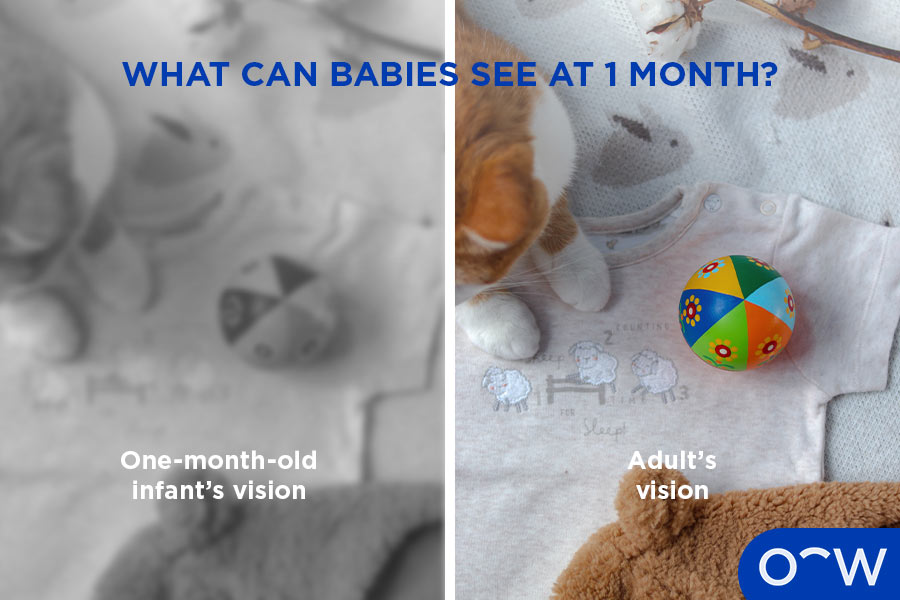
Babies can see shapes that are close by at 1 month, but distant objects are blurry, according to Kids Health Organisation. Your baby's colour vision is developing during this time; they will enjoy bright, primary colours.
Can a 1-Month-Old Baby Recognise Faces?
A 1-month-old baby may not be able to recognise faces. Facial recognition is typically said to emerge around 2 to 3 months old, according to Nationwide Children's Hospital.
What Can Babies See at 2 to 3 Months?
Babies can see small blocks and toys up close at 2 to 3 months old, and can better track objects with their eyes, according to Raising Children Network.
How Far Can a 2 Month Old See?
There is no clear distance for how far a 2-month-old can see. It is generally agreed that they can see close up, such as the face of the parent or caregiver that is holding them.
Can Babies Track Moving Objects by 3 Months?
Yes, babies can track moving objects by around three months. Their ability to track moving objects with their eyes will develop between two and three months old, according to Ocean Kids Health.
When do Babies Start Seeing Colours?
Babies can start seeing colours after a few weeks, according to Cooper Vision Australia. This colour vision then develops for the next few months.
What Colours Can Babies See First?
Generally, babies can see black, white and grey as their first colours or shades. It is generally agreed that they will be able to see red soon after.
Can Newborns Distinguish Between Different Colours?
Newborns can distinguish between certain colours. In their first two months, they can see bright light and primary colours, according to Better Health Channel.
How does Depth Perception Develop in Infants?
Depth perception develops in infants gradually throughout the months. By two years old, they will have increased depth perception, according to Cooper Vision Australia.
Can Babies Judge Distances by 6 Months?
Yes, babies can judge distances by 6 months; however, this will still develop with time.
How do Visual Milestones Change Month by Month?
Visual milestones change month by month for infants as they continue to grow. These crucial months of milestones include 1-2 months, 3 months, 4-5 months, 6 months and 7-12 months. Read more about which visual milestones typically emerge in these months.
- 1-2 months: A 1-2 month old will learn how to focus both of their eyes on tracking an object and continue to develop their colour vision, preferring bright colours but learning how to differentiate between shades, according to Baby Centre Australia.
- 3 months: At 3 months old, your infant's colour vision will continue to improve, and they will be able to perceive a wider range of colours, according to Ocean Kids Health.
- 4-5 months: At 4-5 months old, your infant will watch your face closely, begin to watch their own hands, and watch more distant objects, according to the Australian College of Behavioural Optometrists.
- 6 months: At six months, your infant will likely have more developed hand-eye coordination and, in some cases, 20/20 visual acuity, according to Ocean Kids Health.
- 7-12 months: At 7-12 months old, your infant may look clearly at smaller objects, can watch and track fast-moving objects and acquire depth perception, according to My Kids Vision Organisation.
Can a Baby's Vision Develop at a Different Rate?
Yes, a baby's vision can develop at a different rate. Each baby is unique, and vision milestones are representative of the average number of months babies take to be able to do certain things. Some can develop vision skills quickly, and others more slowly. If you are concerned about your baby's vision journey, it is important to consult an optometrist.
How can Parents Support Healthy Vision Development?
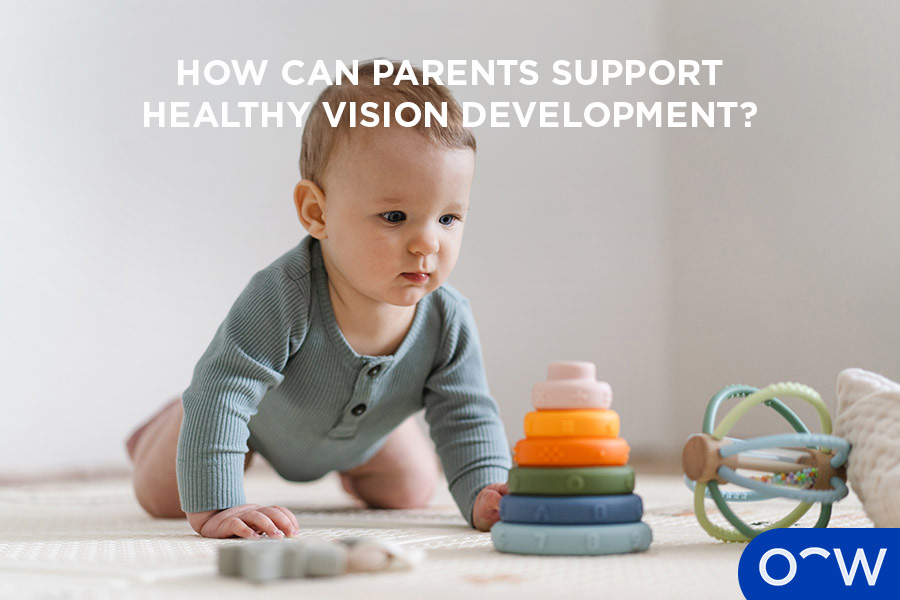
Parents can support healthy baby vision development by playing games that help with visual tracking, eye-hand coordination and visual focusing and identification, according to the Australian College of Behavioural Optometrists. Read more about these ways that parents can support healthy baby vision development below.
- Visual Tracking: Visual tracking games include pulling a string toy along in their line of vision, playing peekaboo, and playing with a ball. Visual tracking allows children to focus on one object in their vision.
- Hand-Eye Coordination: Hand-eye coordination games include stacking and nesting toys, finger painting and clay work, and a balloon game, such as one that involves making sure it does not touch the floor.
- Visual focusing and identification: Visual focusing and identification activities include puzzles, picture books where you have to look for an object on the pages, and even going to the supermarket and asking your child to point out an item.
Can Regular Eye Tests Detect Vision Problems Early?
Yes, regular eye tests can detect vision problems early. It is important that if your infant shows signs of vision problems, you take them to an optometrist with a particular interest in paediatric vision.
What are the Signs of Vision Problems in Babies?
The signs of vision problems in babies are eye misalignment, white pupil colour, and extreme light sensitivity. Read more about these signs of vision problems in babies below.
- Eye misalignment: Eye misalignment, formally known as strabismus, can be common in babies. This is common amongst newborns; however, after 4 months old, if their eyes are still regularly crossing inwards and drifting outwards, this should be checked by an Optometrist, according to the Healthy Children Organisation.
- White Pupil Colour: A white pupil, formally known as leukocoria, can be a warning sign of a serious condition. See a GP or optometrist if a white pupil is present in your infant. A persistent white pupil reflex (leukocoria) requires prompt evaluation by a GP, paediatric ophthalmologist, or hospital emergency eye clinic.
- Extreme light sensitivity: Extreme light sensitivity in infants should be monitored by a health professional and can signal high eye pressure, according to Cooper Vision.
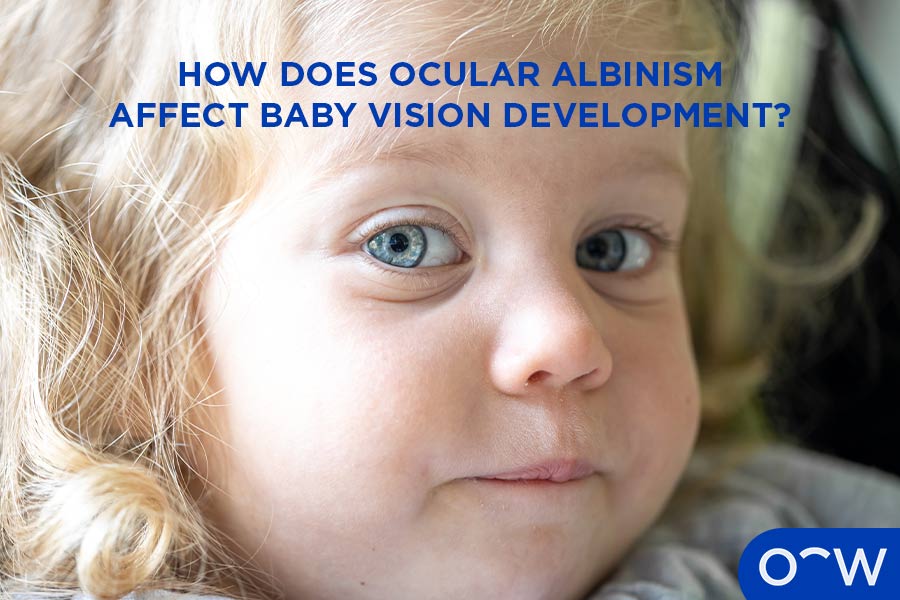
How does Ocular Albinism Affect Baby Vision Development?
Ocular albinism affects baby vision development as the eyes will take longer to develop. They will only be able to recognise faces after around 6 months or more, according to Albinism Australia. It is important to have an Ophthalmologist, particularly one specialising in pediatrics, to assist in providing your little one with the care they need.
How do Congenital Cataracts Affect Baby Vision Development?
Congenital cataracts affect baby vision development as the eye condition leads to a cloudy lens inside the eye instead of it being clear, according to the Sydney Children's Hospital Network.