


 1300 164 990
Trifocal Lenses: Definition and Advantages
Published on October 27th, 2026
Trifocal lenses are a form of multifocal lenses that help address problems with distance vision, intermediate vision and near vision in one lens. Bifocal lenses differ from trifocal lenses as they only feature two prescriptions in one lens for near and far vision. While trifocal lenses have sections clearly separated by visible lines, progressive lenses offer correction for distance vision, intermediate vision and near vision problems, but they do not have any visible lines. It is important to note that Oscar Wylee does not sell trifocal lenses; however, we do offer multifocal lenses instead.
What are Trifocal Lenses?
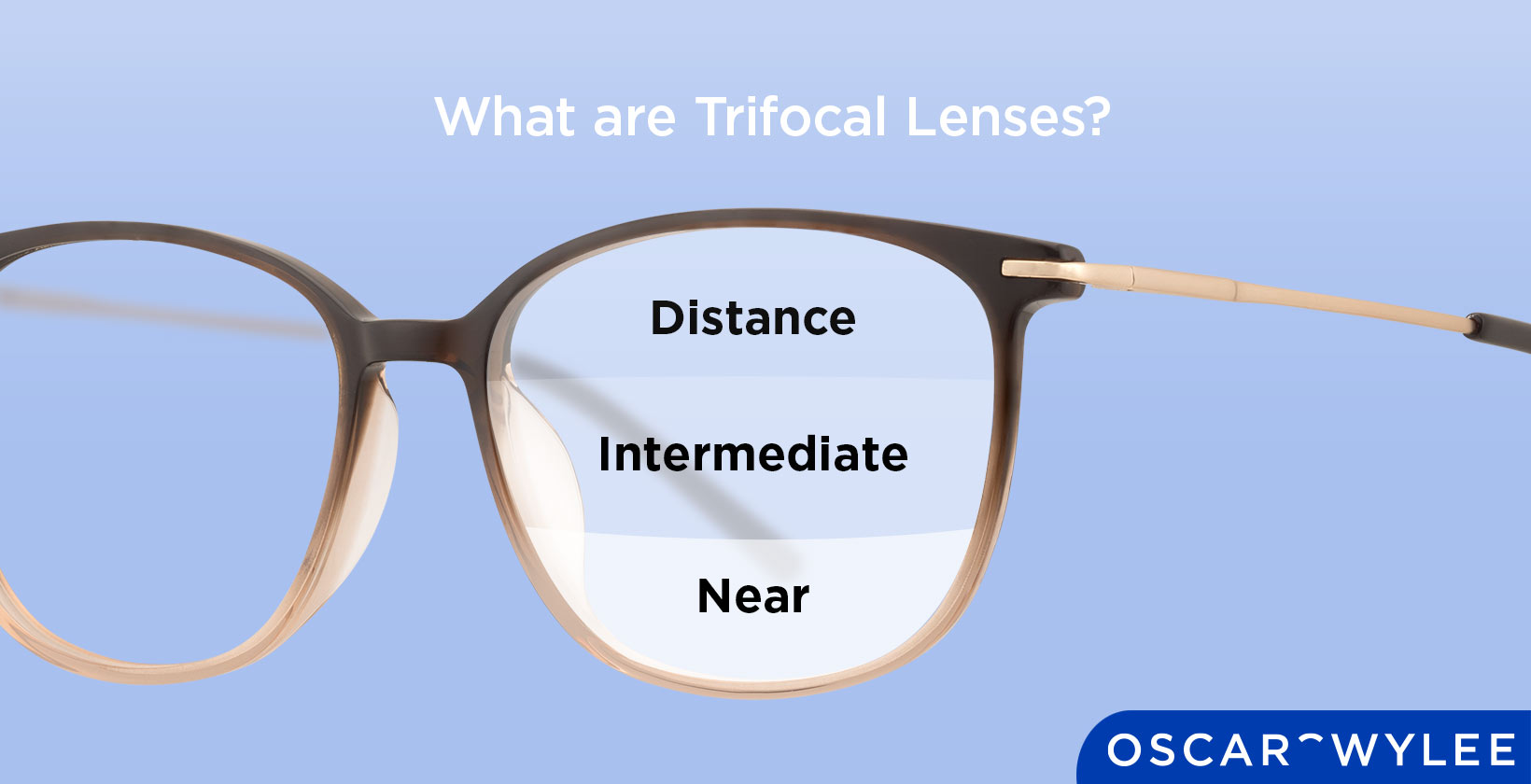
Trifocal lenses are a type of multifocal lenses that provide correction for problems related to distance vision, intermediate vision and near vision. There are different forms of trifocals, which include flat top (D-Segment), executive (Franklin) and Double-D (occupational). The three different optical zones are separated by clear visible lines.
How do Trifocal Lenses Work?
Trifocal lenses work by providing correction for three distances, including distance, intermediate and near vision. Trifocal lenses allow wearers to smoothly switch between the three distances, according to the Vision Eye Institute.
Do Trifocal Lenses Have Three Vision Zones?
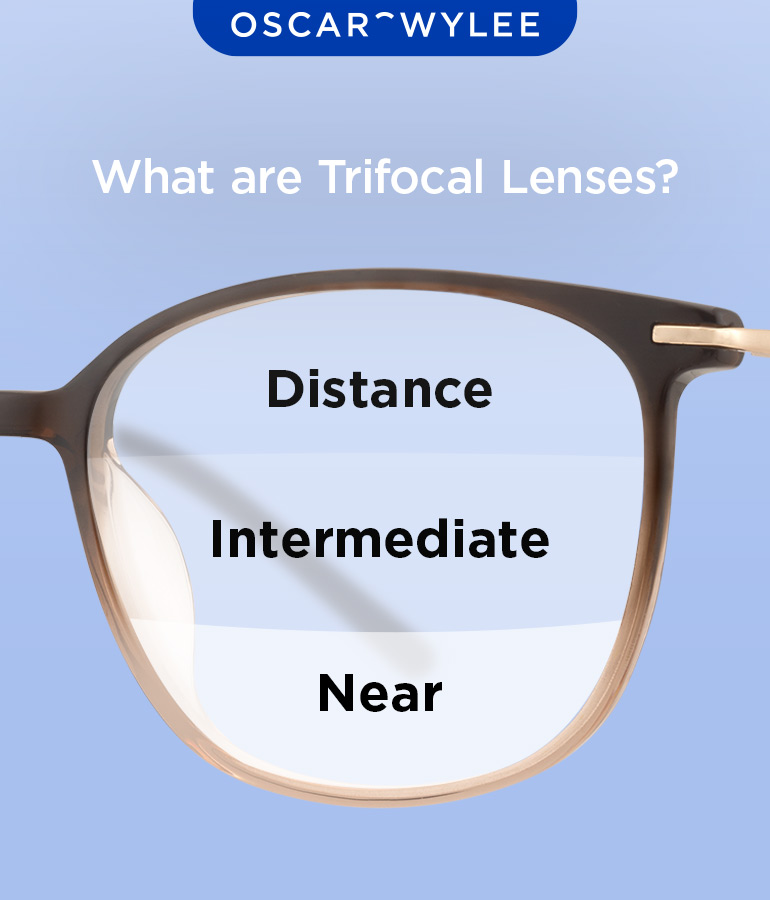
Yes, trifocal lenses do have three vision zones, with the different zones separated by clear visible lines. The top section provides a prescription for distance vision, the middle section provides a prescription for intermediate vision, and the bottom section provides a prescription for near vision.
What are Trifocal Glasses Used For?
Trifocal glasses are used for correcting vision problems related to distance vision, intermediate vision and near vision. People with vision problems at more than one distance typically use them so they can seamlessly switch between prescriptions without the need to change glasses.
Which Types of Vision Can Trifocal Lenses Correct?
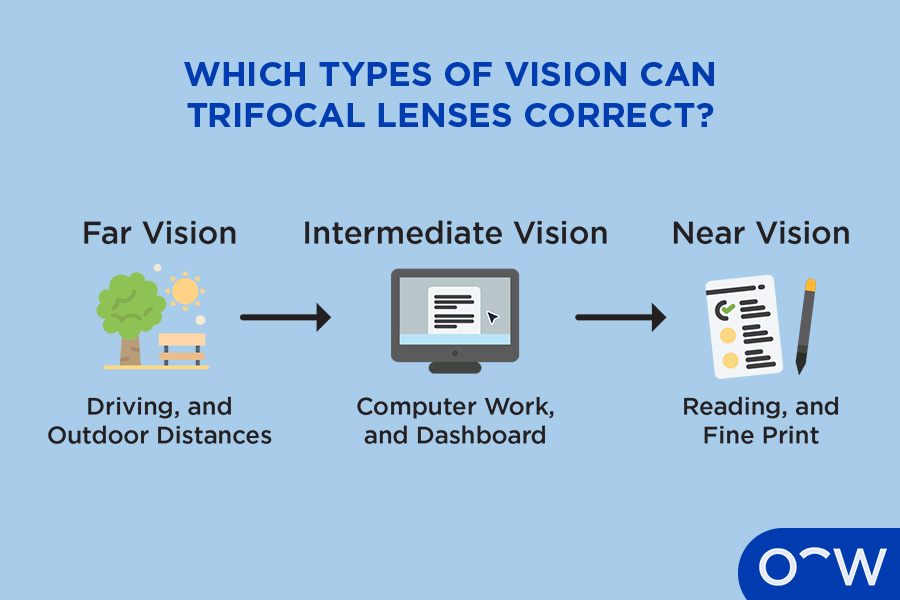
The types of vision that trifocal lenses can correct include distance, intermediate and near vision. The types of vision that trifocal lenses can correct are listed below.
- Distance: Distance vision is typically required for tasks such as driving, watching TV, or looking at objects in the distance. Trifocal lenses can provide correction for this type and are usually positioned in the top section of the frame.
- Intermediate: Intermediate vision is usually used for actions such as working on a computer, cooking on a stovetop, reading from a car dashboard and during social interactions. Trifocal lenses can aid in providing clear vision for those with poor intermediate vision and are typically positioned in the middle section of the frame.
- Near: Near vision may be associated with tasks such as reading and writing, using your smartphone, crafts and daily living. Trifocal lenses can help correct blurry near vision and are usually positioned in the bottom section of the frame.
Can Trifocal Glasses Correct Near, Intermediate, and Distance Vision?
Yes, trifocal glasses can help provide correction for near, intermediate and distance vision. Trifocal lenses feature a section for each vision zone, which may be typically separated by distinct lines. Trifocal lenses may be ideal for patients who have vision problems associated with near, intermediate and distance vision and may not want to switch between multiple frames.
What Types of Trifocal Lenses are Available for Eyeglasses?
The types of trifocal lenses that are available for eyeglasses may include flat-top trifocal lenses, executive trifocal lenses and double-d trifocal lenses. It is important to note that Oscar Wylee does not sell trifocal lenses. The types of trifocal lenses that are available are listed below.
- Flat-top Trifocal Lenses: Flat-top trifocal lenses are typically the most common form of trifocal lenses and feature D-shaped segments for the near vision, intermediate vision and distance vision zones.
- Executive Trifocal Lenses: Executive trifocal lenses have the divided vision zones extended across the entire lens of the frame.
- Double-d Trifocal Lenses: Double-d trifocal lenses have a more unique arrangement with their near vision zone positioned both at the top and bottom. This type may be suitable for individuals who do a lot of close-up work.
How do Lined Trifocal Lenses Differ From Other Designs?
Lined trifocal lenses differ from other designs as they feature three vision zones that are divided by clear lines. Other types of lenses, such as single vision lenses or multifocal lenses, usually feature smoother transitions between the different zones and offer correction for one type of vision problem or both near vision and distance vision.
Are Progressive Lenses the Same as Trifocals?
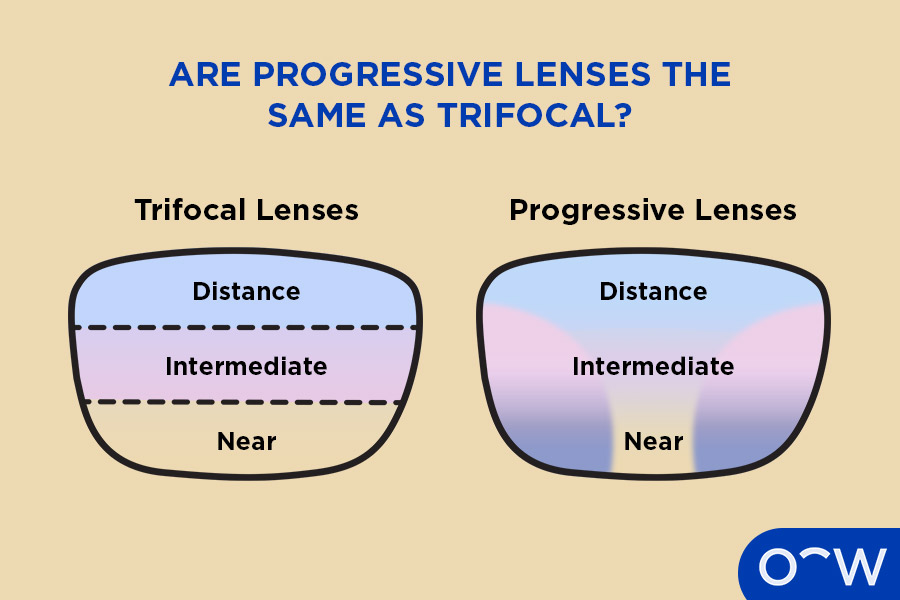
No, progressive lenses are not the same as trifocals. Progressive lenses have no visible lines separating the different vision zones, while trifocal lenses do feature distinct lines to separate the vision zones. However, progressive lenses and trifocal lenses both provide clear vision at multiple distances.
What are the Advantages of Trifocal Lenses?
The advantages of trifocal lenses may include three vision ranges, convenience, computer vision and defined zones. The advantages of trifocal lenses are listed below.
- Three Vision Ranges: Having three vision ranges all in one frame can be an advantage for users, as they can perform all types of their usual tasks that may require distance vision, intermediate vision and near vision.
- Convenience: Convenience is another advantage of trifocal lenses as they offer wearers one frame that provides correction for multiple distances.
- Computer Vision: Computer vision can be another ideal advantage of trifocal lenses, as the use of computers and screens requires intermediate vision. So, those who may need vision correction during driving but also computer use may find trifocal lenses beneficial.
- Defined Zones: Defined zones are a notable advantage of trifocal lenses, as their distinct lines help reduce any blurring from the softer edges that progressive lenses can have.
How can Trifocal Glasses Support Different Viewing Distances?
Trifocal glasses can support different viewing distances by having each lens divided into three distinct vision zones, allowing smooth transitions across distance, intermediate and near vision. The top portion provides clear distance vision for tasks such as driving, while the middle section corrects intermediate vision for viewing a computer screen or reading from a car dashboard. The bottom section features the reading prescription for close-up tasks like reading or phone screens, giving wearers comprehensive visual support across all everyday ranges.
Can Trifocal Lenses Reduce the Need to Switch Between Glasses?
Yes, trifocal lenses can reduce the need to switch between glasses. Trifocal glasses offer three prescription types all in one frame, eliminating the need to change to another frame when switching tasks.
What are the Disadvantages of Trifocal Lenses?
The disadvantages of trifocal lenses can include the adaptation period and rings or flare around lights. Users may need some time to adjust as the brain needs to actively learn to process the three different vision zones. Adapting to trifocal lenses also involves being able to ignore the other vision sections when they’re not in use. This period can take a number of days to several weeks, depending on the user.
Why Do Some People Find Trifocal Glasses Difficult to Adjust To?
Some people may find trifocal glasses difficult to adjust to as they force the eyes and brain to switch between three different vision zones. It may also require being able to use one section for your required task without using the other sections and confusing your brain.
Do Trifocal Lenses Have Visible Lines?
Yes, trifocal lenses do have visible lines, with near vision, intermediate vision and distance vision having their own section in the lenses. Trifocal lenses often have two horizontal lines, but this can depend on the type, as there are different layout designs for certain types of trifocal lenses.
How do Trifocals Compare With Bifocals and Progressives?
Trifocals differ from bifocals because they have more vision zones. Bifocals have two vision zones: one for distance vision and one for near vision. Progressives or multifocals are similar to Trifocals; however, they do not have the visible lines or segments between the different viewing zones and offer a seamless transition.
Are Trifocal Lenses Better Than Progressive Lenses?
No, trifocal lenses are not necessarily better than progressive lenses. The benefit of the lenses largely depends on the different needs of each individual based on their vision health and requirements. If a patient only needs correction for two types of prescriptions, they can opt for progressive lenses and won’t likely need trifocal lenses.
Who can Benefit From Trifocal Glasses?
Those who can benefit from trifocal glasses include adults with presbyopia aged 40 or over and those who frequently need to multitask between different activities that require different types of vision. Individuals who require vision correction at three distances may also want to reduce the need to carry more than one pair of glasses.
When Might Trifocal Lenses Be a Practical Choice?
Trifocal lenses can be a practical choice when you require vision correction for multiple distances that include near vision, intermediate vision and distance vision. If you also want to reduce the need to switch between more than one pair of glasses for different tasks.
Can Trifocal Lenses Be Used for Everyday Activities?
Yes, trifocal lenses can be used for everyday activities. They can offer an ideal range of clear vision and eliminate the need to carry additional glasses with you on your day-to-day activities.