


 1300 164 990
Screen Time and Children: Effects, Guidelines, and Limits
Published on September 24th, 2026
Excessive screen time can affect children’s physical health, cognitive development, and socio-emotional wellbeing. Screen time affects children in different ways, depending on the content viewed, how the child interacts with it, and the child's age, according to the Australian Institute of Family Studies. Screen time guidelines developed by the Australian Government outline the recommended daily screen time limits for children. Parents and guardians can reduce screen time for children by enforcing these limits, creating screen-free zones, and using parental controls. The best ways to keep children’s eyes healthy are to enforce screen time limits, encourage outdoor play, and schedule regular eye tests.
What is Screen Time?
Screen time is the amount of time an individual spends using a device with a screen, such as a phone, tablet, computer, TV, or gaming console. Screen time can include educational, recreational, social, and communication activities. Screen time guidelines, such as the NSW Government Screen Time Guidelines, outline the maximum recommended screen time usage for children.
How Does Screen Time Affect Children?
Screen time can negatively affect children’s health outcomes, including physical health, delayed language development, and socio-emotional wellbeing. Excessive screen time increases a child’s obesity risk, and the blue light emitted by screens can disrupt their sleep patterns, according to the Sydney Children’s Hospital Network. It may also cause language delays and affect their ability to concentrate. Too much screen time has been associated with anxiety and depression in children, and behavioural problems.
Does All Screen Time Affect Children in the Same Way?
No, screen time does not affect children in the same way. The impact of screen time depends on the content, how the child interacts, and their age, according to the Australian Institute of Family Studies. For example, educational screen time can support early learning and problem-solving skills, whereas unrestricted access to social media platforms has been linked to increased rates of anxiety and depression in children, according to the Australian Catholic University (ACU). Screen time guidelines are based on age, mainly because older children can handle more screen time than younger children.
How Much Screen Time Should Kids Have by Age?
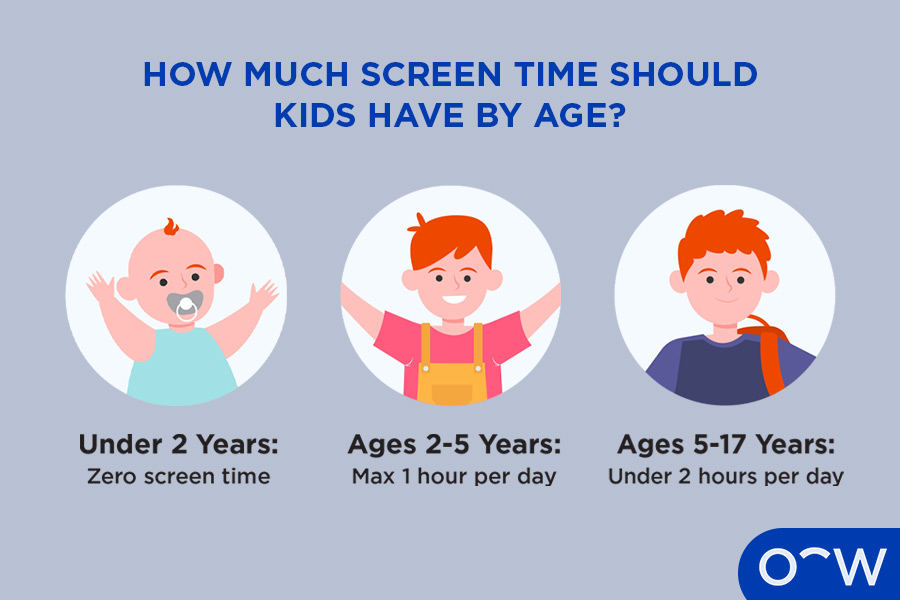
Screen time recommendations for kids vary depending on age and focus on reducing time where possible, sleep, and physical activity, according to the NSW Government. The recommended guidelines are split into children under 2 years old, children aged 2 to 5, and children aged 5 to 17 years old. The screen time recommendations for children are explained below.
- Children under 2: Children under 2 should have no sedentary screen time (inactive or passive time spent in front of a screen), according to the Sydney Children’s Hospital Network. Using screens to talk to family members or friends, when accompanied by an adult, is an exception to this.
- Children aged 2 to 5: Children aged 2 to 5 should have no more than 1 hour of screen time per day, according to the Sydney Children’s Hospital Network.
- Children aged 5 to 17: Children aged 5 to 17 should have no more than 2 hours of sedentary screen time per day, excluding schoolwork, according to the Sydney Children’s Hospital Network.
Should Screen Time Limits Change as Children Get Older?
Yes, screen time limits should change as children get older because their social, developmental, and educational needs change. Older children use screens for educational needs and connection with peers, whereas younger children are more at risk of passive viewing, according to the Royal Children’s Hospital, Melbourne. Reducing strict screen time limits on older children can also benefit their independence and autonomy, as they grow into adults, according to the Raising Children Network. With this in mind, the type of content children view becomes more important as they age, and boundaries should still exist, particularly surrounding sleep hygiene.
What are the Effects of Too Much Screen Time on Children?
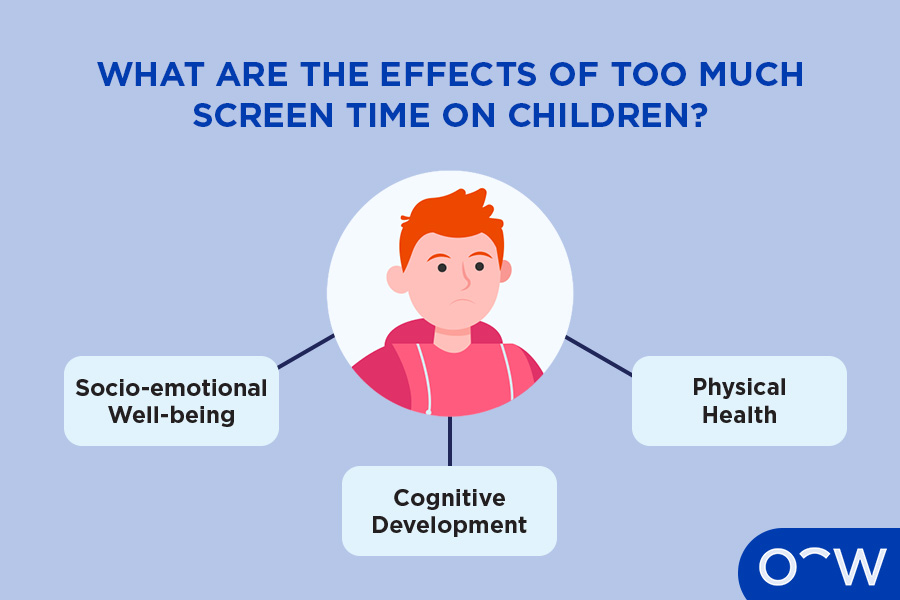
Too much screen time can affect children’s physical health, cognitive development, and socio-emotional wellbeing. The effects of too much screen time on children are explained further below.
- Physical Health: Excessive screen time affects children’s physical health, including weight gain caused by reduced physical activity and junk food consumption paired with screen time, according to the University of Sydney. Children may also experience eye strain and increased risk of myopia, and poor posture, according to the Sydney Children’s Hospital Network.
- Cognitive Development: Excessive screen time affects children’s cognitive development, including speech issues for babies and toddlers, and shorter attention spans. It can also lead to poor sleep hygiene for children, as it can reduce melatonin production and cause tiredness, which can lead to behavioural issues and attention problems.
- Socio-emotional Wellbeing: Excessive screen time affects children’s socio-emotional wellbeing, including increased risk of anxiety and depression and lack of patience.
Why is Screen Time Bad for Kids?
Screen time is not inherently bad for kids, but problems can occur when use becomes excessive or replaces adequate sleep, physical activity, learning, or social interaction. Excessive screen time can harm children’s physical health, sleep schedules, and language development, according to the Australian Institute of Family Studies.
Can Too Much Screen Time Affect Child Development?
Yes, too much screen time can negatively affect a child's cognitive, social-emotional, and physical development. Too much screen time can impair a child’s attention span, working memory, and executive function, as well as cause language delays. Excessive screen time is also associated with higher rates of ADHD, anxiety, and depression in children, and can lead to increased tantrums and behavioural issues. Sedentary screen time, which is inactive or passive time spent in front of a screen, increases a child’s risk of obesity and can affect their sleep routine.
How Does Screen Time Affect Sleep and Daily Activities?
Screen time can affect sleep and daily activities by disrupting the sleep cycle and daily routines. Blue light exposure from screens reduces melatonin in children, which can make it harder for them to fall asleep, according to the Sydney Children’s Hospital Network. When children stay up late on screens, it reduces their sleep time, which can have negative effects, particularly during school days, with possible increased irritability and trouble regulating emotions. When children are tired, they are more likely to choose unhealthy foods with excess sugar and fat, according to the University of Sydney. Screen time can also replace outdoor activities, increasing the risk of obesity in children. Lack of time spent with peers and family due to screen time can have negative consequences for children’s social and communication skills.
Does Screen Use Before Bed Affect Sleep Quality?
Yes, screen use before bed can affect sleep quality and make it harder to fall asleep. Blue light emitted from screens reduces melatonin, which stops you from feeling sleepy, and interactive activities can make it harder for your brain to wind down, according to the Sleep Health Foundation, Australia.
How Can Parents Manage Screen Time for Kids?
Parents can manage screen time for kids by enforcing screen time limits, creating screen-free zones, and using parental controls. Screen time limits can be set based on the recommended guidelines for children set out by the Australian Government. Screen-free zones can include your child’s bedroom or the dinner table. Parental controls are tools such as Apple Screen Time or apps that lock the device when screen time limits are reached.
Do Consistent Screen Time Limits Help Children Build Healthy Habits?
Yes, consistent screen time limits can help children build healthy habits. Consistent screen time limits help children establish a clear routine with digital devices that is balanced with their social and school life. Screen time limits help children practice sleep hygiene and allow more time for outdoor play and family time, according to Sunshine Coast Health. They can also help children establish their own self-regulation around devices.
How Can Screen Time Affect Children's Eyes?
Excessive screen time can cause digital eye strain, dry eyes and increase the risk of myopia development in children, according to UNSW Sydney. Staring at screens too closely for too long can strain the eye muscles and affect how the eye develops, according to ophthalmologist Dr Parth Shah. This increases the risk of developing myopia, which is when the eyes can see clearly up close but struggle to see long distance. Eye strain, headaches, and dry eyes are all associated with extended screen time.
Can Myopia Control Help Children With Screen-Related Eye Strain?
No,
Can Blue Light Glasses Help Kids Who Use Screens?
Blue light glasses may help improve kids’ sleep if worn before bedtime, but they cannot prevent physical eye damage or directly reduce eye strain. Blue light in the evening can affect the sleep cycle, so wearing blue light glasses before bed may help support natural circadian rhythms. Better ways to support your child’s eyes are the 20-20-20 rule, encouraging blinking, and setting screen limits.
What are the Best Ways to Keep Children's Eyes Healthy?
The best ways to keep children’s eyes healthy are to enforce screen time limits, encourage outdoor play, and schedule regular eye tests, according to RANZCO. The ways you can keep your child’s eyes healthy are explained below.
- Enforce Screen Time Limits: Enforcing screen time limits is important, as are healthy screen habits such as the 20-20-20 rule. Devices should be held at arm’s length, and ensure your child has adequate lighting while looking at screens.
- Encourage Outdoor Play: Encouraging 1-2 hours of daily outdoor play is important for your child’s development and may reduce the risk of developing myopia. Ensure your child’s eyes are protected from harmful UV rays with wide-brimmed hats and 100% UV-blocking sunglasses.
- Schedule Regular Eye Tests: Scheduling regular eye tests for your child is necessary to maintain their eye health and monitor their vision. Your child’s eyes should be tested before the age of 4 or starting school, according to RANZCO. Oscar Wylee offers kids' eye tests at select stores.