


 1300 164 990
New Glasses Headache: Can Glasses Cause Headaches?
Published on October 16th, 2026
New glasses can cause temporary headaches while your eyes adjust to a new prescription or lens. Headaches can also result from a poor frame fit, incorrect lens power, or inaccurate measurements. If headaches persist or occur alongside red flag symptoms such as persistent double vision, you should check your glasses with an optometrist.
It is important to note that Oscar Wylee offers optometry services only; this article is for educational purposes only and is not a substitute for professional medical advice, diagnosis, or treatment.
Can New Glasses Cause Headaches?
Yes, new glasses can sometimes cause temporary headaches while your eyes and brain adjust to a new prescription or lens. Headaches can also occur if the prescription, pupillary distance, or frame fit is incorrect. If headaches persist, are severe, or occur with blurred or double vision, have your glasses and prescription checked by an optometrist.
Is a Headache Normal When Adjusting to New Glasses?
Yes, a mild headache is normal when adjusting to new glasses within the first 1-2 weeks. Single vision lenses usually only take 1-2 weeks to adjust to, whereas new progressive or multifocal lenses may take up to 4 weeks for full adjustment. Some tips during the adjustment period are wearing your glasses consistently, avoiding switching back to your old glasses, and moving your entire head (not just your eyes) when looking around. Additionally, if you have been wearing your old glasses all day before picking up your new frames, try them on in the morning instead, when your eyes are refreshed.
What Causes Headaches With New Glasses?
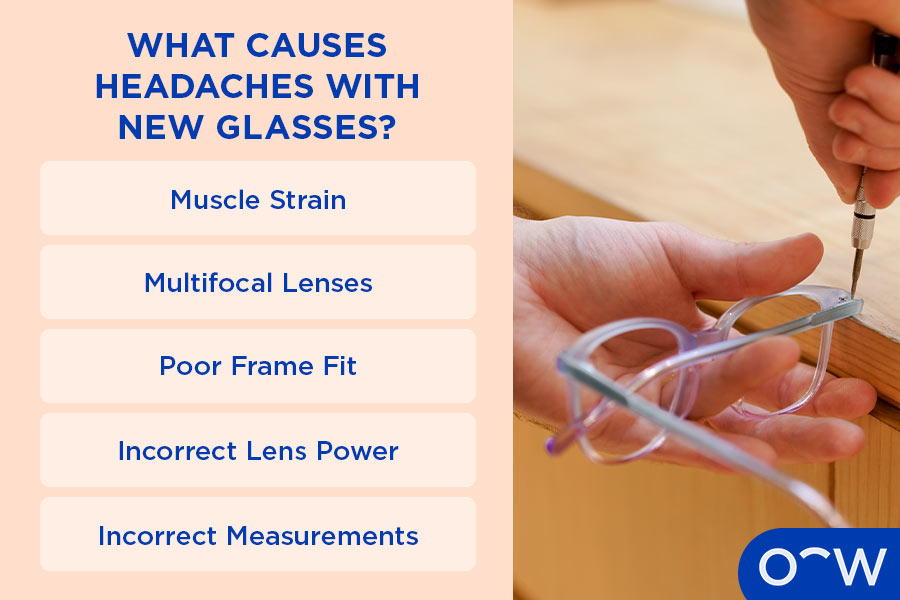
The causes of headaches with new glasses include muscle strain, switching to multifocal lenses, poor frame fit, incorrect lens power, and inaccurate measurements. These headache symptoms with new glasses are explained below.
- Muscle Strain: Your eye muscles must work differently to focus through new lenses.
- Multifocal Lenses: Switching to progressives or bifocals forces your eyes to learn new viewing zones.
- Poor Frame Fit: Tight frames can pinch your nose or squeeze your temples, causing physical tension.
- Incorrect Lens Power: An incorrect lens power causes your eyes to overwork to compensate for visual mismatch.
- Inaccurate Measurements: An off pupillary distance (PD) or an incorrect prescription creates continuous visual strain.
Can a New Prescription Cause Headaches?
Yes, a new prescription can cause headaches as part of the normal temporary adjustment period. Common causes of new prescription headaches include prescription changes, new lens types, and wrong measurements. Mild new prescription headaches usually only last 1-2 weeks.
Can the Wrong Glasses Prescription Cause Headaches?
Yes, the wrong glasses prescription can cause headaches. A wrong prescription can cause headaches due to eye strain, depth perception and alignment issues, and frame and fit problems. If new glasses headaches last more than 2 weeks, your prescription may be incorrect.
What Does a New Glasses Headache Feel Like?
A new glasses headache usually feels like a steady dull ache around the temples and forehead, which can intensify in the evenings. People may also feel tired and have sore eyes, and a similar ache behind them. These symptoms can be accompanied by blurred vision, dizziness, and nausea.
What Other Symptoms Can Come With a New Glasses Headache?
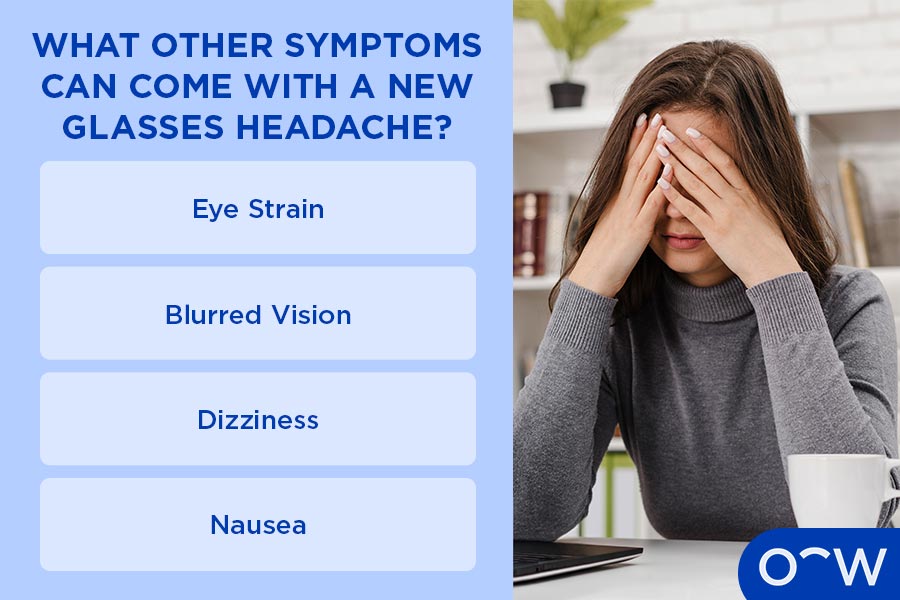
Other symptoms that can come with a new glasses headache include eye strain, blurred vision, dizziness, and nausea. These symptoms are explained below.
- Eye Strain: Eye strain refers to tired or uncomfortable eyes.
- Blurred Vision: Blurred vision means having difficulty seeing clearly.
- Dizziness: Dizziness refers to feeling unsteady or lightheaded.
- Nausea: Nausea refers to feeling physically sick, usually associated with significant visual discomfort.
1. Eye Strain
Eye strain can be an accompanying symptom with a new glasses headache, characterised by tired, sore, or heavy-feeling eyes. This may be exacerbated by reading or looking at screens.
2. Blurred Vision
Blurred vision and visual distortions are other symptoms that can come with a new glasses headache while your eyes adjust.
3. Dizziness
Mild dizziness or queasiness is normal as your brain recalibrates how it views the world.
4. Nausea
Mild nausea and lightheadedness are normal symptoms that can accompany new glasses headaches during the adjustment period. Persistent nausea should be checked by an optometrist.
How Long Do Headaches From New Glasses Last?
Headaches from new glasses generally last 1-2 weeks. For standard single-vision glasses or slight prescription changes, headaches should disappear completely by the end of the first or second week. For progressive or bifocal lenses, you may take longer to adjust, sometimes up to 4 weeks.
Should Headaches Improve as You Adjust to New Glasses?
Yes, headaches should improve within 1-2 weeks as you adjust to new glasses. Most mild headaches should settle within 1-2 weeks for standard single-vision prescriptions, although it could take 2-4 weeks for new progressive or bifocal wearers.
Can Glasses Frames Cause Headaches?
Yes, glasses frames can cause headaches due to physical pressure on the head or misalignment. If your frames are too tight, they can create pressure on your head and lead to tension headaches around the temples. Similarly, nose pads can pinch the sides of your nose if they are too tight, which can cause soreness. Temple arms may also cause mild headaches if too tight, and if your glasses are misaligned, it may lead to distortion and eye strain.
Can Tight Glasses Put Pressure on Your Head?
Yes, tight glasses can put pressure on your head, temples, nose, or behind the ears. Continuous pressure can cause discomfort and may contribute to headaches. An optical dispenser can adjust the frame for a more comfortable fit.
How can you Get Rid of a Headache From New Glasses?
To get rid of a headache from new glasses, wear them consistently, rest your eyes, and follow the 20-20-20 rule. These new glasses headache tips are explained below.
- Wear Them Consistently: Wear your new glasses consistently by putting them on first thing and wearing them all day. Avoid switching back and forth to your old glasses.
- Rest Your Eyes: Rest your eyes by taking short breaks from your glasses. Try sitting in a dimly lit room to further relax your eyes.
- Follow the 20-20-20 Rule: Follow the 20-20-20 rule, where you look at something 20 feet (6 metres) away for 20 seconds every 20 minutes.
What Can Help Relieve a Headache From New Glasses?
To help relieve a headache from new glasses, try allowing adjustment time, getting a frame adjustment, checking your prescription, and taking visual breaks. These relief tips are explained below.
- Adjustment Time: Allow adjustment time for your eyes if symptoms are mild.
- Frame Adjustment: A frame adjustment may relieve pressure headaches. Oscar Wylee optical dispensers can professionally adjust your frames.
- Check Your Prescription: Check that your prescription is correct if your symptoms persist.
- Visual Breaks: Take regular visual breaks during prolonged near viewing, such as reading or screen time.
Should you Stop Wearing New Glasses if They Cause Headaches?
No, you should not stop wearing glasses if they cause headaches, as it is usually part of the adjustment process. A mild headache while wearing your new glasses is normal for up to 2 weeks, as your eyes adjust. If your glasses are pinching your face, they might be causing a tension headache, and you should get them adjusted. Stop wearing your glasses if headaches last over 2 weeks, or if you experience sharp, severe pain, double vision, or nausea.
When Should You Get Your New Glasses Checked?
You should get your new glasses checked if your adjustment period and/or symptoms last over 2 weeks or you experience prescription or fit issues. If headaches, dizziness, nausea, blurriness, or eye strain last beyond 2 weeks, consult your optometrist. You should also visit your optometrist if you notice prescription or fit issues such as a misaligned optical centre, slipping frames, or suspected script error.
When Does a Headache With New Glasses Need Professional Advice?
A headache with new glasses needs professional advice from an optometrist if it lasts more than 2 weeks, gets progressively worse, or is accompanied by double vision, severe dizziness, or nausea. New glasses headaches are usually mild and should fade within 1-2 weeks. If headaches persist longer than this, you should consult your optometrist for professional advice. If the headache pain increases with each day, instead of improving, this is another reason to go back to your optometrist. Finally, you should consult your doctor or optometrist immediately if headaches are accompanied by red flag symptoms such as persistent double vision, severe balance issues, vertigo, or ongoing nausea.
Could Persistent Headaches Mean Your Glasses Need Adjusting?
Yes, persistent headaches can mean your glasses need adjusting. If your glasses do not fit properly, it can put extra strain on your eyes and facial muscles, which can lead to persistent headaches. Oscar Wylee optical dispensers are professionally trained to adjust your glasses, and a purchase of Oscar Wylee frames means lifetime adjustments on us!