


 1300 164 990
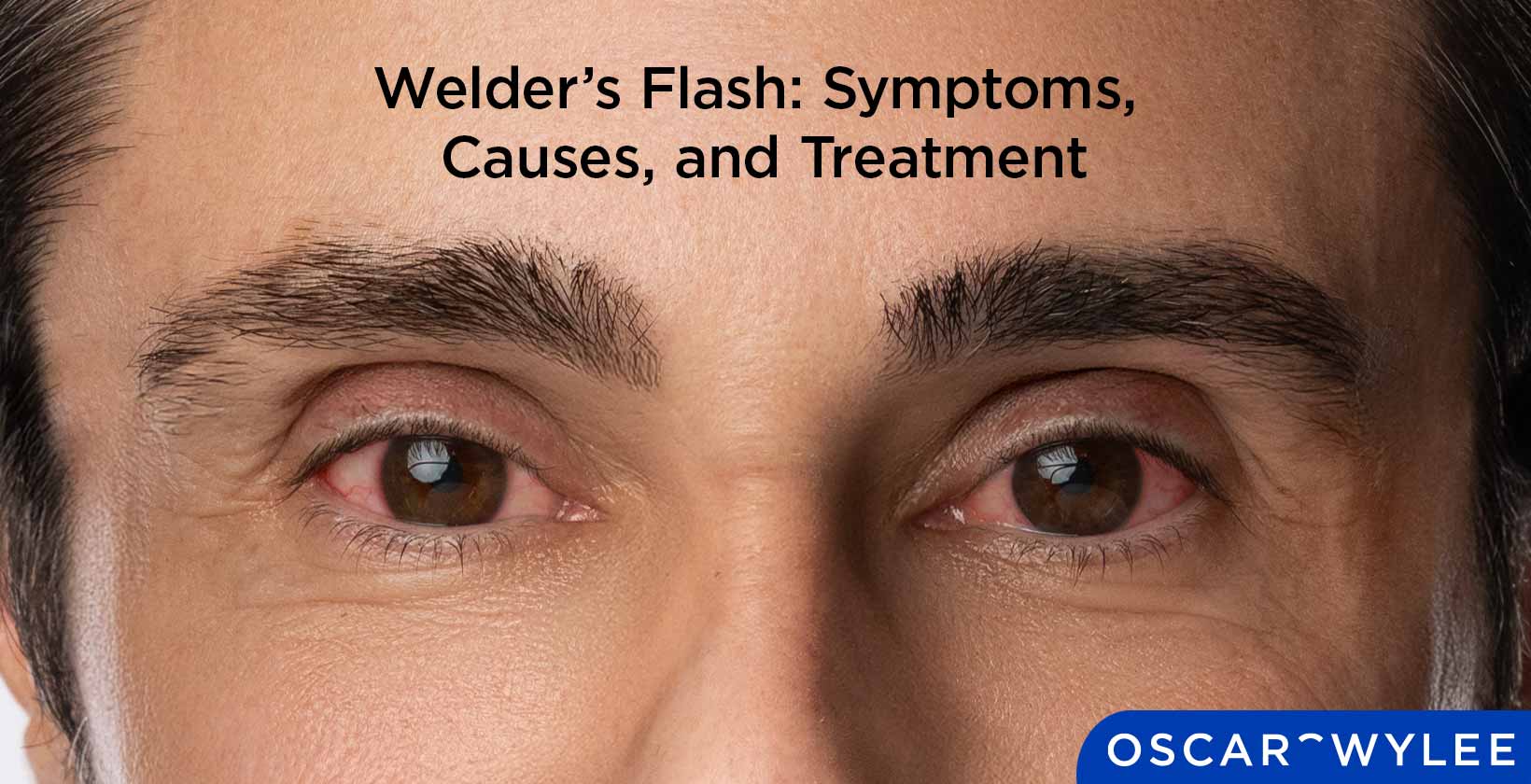
Welder's Flash: Symptoms, Causes, and Treatment
Published on November 27th, 2026
Welder's flash is a painful inflammation of the cornea caused by ultraviolet light (UV) exposure during welding. Symptoms of welder's flash include intense eye pain, gritty sensation, redness, excessive tearing, photophobia, blurred vision, and headaches. Welder's flash is different from other eye injuries because it is not caused by physical impact, sharp objects, or chemical splashes, and has a delayed onset of symptoms.
It is important to note that Oscar Wylee offers optometry services only; this article is for educational purposes only and is not a substitute for professional medical advice, diagnosis, or treatment.
What is Welder's Flash?
Welder's flash, also known as arc eye or photokeratitis, is a painful inflammation of the cornea caused by intense exposure to ultraviolet (UV) radiation from a welding torch or arc, according to the Better Health Channel. Welder's flash is technically an eye sunburn. Symptoms may include intense eye pain, gritty sensation, redness, excessive tearing, photophobia, blurred vision, and headaches. Although many cases heal within 24-48 hours, severe exposure or persistent symptoms may require medical evaluation to rule out other eye injuries.
What Causes a Flash Burn from Welding?
A flash burn from welding, or welder's flash, is caused by intense exposure to ultraviolet (UV) radiation emitted by the welding arc, according to the Better Health Channel. The welding arc is an intense, localised electric discharge similar to a sustained flash of lightning that jumps across a small gap between an electrode and the base metal during welding. If you look at an unprotected welding arc, the high-energy UV light is absorbed by the surface of the eye, specifically the cornea's epithelial layer and the conjunctiva.
Can Ultraviolet Light Damage the Cornea?
Yes, ultraviolet light from welding arcs can damage the cornea, according to WorkSafe Victoria. The electric arc emits high-energy UV radiation, which is absorbed by the outer layers of the eye, primarily the corneal epithelium. Excessive exposure to UV light causes cell death in the surface cells of the cornea, leading to painful inflammation, according to the Better Health Channel. Although the surface epithelium usually heals on its own, repeated exposure can risk long-term complications such as cataracts and surface eye cancers.
What are the Common Symptoms of Welder's Flash?
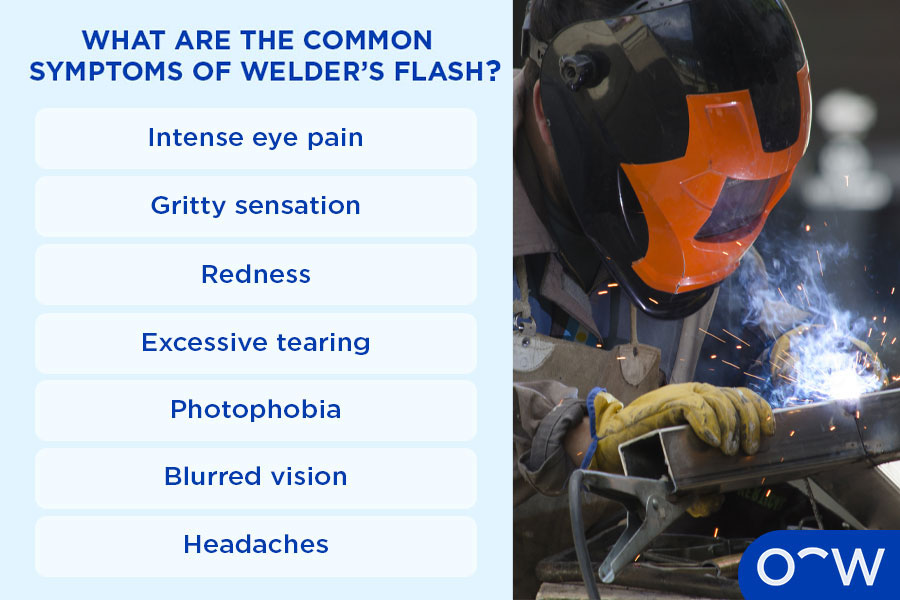
Common symptoms of welder's flash include intense eye pain, gritty sensation, redness, excessive tearing, photophobia, blurred vision, and headaches. Welder's flash symptoms usually appear 3 to 12 hours after ultraviolet (UV) exposure. Common welder's flash symptoms are explained further below.
1. Intense Eye Pain
Intense eye pain or a burning sensation ranging from mild to severe is one of the most common symptoms of welder's flash.
2. Gritty Sensation
An uncomfortable gritty or 'sand in the eye' sensation often develops as the surface of the eye becomes irritated.
3. Redness
Redness or bloodshot eyes, accompanied by swollen membranes or eyelids, frequently points to UV exposure.
4. Excessive Tearing
Excessive tearing and watering (lacrimation) is a typical reflex as the eyes try to soothe themselves.
5. Photophobia
Photophobia, or an abnormal sensitivity to light, makes bright environments difficult to tolerate.
6. Blurred Vision
Blurred vision or temporary visual changes can also affect your sight while the cornea heals.
7. Headaches
Headaches or eyelid twitching (blepharospasm) sometimes accompany the eye strain.
How is Welder's Flash Different From Other Eye Injuries?
Welder's flash is different from other eye injuries because it is technically a 'sunburn' of the cornea caused by intense UV exposure, which makes it different in cause, location, and timeline from mechanical, chemical, or deep-retinal injuries. Welder's flash damages the outer layer of the cornea, whereas injuries from looking at the sun during a solar eclipse burn the sensitive retina at the back of the eye, according to the Better Health Channel. Welder's flash almost always heals on its own within 24-48 hours without scarring. Also, unlike a physical impact, welder's flash is painless when it happens, with symptoms taking 30 minutes to 12 hours to appear. Welder's flash almost always affects both eyes at the same time, unlike other eye injuries, according to Queensland Health.
What Makes Arc Eye Different from a Regular Eye Burn?
Arc eye, or welder's flash, is different from a regular eye burn (radiation burn) because it is caused by invisible UV light rather than a direct thermal or chemical injury. Welder's flash is caused by intense UV radiation, typically from a welding arc or sunbeds, that damages the outer corneal cells. By contrast, regular eye burns are caused by direct contact with physical heat such as flames or steam, or caustic substances such as acid.
Can Welding Sparks Cause a Different Type of Eye Injury?
Yes, welding sparks cause a different type of eye injury that is distinct from welder's eye, according to WorkSafe Queensland. Welding sparks can cause thermal skin/eyelid burns, corneal foreign bodies or penetrating ocular trauma caused by hot molten metal spatter, slag, or flying debris hitting the eye.
How Do You Treat Welder's Flash at Home?
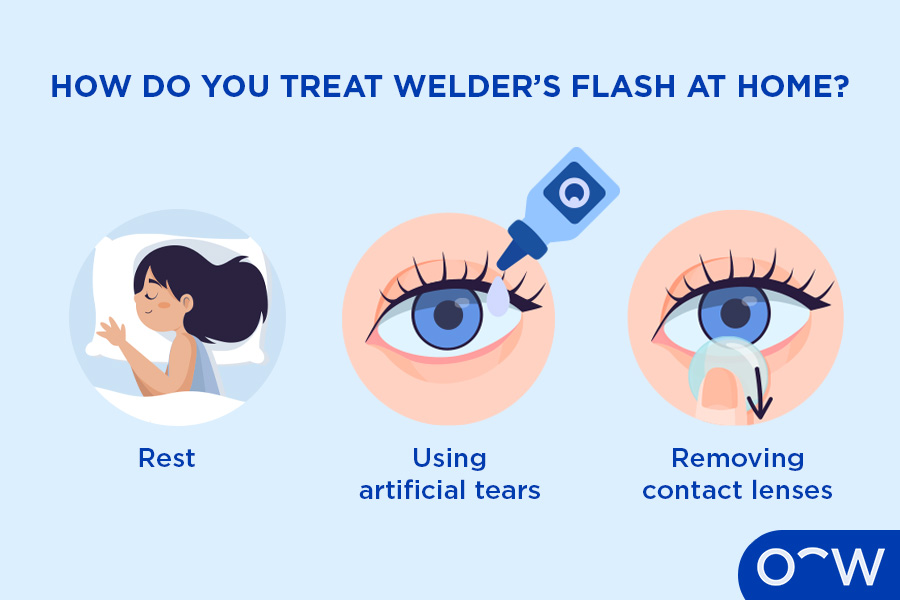
Any suspected welding eye injury should first be assessed by a doctor or optometrist to rule out metal foreign bodies or deeper eye damage. Once diagnosed, mild cases of welder's flash are typically managed at home by rest, removing contact lenses, applying cold compresses, using artificial tears, managing pain, and wearing sunglasses. The ways to treat welder's flash at home are explained below.
- Rest: Rest is very important to help ease surface inflammation while the cornea heals. Lie in a dark or dim room with your eyes closed and avoid screens.
- Remove Contact Lenses: Contact lenses should be removed immediately and not be worn until your eyes are completely healed and cleared by an eye care professional, according to Queensland Health.
- Apply Cold Compresses: Applying a clean, cold towel to your closed eyes for 10-15 minutes at a time can help reduce swelling and heat.
- Use Artificial Tears: Preservative-free artificial tears can help soothe the eyes and reduce gritty sensations. Always follow the product label or your optometrist's advice.
- Manage Pain: Your pharmacist or doctor may recommend suitable over-the-counter pain relief, such as paracetamol. Always read the label and follow the directions for use.
- Wear Sunglasses: Wearing sunglasses when outside or in bright conditions can help ease light sensitivity (photophobia), according to Queensland Health.
Can Artificial Tears Help Soothe Irritated Eyes?
Yes, artificial tears can help soothe irritated eyes from welder's flash by lubricating the eye and easing gritty, burning sensations, according to the Better Health Channel. Artificial tears provide a protective moisture cushion while the cornea recovers. If recommended by your doctor, pharmacist, or optometrist, use preservative-free artificial tears, especially if you need to reapply frequently, or ask about thicker lubricating gels or ointments for nighttime comfort. Always follow the directions for use on the packaging.
When Should You Seek Medical Care for Welder's Flash?
You should seek medical care or visit an emergency department for welder's flash if you experience worsening or severe eye pain, changes in vision, worsening glare, unusual discharge, a foreign body sensation, or other systemic symptoms. These red flag symptoms you should seek medical attention for are explained below.
- Worsening or Severe Pain: Worsening or severe eye pain that does not improve even after taking pain medication is a red flag symptom, according to the Better Health Channel.
- Changes in Vision: Changes in vision, including a sudden loss of vision, significant blurred vision, or black spots, according to Healthy WA.
- Worsening Glare: Worsening glare or extreme light sensitivity that makes it hard to keep the eyes open, according to the National Centre for Farmer Health.
- Unusual Discharge: Unusual discharge from the eye, such as pus or bloody fluid.
- Foreign Body Sensation: A foreign body sensation that feels like something is stuck in the eye, even after flushing.
- Other Systemic Symptoms: Other systemic symptoms such as a fever, physical trauma, or chemical exposure.
How Can You Tell if a Welding Eye Burn is Severe?
You can tell if a welding eye burn is severe if you experience intense or worsening symptoms, according to Queensland Health. The warning signs of a severe welding eye burn are worsening pain, significant changes in vision, visual disturbances, abnormal discharge, an inability to tolerate light, and systemic signs such as a fever. Moderate flash burns usually cause gritty sensations, bloodshot eyes, and moderate pain that heals within 24-48 hours, according to the Better Health Channel. If you suspect a severe eye burn, don't rub your eyes, take out contact lenses, and seek urgent medical evaluation from a GP, an eye care professional, or an emergency department.
Can Untreated Corneal Damage Affect Your Vision?
Yes, untreated corneal damage from a welder's flash can affect your vision and potentially lead to serious complications, according to the Better Health Channel. In most mild cases, the surface layer of the cornea can repair within 24-48 hours and typically heals without scarring. However, if more severe cases are left untreated, there is a risk of secondary infections such as keratitis and potentially permanent visual impairment or vision loss in severe cases.
How Long Does Welder's Flash Last?
Welder's flash typically lasts 24 to 48 hours, but mild or severe cases can take anywhere from 24 to 72 hours to completely heal, according to the Better Health Channel. Pain does not happen immediately, and instead, usually sets in 6 to 12 hours after exposure to the UV arc, which can wake you up in the middle of the night. Symptoms such as a gritty sensation, severe light sensitivity, watering, and pain usually peak and then resolve within 1 to 2 days. The cornea can repair itself within 1 to 2 days without scarring, as long as no secondary infection develops.
What Affects the Healing Time of a Flash Burn?
The healing time of a flash burn is mainly affected by its severity and the efficiency of treatment, according to the Better Health Channel. Mild surface exposure heals within 24-48 hours, whereas more severe UV exposure can extend recovery to 3 to 5 days or longer. Untreated flash burns can develop infections, which significantly delay healing and increase the risk of vision loss, according to Queensland Health. Resting the eyes and following your clinician's care plan, such as using preservative-free artificial tears or any prescribed medications, can help increase comfort and support recovery. General health conditions, as well as age and pre-existing eye conditions, can affect how fast the cornea heals.
Can Welder's Flash Symptoms Last Longer than Two Days?
Yes, welder's flash symptoms can last longer than two days if severe, according to the Better Health Channel. If UV exposure was intense or prolonged, recovery can take up to 72 hours or longer. If your pain worsens or symptoms last longer than a couple of days without improvement, it could indicate a secondary corneal infection or more serious damage.
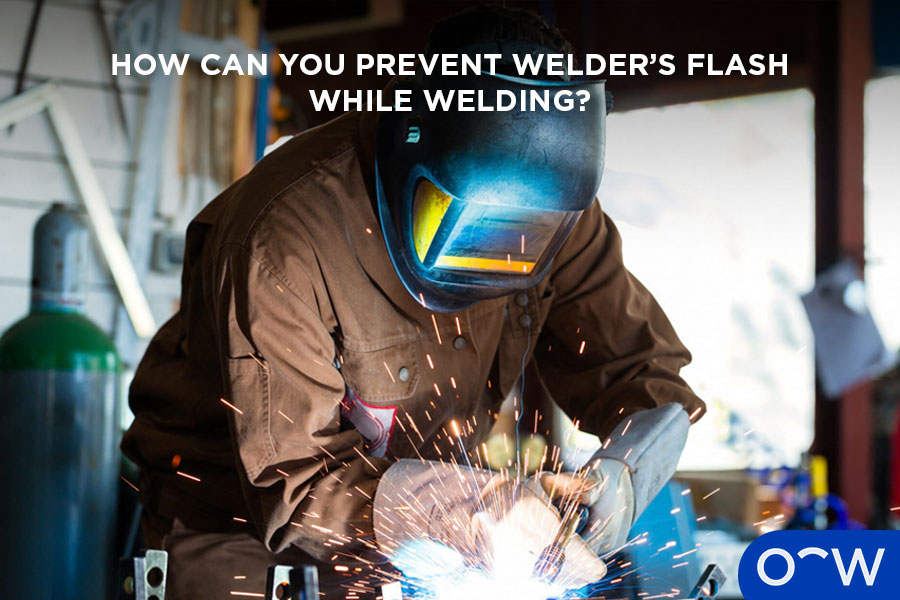
How Can You Prevent Welder's Flash While Welding?
To prevent welder's flash while welding, use approved protective gear, set up physical barriers, and follow workplace safety standards. The ways you can protect yourself from welder's flash are explained below.
- Use Approved Protective Gear: Use approved protective gear that complies with Australian and New Zealand Standards, including AS/NZS 1338.1 and AS/NZS 1337 / AS/NZS 1337.1. Use a helmet with a properly rated filter shade that covers your entire face.
- Set Up Physical Barriers: Set up physical barriers such as welding curtains and screens to protect coworkers and passersby, and create restricted zones in the workplace.
- Follow Workplace Safety Standards: Follow workplace safety standards, including using automated or robotic welding equipment and, where possible, using alternative metal-joining methods.
What Eye Protection Helps Prevent Arc Eye?
To protect against arc eye during welding, you need eye protection fitted with a proper optical filter rated under Australian Standard AS/NZS 1338.1 (or AS 1338), according to Safe Work Australia. Recommended eye protection includes welding helmets with AS/NZS 1338.1 shade filters, auto-darkening helmets, and welding goggles or shields. Bystander protection is also important; nearby workers and onlookers must also be shielded using welding screens, curtains, or wear a minimum of Shade 5 safety glasses to prevent secondary flash burns.
Can Indirect Exposure to Welding Light Burn Your Eyes?
Yes, indirect exposure to welding light can burn your eyes, according to WorkSafe Victoria. During electric arc welding, the arc emits strong UV radiation, which can bounce off surfaces nearby. You do not have to look directly at the torch or arc to sustain an injury, and simply being in close proximity can cause UV rays to reflect into your eyes. Indirect exposure can still cause welder's flash, according to Queensland Health.