


 1300 164 990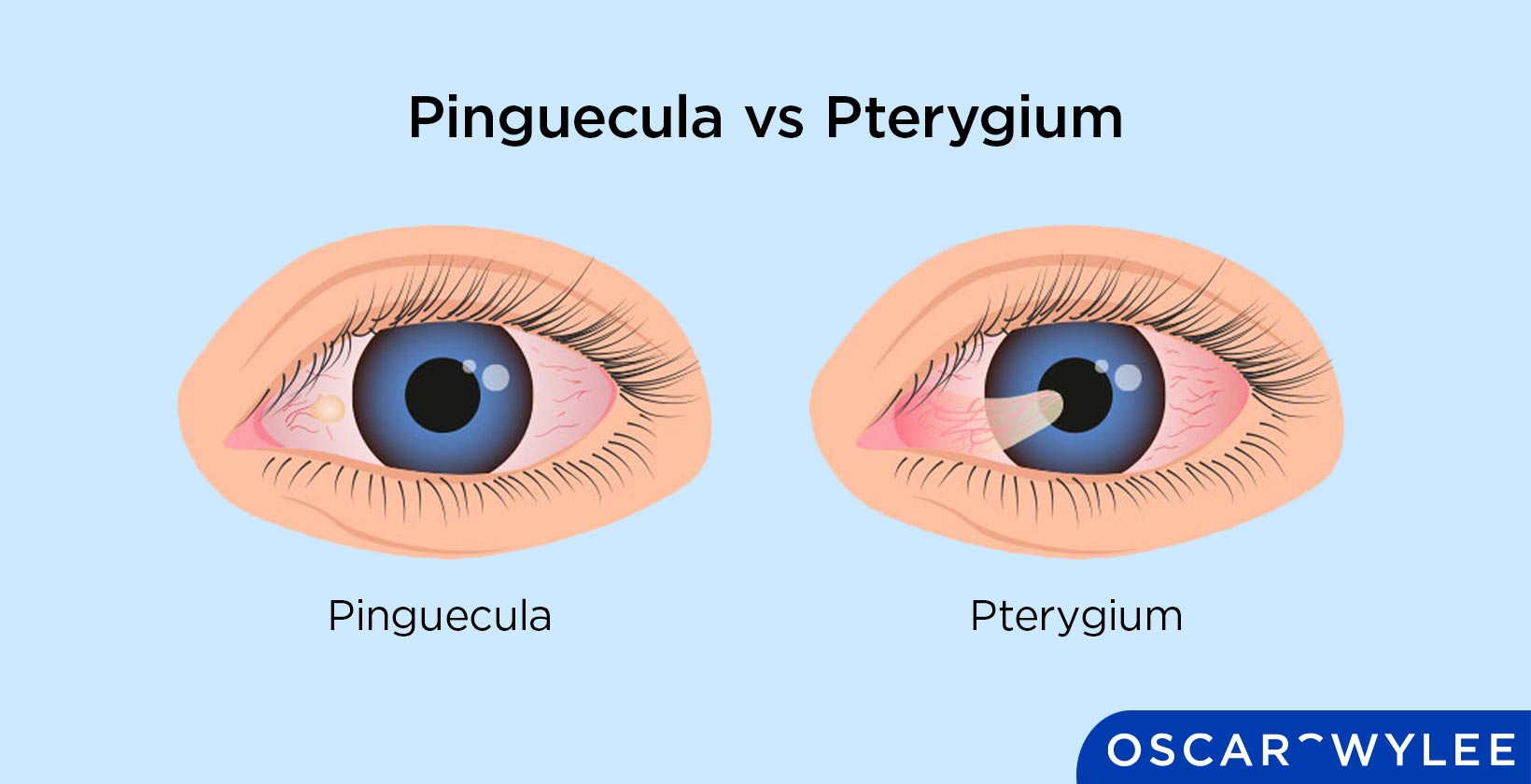
Pinguecula vs Pterygium
Published on July 2nd, 2026
Pinguecula and pterygium are common, non-cancerous growths that form on the conjunctiva, or white part of the eye. The main difference between pinguecula and pterygium is that pinguecula grows solely on the conjunctiva, while pterygium grows over the cornea as well. They are mainly caused by long-term exposure to UV rays, wind, and dust, and appear more commonly in those who spend extended time outdoors. The main symptoms of pinguecula and pterygium are the visible growths on the eye, which may be accompanied by dryness, irritation, a foreign body sensation, redness, and swelling. UV400 lenses are recommended for prevention because they block nearly 100% of UVA and UVB radiation. The recommended sunglass styles to protect against UV exposure are wraparound sunglasses, large frame sunglasses, close-fitting sunglasses, UV400 sunglasses, and UV400 polarised sunglasses.
It is important to note that Oscar Wylee offers optometry services only; this article is for educational purposes only and is not a substitute for professional medical advice, diagnosis, or treatment.
What Are Pinguecula and Pterygium?
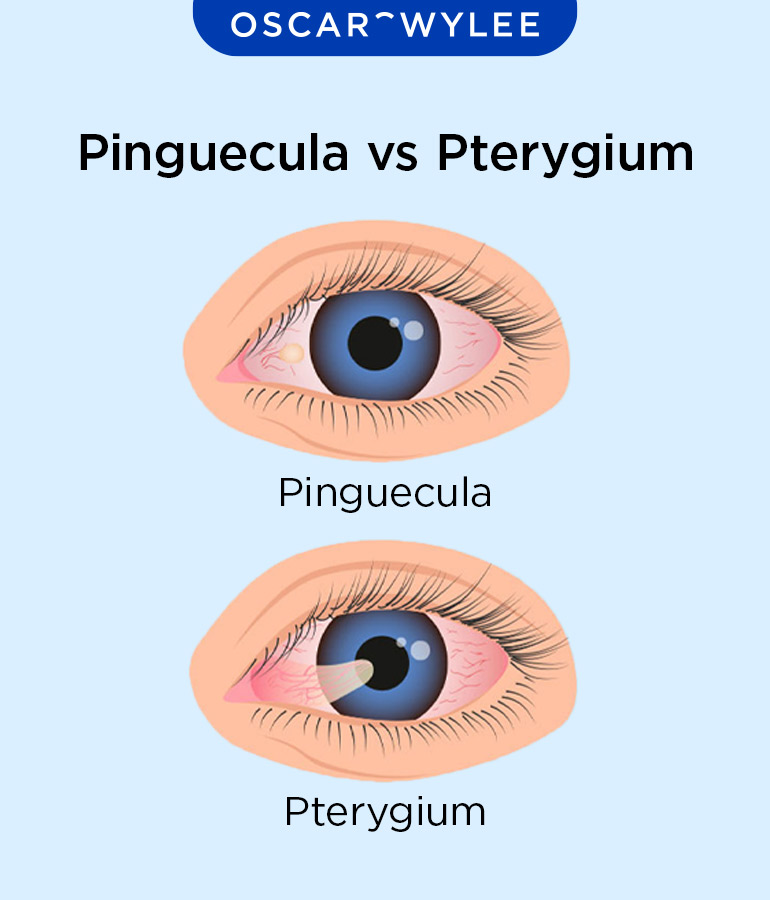
Pinguecula and pterygium are both common, non-cancerous growths on the eye. A pinguecula is a small yellowish growth on the white of the eye, and a pterygium is a fleshy tissue that grows over the cornea, according to the North Shore Eye Centre, Sydney. Pinguecula and pterygium differ in their size, appearance, and effects on vision. If you notice a new growth on or around your eye, we recommend you book in to see your optometrist immediately.
How Do These Eye Growths Develop?
Pinguecula and pterygium primarily develop due to long-term UV exposure and chronic irritation from wind, dust, and dry environments, according to the Better Health Channel, Victoria. Both pinguecula and pterygium can be made worse by chronic dryness and irritation.
Are Pinguecula and Pterygium The Same Condition?
No, pinguecula and pterygium are not the same condition, but they are both common, non-cancerous growths on the conjunctiva. A pinguecula is a small yellowish growth on the white of the eye, and a pterygium is a fleshy tissue that grows over the cornea, according to the North Shore Eye Centre, Sydney. A pinguecula can turn into a pterygium in some cases.
What Does a Pinguecula Look Like Compared to a Pterygium?
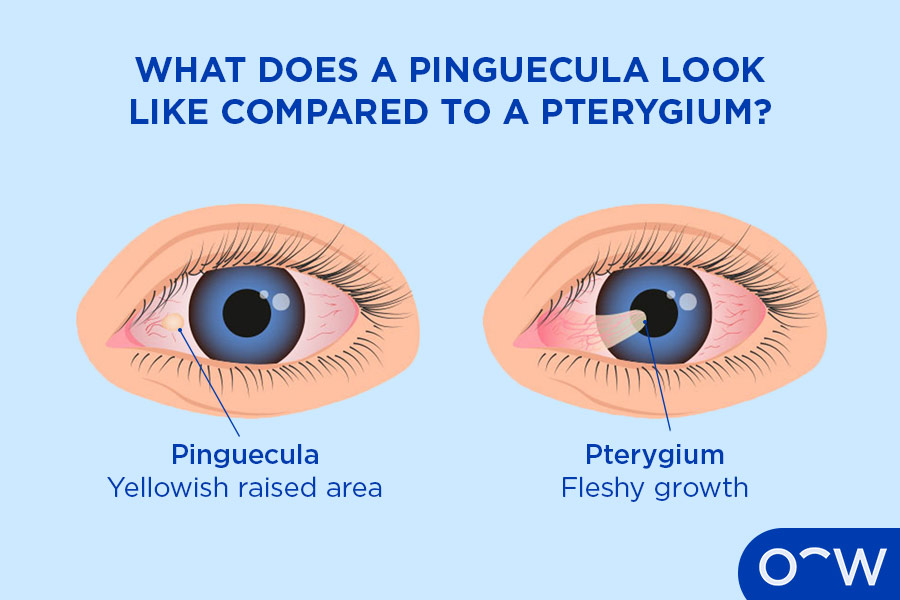
A pinguecula stays on the conjunctiva, or white part of the eye, whereas a pterygium grows over the cornea, the clear surface covering the coloured part of the eye, according to the Royal Australian and New Zealand College of Ophthalmologists (RANZCO). Pinguecula are described as a small, raised, yellowish bump, whereas a pterygium is described as a pink, fleshy, triangular-shaped growth. Pterygium also often appears redder and more inflamed as it has a visible blood supply, whereas pinguecula does not often have clear blood vessels.
Where Do These Growths Usually Appear on the Eye?
These growths usually appear on the white part of the eye, called the conjunctiva. Pinguecula and pterygium most commonly appear on the side of the eye closest to the nose, but can also appear on the other side. Pterygium differs from pinguecula in that, although it also starts growing on the conjunctiva, it extends outwards and grows over the cornea. Both eyes can be affected by pinguecula and pterygium.
What Role Does The Conjunctiva Play in Pinguecula and Pterygium?
The conjunctiva is the tissue where pinguecula and pterygium grow. The conjunctiva is a thin, clear membrane that covers the inside of the eyelid, according to the Royal Australian College of General Practitioners (RACGP). Its role is to protect and cover the eye surface.
Can Both Conditions Affect One Eye or Both Eyes?
Yes, both conditions can affect one eye or both eyes. The severity of pinguecula and pterygium may differ between eyes. When pinguecula and pterygium appear in both eyes, they often appear simultaneously, as they are due to environmental factors.
What Causes Pinguecula and Pterygium?
Pinguecula and pterygium are caused by long-term exposure to UV light and environmental irritants, and may also be caused by chronic dry eye. The causes of pinguecula and pterygium are explained below.
- UV light: UV light exposure is the main cause of pinguecula and pterygium. People who have extended exposure to UV light, such as those who work outdoors, are at a higher risk of developing these eye growths.
- Environmental irritants: Environmental irritants such as wind, dust, and dry air can accelerate the growth of pinguecula and pterygium. Prolonged exposure to these environmental irritants can dry the eyes out, which promotes the growth of pinguecula and pterygium.
- Chronic dry eye: Chronic dry eye can worsen irritation of the eye and promote the growth of pinguecula and pterygium.
How Does Sun Exposure Contribute to Their Formation?
Sun exposure contributes to the formation of pinguecula and pterygium because it causes UV radiation damage to the conjunctiva, which damages surface eye tissues over time. Sun damage changes the eye tissues gradually over time, meaning risk increases with prolonged exposure to UV rays. Sun protection, such as sunglasses, is important to protect your eyes and reduce the risk of developing eye growths such as pinguecula and pterygium.
Why are UV400 Lenses Recommended for Preventing Pinguecula and Pterygium?
UV400 lenses are recommended for preventing pinguecula and pterygium because they block almost 100% of UVA and UVB rays, which protects eye tissues from sun damage. Pinguecula and pterygium are mainly triggered and worsened by long-term sun exposure; UV400 lenses are recommended to prevent the benign growths.
Which Sunglasses Styles Provide Better Protection Against UV Exposure?
The sunglasses styles that provide better protection against UV exposure are wraparound sunglasses, large frame sunglasses, close-fitting sunglasses, UV400 sunglasses, and polarised UV400 sunglasses. These sunglasses styles that provide better protection against UV exposure are explained below.
- Wraparound Sunglasses: Wraparound sunglasses can help reduce sun exposure, preventing UV rays from entering the sides, top, and bottom, according to Cancer Council NSW. Oscar Wylee has a range of wraparound style sunglasses, including our popular Stevo frames in Obsidian Matte Black.
- Large Frame Sunglasses: Large frame sunglasses help cover more eye area, reducing UV radiation and glare, according to Cancer Council NSW. Oscar Wylee has a range of oversized sunglasses, including our popular Bale frames in Gilded Tortoise.
- Close-Fitting Sunglasses: Close-fitting sunglasses limit sun exposure, reducing UV radiation and glare, according to Cancer Council NSW.
- UV400 Sunglasses: UV400 sunglasses block harmful UV radiation from entering the eyes.
- Polarised UV400 Sunglasses: Polarised UV400 sunglasses combine glare reduction and UV protection, according to Cancer Council NSW.

Can Dry Eyes Increase the Risk of Developing Pinguecula and Pterygium?
Yes, dry eyes can increase the risk of developing pinguecula and pterygium. This is due to the compromised tear film that comes with the condition, which can lead to friction and micro-inflammation on the eye. This can accelerate changes to the surface of the eye caused by the environment.
What Symptoms Can Help Tell Them Apart?
The symptoms that can help tell them apart may primarily be the involvement of the cornea and appearance. A pterygium can grow over the cornea and affect vision, while a pinguecula develops on the conjunctiva (the clear layer over the sclera of the eye) and typically remains there. A pterygium usually looks like fleshy tissue, and a pinguecula is often characterised by its yellowish and raised nature. Both of these growths can present similar symptoms such as irritation, redness, inflammation and some discomfort.
Does a Pinguecula Always Cause Symptoms?
No, a pinguecula does not always cause symptoms. A pinguecula rarely requires surgical intervention and may only raise cosmetic concerns. If symptoms of inflammation do arise, certain types of eye drops are considered effective, according to Somnath and Tripathy (2023) in their research paper on Pinguecula in the National Library of Medicine. Pinguecula causes can include several factors, including sun exposure, environmental irritants, chronic dry eye, aging, and contact lens wear.
How is Pinguecula vs Pterygium Diagnosed?
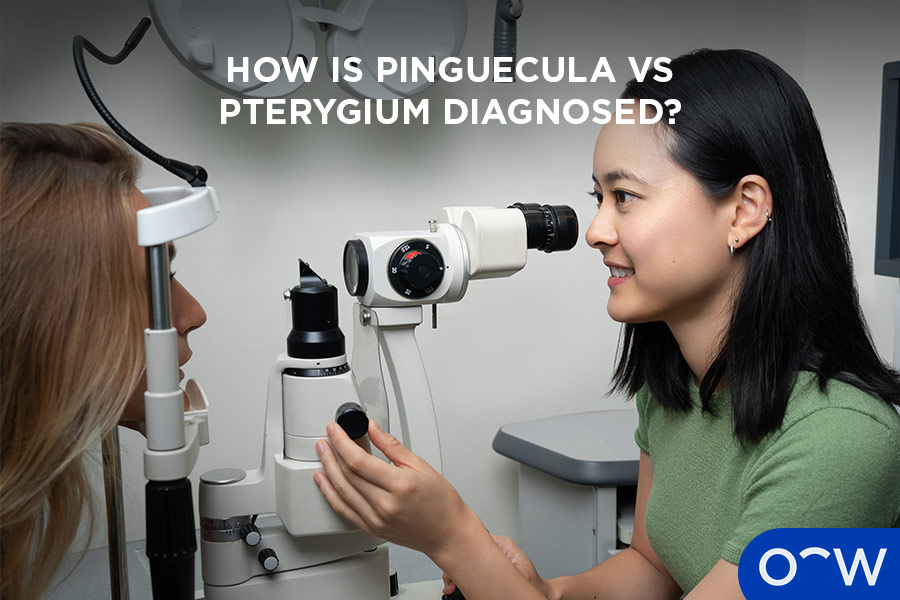
A pinguecula and pterygium can be diagnosed through a standard eye test with an optometrist. As part of a routine eye test, a slit-lamp examination can specifically help identify these growths on the eye. It involves a special microscope that enables a highly magnified view of the eye's surface, and an optometrist can then distinguish between them based on location and appearance.
What Tests do Eye Doctors Use to Examine these Conditions?
The tests that eye doctors use to examine these conditions can include a slit-lamp examination, vision testing, corneal assessment and a medical history review. While eye doctors, also known as ophthalmologists, can examine these conditions, it may be important to note that optometrists are also qualified to diagnose and help manage pingueculas and pterygiums. The tests that eye doctors may use to examine these conditions are listed below.
- Slit Lamp Examination: A slit lamp examination can help examine these conditions as it provides a highly magnified view of the eye's surface.
- Vision Testing: Vision testing, such as reading off a Snellen chart, allows the eye doctor to assess your distance vision or can evaluate how light is bent as it enters your eye.
- Corneal Assessment: A corneal assessment can help an eye care professional check the shape and surface to determine corneal health and is typically seen through a slit-lamp examination.
- Medical History Review: Your medical history may be brought up to check if you may be at risk of any systemic conditions and/or to see if other family members may also have these conditions.
Is an Eye Test Usually Enough For Diagnosis?
Yes, an eye exam is usually enough for diagnosis of pinguecula and pterygium. An optometrist will conduct an eye test, which will enable them to identify any abnormal growths on the surface of the eye. Testing methods such as a slit-lamp examination will provide optometrists with a 3D view of the eye's internal and external structures.
How are Pinguecula and Pterygium Treated?
Pinguecula and pterygium may be treated through certain types of eye drops or managed with protective eyewear to focus on alleviating symptoms and preventing further damage. A pinguecula and pterygium may only require eye drops in their early stages. Surgical removal of a pterygium may only be conducted if the growth becomes painful, affects blinking function or changes your cornea shape.
How Can Good Eye Care Habits Help Prevent Pinguecula and Pterygium?
Good eye care habits may help prevent pinguecula and pterygium as they focus on protecting the eyes from excessive UV exposure. Good eye care habits such as wearing sunglasses, wearing hats or limiting sun exposure may help reduce the risk of developing pinguecula and pterygium. This is because the condition may be associated with repeated exposure to UV radiation. The condition is considered more common in those who spend lots of time outdoors, such as surfers, trade workers and farmers, according to Australia Wide First Aid.
Which Treatments Can Relieve Discomfort and Inflammation From Pinguecula and Pterygium?
The treatments that can relieve discomfort and inflammation from pinguecula and pterygium may include artificial tears, lubricating ointments, anti-inflammatory drops, cold compresses, and environmental protection. The treatments that may relieve discomfort and inflammation from pinguecula and pterygium are listed below.
- Artificial Tears: Artificial tears may relieve discomfort and inflammation from pinguecula and pterygium during their early stages by adding more lubrication to the eye. This can help reduce friction and inflammation.
- Lubricating Ointments: Lubricating ointments can also aid with discomfort and inflammation from pinguecula and pterygium as they help restore lost moisture and lessen any friction when blinking.
- Anti-Inflammatory Drops: Anti-inflammatory eye drops may be used to relieve discomfort and inflammation from pinguecula and pterygium, as they can disrupt the body's inflammatory response and work to reduce swelling, redness and any burning.
- Cold Compresses: A cold compress may help relieve discomfort and inflammation from pinguecula and pterygium, as it can aid in constricting the blood vessels, slowing down fluid build-up, which is what causes the swelling.
- Environmental Protection: Environmental protection may refer to avoiding exposure to pollutants in the air and excessive chemicals, which can help prevent further irritation.
Is Surgery Necessary in Every Case For a Pinguecula and Pterygium?
No, surgery may not be necessary for every case of a pinguecula and pterygium. The most suitable treatment will depend on the severity of your condition.
What Complications and Long-Term Outcomes Should You Know About Pinguecula and Pterygium?
The complications and long-term outcomes that you should know about pinguecula and pterygium can include persistent irritation, growth progression, cosmetic concerns and recurrence. The complications and long-term outcomes you should know about pinguecula and pterygium are listed below.
- Persistent Irritation: Persistent irritation can be a complication of pinguecula and pterygium. A pinguecula can cause irritation in the eye due to its raised surface, which can affect the way tears spread across the eye and cause irritation. A pterygium can bring on irritation as it can disrupt the tear film in the eye, with its raised surface leading to localised dry spots and persistent discomfort.
- Growth Progression: The growth progression for a pinguecula and pterygium is considered slow. A pinguecula may start off as built-up protein or calcium underneath the conjunctiva to a raised yellowish bump on the sclera. A pterygium may start off as a small and flat wedge-shaped growth on the conjunctiva, which can then extend over to the cornea.
- Cosmetic Concerns: The cosmetic concerns for a pinguecula may be due to its yellowish appearance and increased redness. A pterygium can raise cosmetic concerns as it can show distinctly and appears very visibly red.
- Recurrence: Recurrence can be a complication of pinguecula and pterygium even after surgical removal.
When Can a Pterygium Become More Serious than a Pinguecula?
A pterygium may become more serious than a pinguecula if it grows extensively to the point of reaching the cornea. However, it may be important to note that a pinguecula is not necessarily a worse condition than a pterygium, as it doesn't affect your vision.
Can a Pinguecula Cause Blindness?
No, a pinguecula does not cause blindness. This benign and non-cancerous yellowish bump develops over the conjunctiva and does not typically grow beyond the conjunctiva, according to Healthline.
It is important to note that Oscar Wylee offers optometry services only; this article is for educational purposes only and is not a substitute for professional medical advice, diagnosis, or treatment.