


 1300 164 990
Leber Congenital Amaurosis (LCA): Causes and Symptoms
Published on May 19th, 2026
Leber Congenital Amaurosis (LCA) is a type of rare, inherited retinal disease (IRD) that is present at birth or in the first few months of life. Leber Congenital Amaurosis is an umbrella term given to a group of diseases caused by mutations in at least 18 to 25 different genes, according to Retina Australia. These gene mutations lead to photoreceptor dysfunction and degeneration, ultimately causing vision loss. The extent of vision loss varies from case to case but can be quite severe. There are other genetic causes of Leber Congenital Amaurosis for which there are currently no treatments, but there are certain approved gene therapies in Australia to treat the disease. Glasses can act as low vision aids and correct refractive errors for patients with Leber Congenital Amaurosis, helping to maximise remaining vision. Sunglasses can help protect eyes and reduce light sensitivity symptoms in patients.
It is important to note that Oscar Wylee offers optometry services only; this article is for educational purposes only and is not a substitute for professional medical advice, diagnosis, or treatment.
What is Leber Congenital Amaurosis (LCA)?
Leber Congenital Amaurosis is a rare inherited eye disorder that causes severe vision loss at birth or early infancy, according to the Centre for Eye Research Australia. Leber Congenital Amaurosis affects the retina's ability to respond to light, leading to early-onset visual impairment or blindness.
How is LCA Defined in Medical Terms?
LCA is defined in medical terms as a genetic retinal dystrophy affecting photoreceptor function. Photoreceptors are cells in the retina that capture light and convert it into electrical signals, according to the Foundation for Fighting Blindness.
Is LCA a Form of Congenital Blindness?
Yes, LCA is considered a form of congenital blindness, according to the Foundation for Fighting Blindness. Vision loss appears at birth or within the first months of life, and severity can vary from low vision to blindness.
How does LCA Affect Vision From Birth?
LCA causes a severely reduced or absent visual response from birth, according to the Centre for Eye Research Australia. In some cases, infants may not track objects or respond to light, which can indicate early retinal dysfunction.
Does LCA Always Cause Total Blindness?
No, LCA does not always cause total blindness, but the disease is characterised by severe, early-onset vision impairment and often leads to blindness.
What Causes Leber Congenital Amaurosis?
LCA is an umbrella term given to a group of diseases caused by mutations in at least 18 to 25 genes, according to Retina Australia. These genes play a variety of roles in the development and function of the retina and normal vision. Specific gene mutations lead to photoreceptor cell function failure, which can lead to vision loss, according to Retina Australia. LCA is a very rare condition, estimated to affect around 1 in 80,000 people worldwide, according to Retina Australia, and it is usually inherited in an autosomal recessive manner.
Which Gene Changes are Linked to LCA Disease?
The gene changes that may be linked to LCA disease can include mutations in at least 18 to 25 different genes, according to Retina Australia, with the most common gene changes linked to LCA being CEP290, GUCY2D, CRB1, and RPE65. These gene changes are listed below in more detail.
- CEP290: Mutations in the CEP290 gene are the most common cause of LCA, accounting for approximately 30% of cases, according to B. Leroy et al's research paper titled 'LCA Due to CEP290 Mutations—Severe Vision Impairment With A High Unmet Medical Need', published in 2021.
- GUCY2D: Mutations in the GUCY2D gene are often related to phototransduction (light sensing) pathways in the eye.
- CRB1: Mutations in the CRB1 gene may cause retinal thickening and specific pigmentation patterns.
- RPE65: Mutations in the RPE65 gene may disrupt the retinoid cycle, preventing the eye from converting vitamin A for light detection.
Is LCA Inherited From Both Parents?
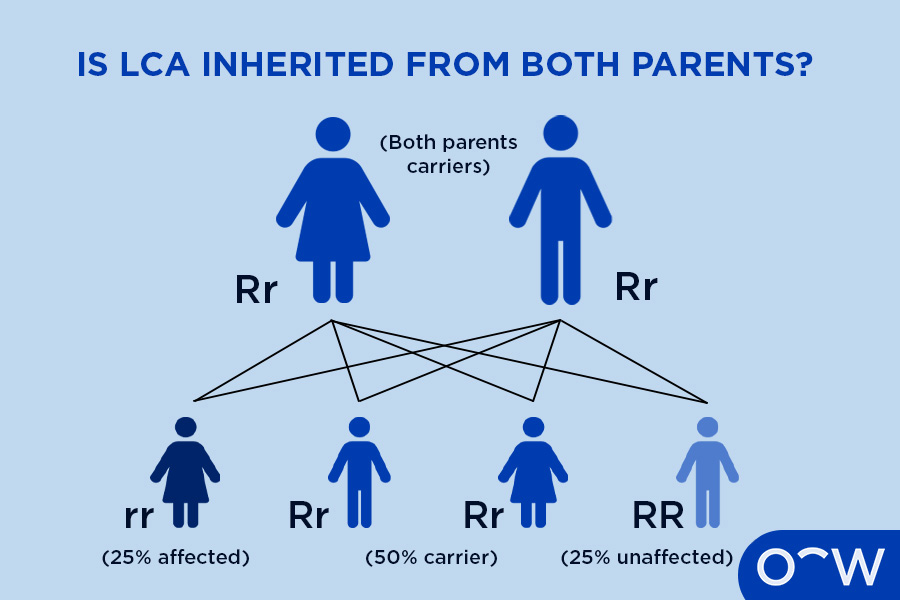
Yes, LCA is almost always inherited from both parents, according to the Foundation for Fighting Blindness. LCA follows an autosomal recessive pattern, meaning a child must receive two mutated genes to develop LCA.
Who can be an LCA Carrier?
Any person with one mutated LCA gene and one normal gene can be a carrier, according to the Foundation for Fighting Blindness. Carriers of LCA usually have normal vision, but they can still pass the gene to their children.
What is an LCA Carrier in Pregnancy?
A LCA carrier in pregnancy is someone with one mutated gene for LCA and one normal gene, according to the Foundation for Fighting Blindness. A carrier of LCA does not show symptoms.
Can a Carrier Pass LCA to Their Baby?
Yes, a carrier of LCA can pass the gene to their baby, according to the Foundation for Fighting Blindness. Both parents must be carriers for the disease to occur, which creates a risk of inheritance in each pregnancy.
What are the Early Symptoms of LCA?
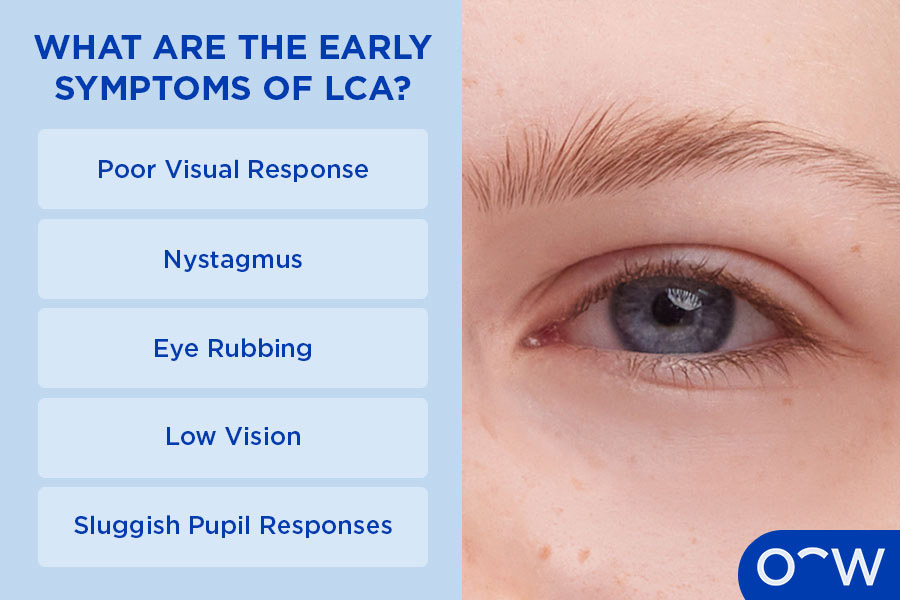
The early symptoms of LCA vary from individual to individual, but often include poor visual response, nystagmus (involuntary, rapid eye movements), eye rubbing, low vision, and sluggish pupil response. These early symptoms of LCA are explained below.
- Poor Visual Response: Poor visual response is an early sign of LCA, where infants may not fixate on objects or follow them with their eyes.
- Nystagmus: Nystagmus is another early sign of LCA; it involves involuntary movements of the eyes.
- Eye Rubbing: Eye rubbing refers to infants pressing, poking, or rubbing their eyes with their knuckles or fingers.
- Low Vision: Low vision may be diagnosed in babies showing poor tracking or focus with their eyes, or in some cases, complete blindness.
- Sluggish Pupil Response: Sluggish pupil response in LCA refers to pupils not adjusting properly to light changes.
1. Poor Visual Response
Poor visual response refers to infants not responding to visual cues, experiencing difficulty focusing on faces, and following objects.
2. Nystagmus
Nystagmus refers to involuntary, rapid, and repetitive eye movements which can be horizontal, vertical, or circular, according to Vision Australia.
3. Eye Rubbing
Eye rubbing, including poking, pressing, and rubbing the eyes, is a symptom of LCA in infants as they try to stimulate light perception. It is important to note that eye rubbing in infants is common, often caused by tiredness, allergies or irritation.
4. Low Vision
Low vision in LCA is usually profound, or complete blindness is present. Low vision is often seen in infants not able to fixate on objects.
5. Sluggish Pupil Response
Sluggish pupil response, ranging from abnormal to absent pupillary response, is an early symptom of LCA. Sluggish pupil response refers to the pupils not contracting or expanding normally to light.
How does LCA Affect a Baby's Eye Movements?
LCA presents differently in different children, but nystagmus, which refers to involuntary jerky eye movements, is a common symptom, according to Retina Australia. Strabismus, or crossed eyes, is another symptom that may be present in infants, as well as slow or no pupillary response to light, according to Retina Australia.
Do Infants With LCA Respond Poorly to Light?
Yes, infants with LCA often respond poorly to light or do not respond at all. In some cases, infants with LCA can also experience extreme sensitivity to light, also known as photophobia.
How is LCA Diagnosed in Children?
LCA is diagnosed in children through clinical eye tests and specialised testing. Comprehensive eye tests by an ophthalmologist are important to check for symptoms that appear in infancy, such as rapid eye movements and sluggish pupillary responses. Eye tests are the first step in a referral pathway. Specialised testing involves electroretinography to assess retinal electrical activity, as well as genetic testing. Early detection and diagnosis of LCA helps guide management and support.
What Tests Confirm LCA?
The tests to confirm LCA are primarily eye tests and specialised testing. A comprehensive eye test is an important first step in diagnosis, including tests such as an Optical Coherence Tomography (OCT), and a Fundus Autofluorescence Imaging (FAF) to visualise the retina. Specialised testing includes electroretinography, which is an essential test to measure the electrical responses of the eye's light-sensitive cells, and genetic testing to identify the specific mutation causing the disease. Optometrists can provide eye tests and OCT testing, but a referral to a specialist is required for further diagnostic testing, including electroretinograms, FAF testing, and genetic testing as required.
Is Genetic Testing Required to Confirm LCA?
Yes, genetic testing is required to confirm a diagnosis of LCA definitively. Genetic testing can identify the exact mutation causing LCA in a patient. It is also necessary to identify targeted therapies for the disease and help with treatment planning.
How is LCA Treated?
Depending on its presentation, treatment for LCA focuses on supportive care and gene therapy. Supportive care for LCA patients includes low-vision aids such as magnifiers and eyeglasses to assist with daily life. Gene therapy for LCA is a breakthrough treatment that delivers a healthy gene directly into retinal cells to treat certain forms of childhood blindness.
What Types of Special Lens Filters are Recommended for Patients with LCA?
The special lens filters that may be recommended for patients with LCA are tinted lenses, UV protection lenses, filters, polarised lenses, and photochromic lenses. These special lens filters are explained below.
- Tinted lenses: Tinted lenses are most often used in sunglasses to protect the eyes from UV rays. Tinted lenses for sunglasses at Oscar Wylee come in grey, brown, and green. There are also tinted lenses in an array of colours that are used as fashion sunglasses that do not offer eye protection.
- UV protection lenses: UV-protection lenses protect your eyes from harmful UVA and UVB rays. Oscar Wylee glasses and sunglasses come with UV400 lenses in every pair.
- Polarised lenses: Polarised lenses are a filter designed to improve visual comfort by reducing glare, often recommended for LCA patients.
- Photochromic lenses: Photochromic lenses automatically darken in bright light and lighten in darker environments, allowing patients improved adaptability. At Oscar Wylee, we sell our own brand of photochromic lenses, referred to as adaptive lenses, as well as Transitions® lenses as add-ons both online and in-store.
Can Prescription Glasses Help Improve Remaining Vision in LCA?
Yes, prescription glasses can help optimise remaining vision in LCA. Glasses can correct refractive errors common in patients with LCA, but they can not cure the disease.
Why is Light Sensitivity Common in LCA?
Light sensitivity is common in LCA because the photoreceptor cells in the eyes are malfunctioning, but the eye's neural pathways still react to light stimulation. This can lead to discomfort for patients in bright environments, both indoor and outdoor.

How does Photophobia Affect Daily Life With LCA?
Photophobia, or light sensitivity, may significantly impact a patient's life, depending on its severity. Common daily life impacts caused by photophobia are restriction of outdoor activities due to discomfort in bright settings, the need for dark glasses, social challenges, and general avoidance of sunlight or strong indoor lighting.
Can Sunglasses Reduce Eye Discomfort From Bright Light?
Yes, sunglasses can reduce discomfort from bright light. Sunglasses reduce glare and excessive brightness, which may improve comfort for patients with light sensitivity.
Which Women's Sunglasses are Suitable for Light Sensitivity in LCA?
The Oscar Wylee women's sunglasses suitable for light sensitivity in LCA are polarised sunglasses, tinted sunglasses, and highly protective styles. At Oscar Wylee, all of our lenses come with UV400 protection to protect eyes from harmful UV rays. These women's sunglasses options suitable for light sensitivity in LCA patients are explained below.
- Polarised sunglasses: Our polarised add-on option at Oscar Wylee offers superior, glare-reducing protection, aiding in light sensitivity symptoms. Any frames can be polarised with our polarisation add-on.
- Tinted sunglasses: Tint add-ons are aesthetic enhancements mainly for reducing brightness, and can help ease light sensitivity in patients with LCA. Our tinted lens add-on is available in 7 colours.
- Highly protective styles: Oscar Wylee provides highly protective sunglasses styles, such as women's wraparound sunglasses. Our Geneveive frames are a popular wraparound style for women, and can help block peripheral light.
Which Men's Sunglasses are Best for Managing Light Sensitivity in LCA?
The Oscar Wylee men's sunglasses suitable for light sensitivity in LCA are polarised sunglasses, tinted sunglasses, and highly protective styles. At Oscar Wylee, all of our lenses come with UV400 protection to protect eyes from harmful UV rays. These men's sunglasses options suitable for light sensitivity in LCA patients are explained below.
- Polarised sunglasses: Polarised sunglasses help to protect the eyes from harmful UVA and UVB rays, while also minimising glare.
- Tinted sunglasses: Dark or amber tints can help reduce brightness, and wraparound designs can help block peripheral light.
- Highly protective styles: Oscar Wylee provides highly protective sunglasses styles, such as men's wraparound sunglasses. Our Stevo frames are a popular wraparound style for men, and can help protect the eyes from different angles.
What Precautions Should Parents Take If LCA Runs in the Family?
Parents should take proactive measures through genetic counselling, carrier testing, early screening, and specialised care if LCA runs in the family. These precautions are explained below.
- Genetic counselling: Genetic counselling provides individuals with information about genetic conditions, and can help parents understand inheritance risks.
- Carrier testing: Carrier testing and early screening involve getting screened, prenatal testing, and early ophthalmological tests for infants.
- Specialised care: Specialised care relates to preventative care such as vision support, UV protection, and lifestyle considerations.
It is important to note that Oscar Wylee offers optometry services only; this article is for educational purposes only and is not a substitute for professional medical advice, diagnosis, or treatment.