


 1300 164 990

Dacryocystitis (Tear Duct Infection): Treatment and Causes
Published on August 19th, 2026
Dacryocystitis is an infection of the tear drainage sac, also known as the lacrimal sac. Dacryocystitis is caused by a blocked tear duct, the narrow tube that forms the final part of the eye’s drainage system. The symptoms of dacryocystitis are swelling, redness, warmth, pain and tenderness, discharge, excessive tearing, and fever. Prescription sunglasses can help protect irritated eyes during recovery from dacryocystitis.
It is important to note that Oscar Wylee offers optometry services only; this article is for educational purposes only and is not a substitute for professional medical advice, diagnosis, or treatment.
What is Dacryocystitis?
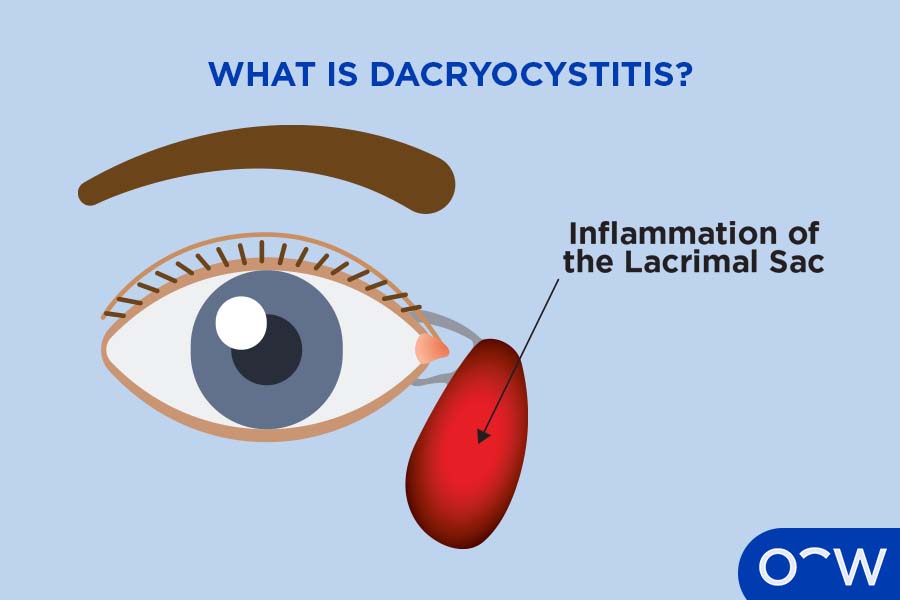
Dacryocystitis is defined as an infection and inflammation of the lacrimal (tear) sac, according to NSW Health. Dacryocystitis is most commonly caused by a blocked tear duct. It commonly causes swelling and tenderness near the inner corner of the eye, along with discharge, excessive tearing, and fever.
Where are the Tear Ducts and Lacrimal Sac Located in the Eye?
The tear ducts and lacrimal sac are located at the inner corner of the eye near the nose. The tear ducts and lacrimal sac work together as part of a drainage system that collects liquid from the eye’s surface and channels it down into the nasal cavity, according to consultant ophthalmologist and eye surgeon Dr. Chameen Samarawickrama.
Is Dacryocystitis the Same as a Tear Duct Infection?
No, dacryocystitis is commonly referred to as a tear duct infection, but technically it is an infection of the lacrimal (tear) sac caused by a blocked tear duct.
What Causes Dacryocystitis?
Dacryocystitis is most commonly caused by a blockage of fluid and germs in the nasolacrimal duct (tear duct), according to Healthdirect Australia. Stagnant tears and bacteria can multiply in the tear duct and lead to a blockage, according to Better Health Channel, Victoria. Blockages in the tear duct can be caused by aging, facial injury, nose issues, growths, or babies can be born with them. The causes of dacryocystitis are explained below.
- Aging: Aging can lead to the narrowing of tear passages, particularly in adults over 40.
- Facial Injury: Facial injuries such as bone fractures can cause a blocked tear duct.
- Nose Issues: Nose issues such as sinus infections, structural problems, and inflammation can cause a blocked tear duct.
- Growth: A growth such as a small stone or tumour can stop fluid flow through the tear duct.
- Babies born with it: Babies can be born with a closed tear duct membrane, known as a valve of Hasner obstruction.
How can a Blocked Tear Duct Lead to Infection?
A blocked tear duct can lead to infection because a blocked tear duct stops normal fluid drainage, which leads to tears and mucus pooling in the drainage system, according to Healthdirect Australia. This trapped liquid is a breeding ground for bacteria, which grow quickly, leading to swelling and inflammation in the tear sac, also known as dacryocystitis, according to Healthdirect Australia.
Can a Blocked Tear Duct Cause Dacryocystitis?
Yes, a blocked tear duct can cause dacryocystitis. A blocked tear duct is the primary cause of dacryocystitis. When the tear duct is blocked, tears and mucus cannot drain properly, which causes bacteria to grow and leads to infection, according to Dr. Chameen Samarawickrama.
What are the Signs and Symptoms of Dacryocystitis?
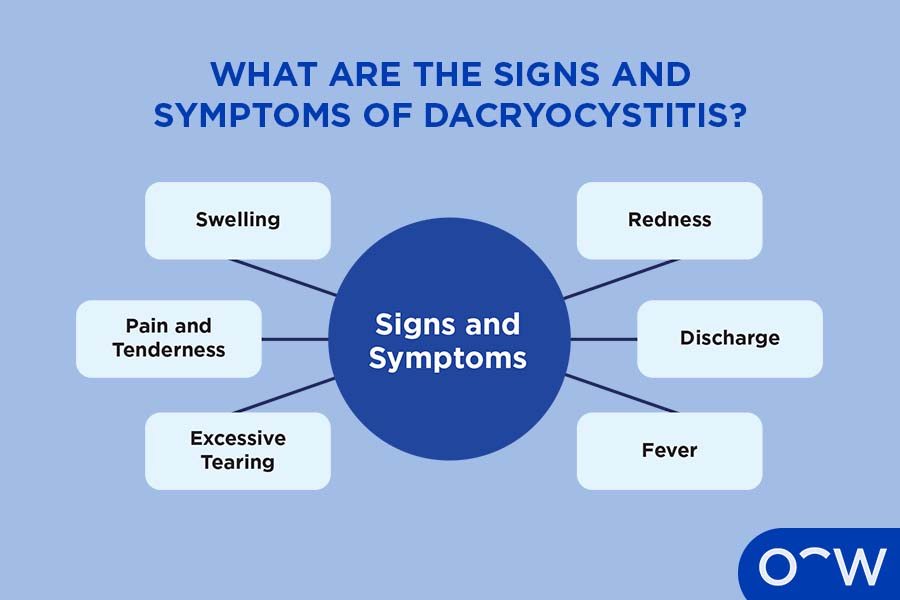
The signs and symptoms of dacryocystitis are swelling, redness, pain and tenderness, discharge, excessive tearing, and fever. The symptoms of dacryocystitis are explained below.
- Swelling: Swelling or a firm lump between the eye and the nose.
- Redness: Redness and warmth around the tear sac.
- Pain and Tenderness: Pain and tenderness around the area.
- Discharge: Discharge such as pus or mucus may drain from the tear duct, particularly when pressure is applied.
- Excessive Tearing: Excessive tearing may occur because drainage is blocked.
- Fever: Fever or feeling generally unwell may occur in severe or spreading infections
Why does the Inner Corner of the Eye Become Swollen?
The inner corner of the eye becomes swollen because a blocked tear duct traps tears and mucus inside the lacrimal sac, leading to bacterial buildup. This leads to the body reacting with swelling, pain, and redness next to the nose in the inner corner.
Can a Tear Duct Infection Cause Pain and Discharge?
Yes, a tear duct infection can cause pain and discharge, according to Healthdirect Australia. Eye pain, pus or sticky discharge, redness, and swelling near the inner corner of the eye are common symptoms of a tear duct infection, also known as dacryocystitis.
How Do Acute and Chronic Dacryocystitis Differ?
Acute and chronic dacryocystitis differ based on the severity and onset of the infection. Acute dacryocystitis involves a rapid onset, severe infection of the lacrimal sac, with symptoms lasting under three months, whereas chronic dacryocystitis involves milder, yet persistent symptoms. Acute dacryocystitis is usually treated with antibiotics, whereas chronic dacryocystitis may require surgery.
What Happens During Acute Dacryocystitis?
Acute dacryocystitis involves a sudden painful infection of the tear sac, causing red, tender swelling near the corner of the eye, according to Perth Children’s Hospital. Fluid builds up in the tear sac, leading to rapid bacterial growth. Watery eyes, red skin, discharge, and fever can occur.
Can Acute Dacryocystitis Become Chronic?
Yes, acute dacryocystitis can become chronic if the tear duct blockage remains unresolved or if infections keep returning.
How is Dacryocystitis Diagnosed?
Dacryocystitis is diagnosed mainly through a physical examination by an optometrist or ophthalmologist, where they look for pain, swelling and redness. When pressure is applied to the tear sac, it will often release discharge, which can help to confirm a dacryocystitis diagnosis. A dye disappearance test, nasal endoscopy, and imaging scans may also be used to diagnose dacryocystitis.
What Tests can Find a Blocked or Infected Tear Duct?
The tests that can find a blocked or infected tear duct are a physical examination, a dye disappearance test, irrigation and probing, nasal endoscopy, and imaging scans. These tests are explained below.
- Physical examination: A physical examination by an optometrist or ophthalmologist examines the eyelids, inner corner of the eye, and nasal passages, checking for swelling, redness, and discharge.
- Dye Disappearance Test: A dye disappearance test involves a special fluorescent dye being placed on the eye’s surface to show whether tears drain normally, according to specialist ophthalmologist Dr Parth Shah.
- Irrigation and Probing: Irrigation involves flushing a sterile saline solution through the tear duct to test if it flows into the nose. A small probe may also be used to locate the obstruction, according to the Better Health Channel, Victoria.
- Nasal Endoscopy: Nasal endoscopy is where an illuminated scope looks inside the nasal cavity to check for structural causes of obstruction, according to Gold Coast Eye and Oculoplastic Surgeons (GCEOS).
- Imaging Scans: Imaging scans such as X-rays, CT scans, or dacryocystography identify structural blockages or complications using contrast dye, according to the Better Health Channel, Victoria.
Can Dacryocystitis be Diagnosed From Symptoms Alone?
Yes and no, while characteristic symptoms like painful red swelling near the inner corner of the eye and discharge strongly suggest dacryocystitis, a formal clinical examination by an optometrist or medical doctor is required for an accurate diagnosis and treatment plan.
How is Dacryocystitis Treated?
Dacryocystitis is treated by oral or intravenous antibiotics, warm compresses and massage, and a dacryocystorhinostomy (DCR) surgery if necessary to treat the underlying cause of the blockage and prevent recurrence, according to Dr. Chameen Samarawickrama. Dacryocystitis is treated depending on the cause of the blocked tear duct. The treatments for dacryocystitis are explained below.
- Oral/Intravenous Antibiotics: Oral or intravenous antibiotics help to treat an infection.
- Warm Compress and Massage: Warm compress and massage can help promote tear drainage and relieve uncomfortable symptoms.
- Dacryocystorhinostomy (DCR) surgery: Dacryocystorhinostomy (DCR) surgery is a surgical procedure that helps create a new drainage pathway for tears and mucus to prevent recurrence of dacryocystitis.
When are Antibiotics Used for Tear Duct Infection?
Antibiotics are used for a tear duct infection when a bacterial infection causes painful inflammation in the inner corner of the eye, often accompanied by discharge, according to Healthdirect Australia. Antibiotics are usually required for acute dacryocystitis, whereas if the eyes are simply watery without inflammation, warm compresses will suffice.
How Can Sunglasses Help Protect Irritated Eyes During Recovery?
Sunglasses can help protect irritated eyes during recovery from dacryocystitis by providing clear vision, reducing light sensitivity (photophobia), and protecting the eyes from wind, dust, and UV rays. The ways prescription sunglasses can help protect irritated eyes during dacryocystitis recovery are explained below.
- Providing Clear Vision: Prescription sunglasses provide clear vision, so you do not have to strain your eyes during healing.
- Reducing Light Sensitivity: Sunglasses can help reduce light sensitivity (photophobia), which is common during recovery or post-procedural healing. Polarised sunglasses reduce glare, which can reduce eye strain.
- Protecting the Eyes: Quality sunglasses from Oscar Wylee block 100% of harmful UVA and UVB rays that may aggravate inflamed eye tissues.

Can Dacryocystitis Treatment Clear the Blockage Without Surgery?
Dacryocystitis treatment, such as antibiotics and warm compresses, can clear an infection of acute dacryocystitis, but often cannot fix an anatomical blockage, according to the Royal Australian College of General Practitioners (RACGP). A patient may need surgery to clear a blockage, according to Healthdirect Australia.
When does Dacryocystitis Require Surgery?
Dacryocystitis requires surgery when it is chronic, recurrent, or does not resolve with antibiotics, according to Chatswood Eye Specialists, Sydney. Surgery for dacryocystitis is called a dacryocystorhinostomy (DCR) and is usually performed to create a new drainage pathway using either external or endoscopic techniques, according to Mount Waverley Eye Surgeons, Victoria.
What Complications Can Dacryocystitis Cause?
The complications dacryocystitis can cause are an abscess, orbital cellulitis, conjunctivitis, fistula, and, in rare cases, vision loss. The complications that dacryocystitis can cause are explained below.
- Abscess: An abscess is a painful collection of pus inside the tear sac.
- Orbital Cellulitis: Orbital cellulitis is a serious infection inside the eye socket, according to the Royal Children’s Hospital, Melbourne.
- Conjunctivitis: Conjunctivitis is the inflammation or infection of the conjunctiva, according to Healthdirect Australia. Conjunctivitis can be caused by a spread of bacterial inflammation to the eye’s surface.
- Fistula: A fistula can form when an abnormal drainage pathway develops due to dacryocystitis.
- Vision Loss: Vision loss is a rare but possible complication that can occur due to severe orbital pressure or optic nerve involvement.
When Should You See a Doctor for Dacryocystitis?
You should see a doctor for dacryocystitis as soon as you experience common symptoms such as a painful swollen lump near the corner of the eye, discharge, and fever, according to Healthdirect Australia. If symptoms include blurred vision or rapidly spreading swelling, you must seek immediate emergency care.