


 1300 164 990

Cortical Visual Impairment (CVI): Causes, Symptoms and Treatment
Published on March 5th, 2026
Cortical visual impairment (CVI) is a neurological condition that can hinder the brain’s ability to process visual information, affecting an individual’s ability to see. Cortical visual impairment can occur when the brain is damaged, therefore, causing vision problems that stem from the brain. Some common symptoms can include difficulty responding to visual stimuli, hindered ability to see details on patterns or moving objects and trouble recognising faces or objects, according to the NAPA Centre.
What is Cortical Visual Impairment (CVI)?
Cortical visual impairment (CVI) is a vision problem that occurs when certain parts of the brain are damaged. Interpreting visual information may be difficult for the brain when the visual processing pathways are damaged from causes such as trauma, cerebral palsy, epilepsy and hypoxic-ischemic injury, according to the NAPA Centre.
How Does Cortical Visual Impairment (CVI) Differ from Other Vision Disorders?
Cortical visual impairment may differ from other vision disorders because the visual impairment is brought on by an underlying abnormality in the brain, unlike many other vision disorders that are caused by a problem with the eyes.
Is Cortical Visual Impairment the Same as Blindness?
No, cortical visual impairment may not be the same as blindness, depending on the severity of your condition. Cortical visual impairment can range from having just mild visual processing difficulties to having minimal functional vision. Complete blindness is when an individual has a complete lack of vision and the inability of the eyes to perceive light.
What Are the Causes of Cortical Visual Impairment?
The causes of cortical visual impairment include oxygen deprivation, prematurity, stroke or trauma and infections. The causes of cortical visual impairment are listed below.
- Oxygen Deprivation: Oxygen deprivation can cause cortical visual impairment, referred to as Hypoxic ischemic encephalopathy (HIE), which is a type of brain injury that can hinder how different parts of the brain function.
- Prematurity: Prematurity may cause cortical visual impairment, as it can leave infants vulnerable to many different issues that can lead to cortical visual impairment.
- Stroke and Trauma: A stroke or trauma can risk the development of cortical visual impairment as it can cause harm to the brain’s visual pathways and regions of the brain that process visual information.
- Infections: Certain infections may lead to inflammation and secondary brain injury, affecting visual pathways as a result.
1. Oxygen Deprivation
Oxygen deprivation or hypoxic ischemic encephalopathy (HIE) is a type of brain damage that can arise due to reduced oxygen or blood flow reaching the brain before or shortly after birth. Oxygen deprivation may trigger cortical visual impairment due to the lack of oxygen or blood supply, damaging cells in certain regions of the brain that are responsible for helping the brain process visual information, according to Hope for HIE.
2. Prematurity
Prematurity is when a baby is born before 37 weeks of pregnancy, according to the World Health Organisation (WHO). Prematurity may increase the risk of developing cortical visual impairment due to several kinds of issues or conditions that can occur due to early birth. Preterm infants are at higher risk of developing periventricular leukomalacia (PVL), which is one of the most common causes of CVI alongside HIE. According to the Orientation Mobility Association of Australasia, vision impairment associated with the brain can come about at any stage from prebirth to adulthood, with premature birth considered as a common risk factor for CVI.
3. Stroke and Trauma
A stroke and trauma may lead to cortical visual impairment as they can harm the occipital lobes, optic radiations, temporal lobe and parietal lobe and visual processing pathways, disrupting the brain from processing visual stimuli. A stroke can specifically damage the occipital lobe at the back of the brain, which can be detrimental to your vision, as this structure of the brain is responsible for most of the visual processing, according to the Stroke Foundation. When the occipital lobe is damaged, it can disrupt how we view colour, size and shape. Trauma can be responsible for the development of cortical visual impairment as it can compromise the structure and function of the brain’s visual processing pathways.
4. Infections
Infections may result in cortical visual impairment as it leads to inflammation, less oxygen flow and increased pressure in the brain. According to the National Institutes of Health, cortical visual impairment can stem from infections, such as Haemophilus influenzae and TORCH infections.
How do Brain Injuries Lead to Cortical Visual Impairment (CVI) in Children?
Brain injuries can lead to cortical visual impairment in children, as many parts of the brain are what help the eyes see. According to Dutton et al. (2006), children with conditions such as cerebral palsy and/or brain damage are often found to be affected with visual problems. Dutton et al. (2006) also state that many structures in the brain, primarily in the occipital lobe, are responsible for helping the eyes see, which is why brain injuries or brain damage can lead to cortical visual impairment.
Can Proper Eye Care Prevent Cortical Visual Impairment CVI from Worsening?
No, proper eye care cannot prevent cortical visual impairment (CVI) from worsening as it cannot treat the neurological cause of CVI. There is no cure for cortical vision impairment currently. However, early eye care and intervention through vision rehabilitation programs and educational support can help ensure individuals make the most of the visual capacity they have.
How is Cortical Visual Impairment (CVI) Diagnosed?
Cortical Visual Impairment (CVI) is diagnosed by a variety of professionals familiar with the condition. A functional vision assessment is usually undertaken, which involves observing how an individual uses their vision and other senses to access their environment, according to Special Eyes Vision.
What Tests do Eye Specialists Perform to Assess Cortical Visual Impairment (CVI) Symptoms?
The tests that eye specialists will perform to assess cortical visual impairment (CVI) symptoms may include a Comprehensive Vision Skills Assessment, according to Smart Vision Optometry. However, this is not enough solely on its own to confirm the full extent of symptoms, and other tests will have to be conducted.
Are Routine Eye Tests Enough to Detect Cortical Visual Impairment (CVI) Early?
No, routine eye tests on their own are not enough to detect cortical visual impairment (CVI) early. Early detection and diagnosis will come from a multidisciplinary team that includes an ophthalmologist, neurologist, pediatricians and vision specialists, according to the Paths to Literacy Organisation. According to the National Eye Institute, there is no single eye exam to check for CVI.
What are the Symptoms of Cortical Visual Impairment in Children?
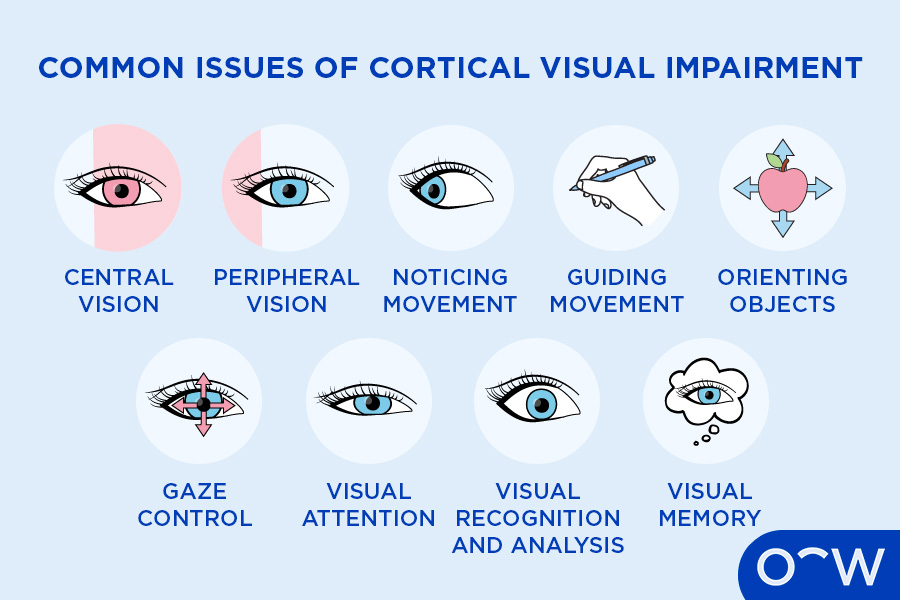
The symptoms of cortical visual impairment in children include difficulty making eye contact, difficulty finding objects in crowded environments, and colour preferences, according to the NAPA Centre. Read more about these symptoms of cortical visual impairment below.
- Difficulty making eye contact: Difficulty making eye contact is a common symptom of Cortical Visual Impairment in children. They may also be unable to recognise familiar faces as a result.
- Difficulty finding objects in crowded environments: Your child may have difficulty finding objects in crowded environments. In messy or crowded places such as playrooms or school, they may be unable to identify the objects they are looking for.
- Colour Preferences: Children may have colour preferences and dislikes for certain colours if they suffer from cortical visual impairment.
How can Parents Identify Signs of CVI in Infants and Toddlers?
Parents can identify signs of CVI in infants and toddlers through certain telltale behaviours. Common signs include delay in visual recognition, preference for more intense colours as opposed to pastels, difficulty going up and down the stairs and if they pay more attention to moving objects rather than still ones, according to the Healthy Children Organisation.
How does Cortical Visual Impairment Affect Daily Activities?
Cortical visual impairment can affect a range of daily activities due to eye issues that emerge as a result of the condition. Notably for children, learning and development can be delayed as a result of the condition, as they are unable to process visual information the way a child with regular eyesight may.
Can Wearing the Right Glasses Help Children with CVI Manage Symptoms?
Yes and no, wearing the right glasses may or may not help children with CVI manage symptoms. Many children with CVI also have spectacle prescriptions (refractive errors), strabismus (eye turns), etc. While spectacles do not treat CVI, they may certainly facilitate improving visual acuity / overall visual function in children who may have coexisting ocular conditions
What Treatments are Available for Cortical Visual Impairment (CVI)?
The treatments available for cortical visual impairment (CVI) include early intervention, environmental modification, and visual stimulation strategies. However, it is important to note that there is currently no cure for cortical visual impairment, and noted treatments are more intended for vision rehabilitation. The treatments available for cortical visual impairment are listed below.
- Early Intervention: Early intervention refers to the services and support for babies and/or toddlers with delays in development and disabilities.
- Environmental Modification: Environmental modification may involve making certain adjustments, such as reducing or eliminating visual clutter, loud noises and ensuring a calm environment to help support cortical visual impairments.
- Visual Stimulation Strategies: Visual stimulation strategies can include incorporating bright or colourful, high-contrast and lighted materials to aid with remaining vision.

How does Eye Exercise Help Cortical Visual Impairment Symptoms?
There is limited evidence to suggest that eye exercises directly help with cortical visual impairment symptoms. Vision therapy may help specific functional skills in selected individuals, but evidence is limited. However, there are ways to control your environment to make vision more comfortable for children with cortical visual impairment symptoms, such as reducing clutter in learning environments, scheduling break times and using plain presentation backgrounds, according to the Department of Education South Australia. There is limited evidence to suggest that eye exercises directly help with cortical visual impairment symptoms.
How does CVI Differ from Strabismus?
CVI differs from strabismus due to its cause and effect on one’s vision and eyes. CVI is different to strabismus as it stems from an issue with the brain, whereas strabismus is linked to eye muscle abnormalities, a problem in the nerves that control the eye muscles, poor control of binocular vision and poor vision in one eye, according to the Lions Eye Institute. Strabismus, also known as crossed eyes, results in the misalignment of the eyes, making them appear turned, crossed or lazy. CVI can co-exist with strabismus and lazy eye; therefore, each should be assessed and managed appropriately in this instance.
How does CVI Differ from Lazy Eye?
CVI differs from lazy eye as it affects the vision and eyes differently. CVI is brought on by damage to the brain’s visual processing pathways, preventing the brain from interpreting visual information, while the physical condition of the eyes typically remains intact. Lazy eye, also known as amblyopia, is poor vision in one eye as a result of abnormal visual development during infancy or early childhood. The ‘lazy eye’ may wander inward or outward, according to the Lions Eye Institute.
Can CVI Coexist with Childhood Glaucoma?
Yes, CVI can coexist with childhood glaucoma; however, this is considered rare. Cortical Visual Impairment is a neurological vision impairment caused by damage to the brain’s visual pathways, according to the Department for Education in South Australia. Contrastingly, Glaucoma is a result of damage to the optic nerve, potentially leading to vision loss due to increased fluid pressure, according to Health Direct.
How Can Glasses Support People with CVI?
Glasses may support people with CVI who also have refractive errors, as glasses are designed to correct refractive errors. While glasses do not treat the CVI itself, they may support the individuals who have coexisting ocular conditions
How do Prescription Glasses Help CVI Patients?
Prescription glasses may not help CVI patients. According to Paths to Literacy, CVI cannot be corrected with prescription glasses, as the visual impairment is brought on by damage or abnormalities in the brain. Patients with CVI can benefit from making environmental modifications, early intervention, and visual rehabilitation.
Can Tinted Lenses Reduce Visual Stress in CVI?
No, tinted lenses may not reduce visual stress in CVI as evidence supporting it’s efficiency in reducing visual stress in CVI is limited. According to Suttle and Conway (2024), evidence that supports the effectiveness of this method is insufficient, and the small randomised trial did not show tinted lenses to have any positive effect on patients with visual stress. While evidence for tinted lenses is limited, some individuals with photophobia (light sensitivity) may benefit from personalised light management strategies.
Can Photochromic Lenses Improve Comfort for CVI?
No, photochromic lenses may not improve comfort for CVI as there is currently as there is limited evidence that photochromic lenses improve comfort for individuals with CVI. Photochromic lenses are designed to provide clear vision and protection from the sun all in one frame, eliminating the need to switch between two glasses. There is no evidence that suggests the effectiveness of photochromic lenses in improving comfort for those with CVI.