


 1300 164 990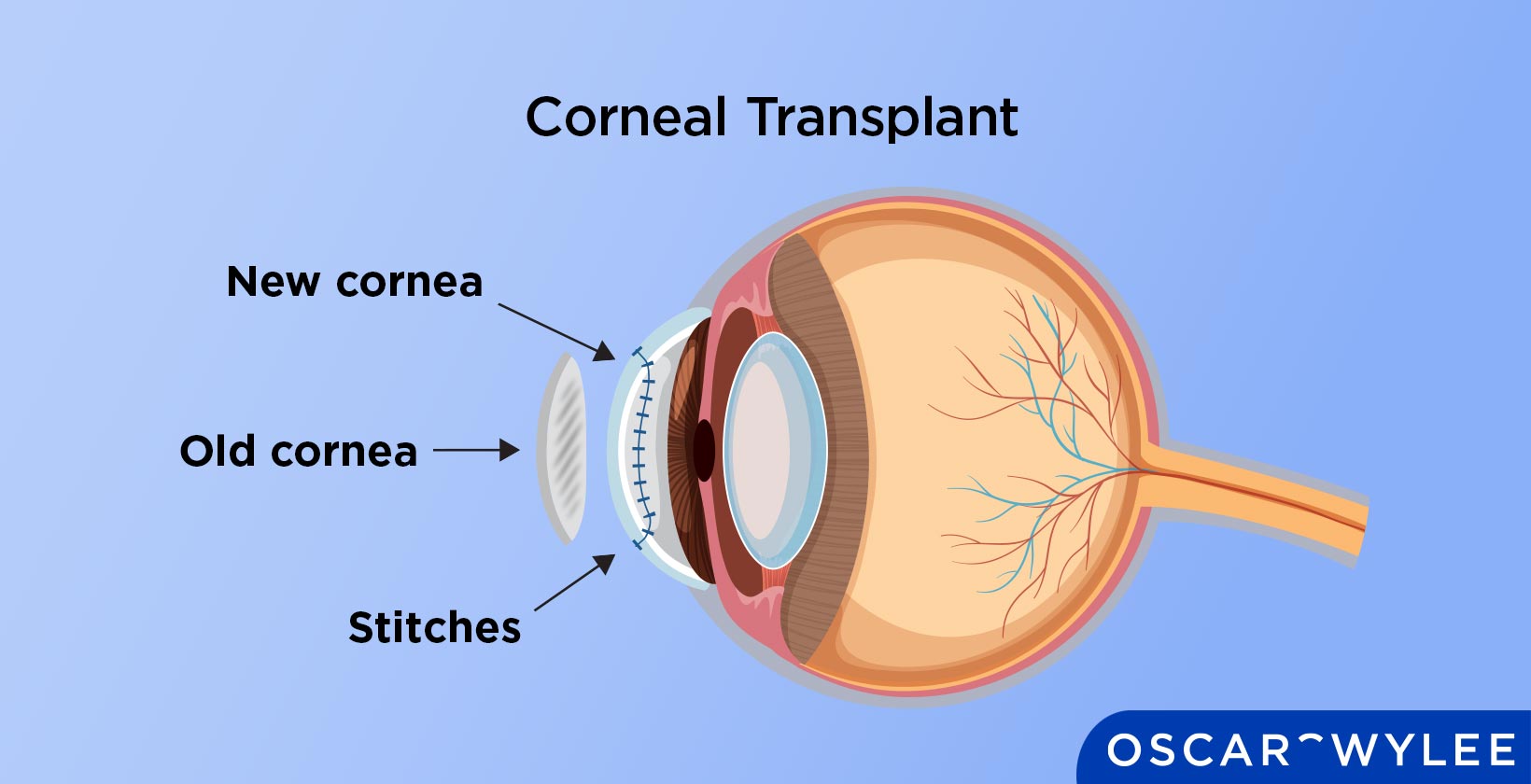
Corneal Transplant: Surgery, Transplant and Recovery
Published on September 18th, 2026
A corneal transplant, which may also be referred to as corneal grafting or keratoplasty, is a procedure to replace a part of an impaired or diseased cornea. According to the Centre for Eye Research Australia, the cornea is responsible for most of the focusing for the eye. The cornea needs to be optimally clear in order to let light pass into the eye and must have a regular curve to focus light correctly. Therefore, injuries and diseases can affect the shape of the cornea and disrupt clear vision.
What is a Corneal Transplant?
A corneal transplant is a surgical procedure that is performed when the clear dome-shaped window becomes cloudy, deformed, scarred or swollen. A corneal transplant may be required when the cornea becomes affected by diseases, such as keratoconus, endothelial decompensation, and scarring, according to Health Direct.
What Role Does the Cornea Play in Vision?
The cornea plays a role in vision by bending light; it focuses light that enters the eye onto the retina. It also helps protect the structures inside the eye, making it a crucial portion of the eye for vision.
Is the Cornea Responsible For Focusing Light into the Eye?
Yes, the cornea is responsible for focusing light into the eye. Due to its clear nature, it allows light to pass through completely and refracts it, so it is focused on the retina. It is the first portion of the eye that incoming light touches.
Why Would Someone Need a Corneal Transplant?
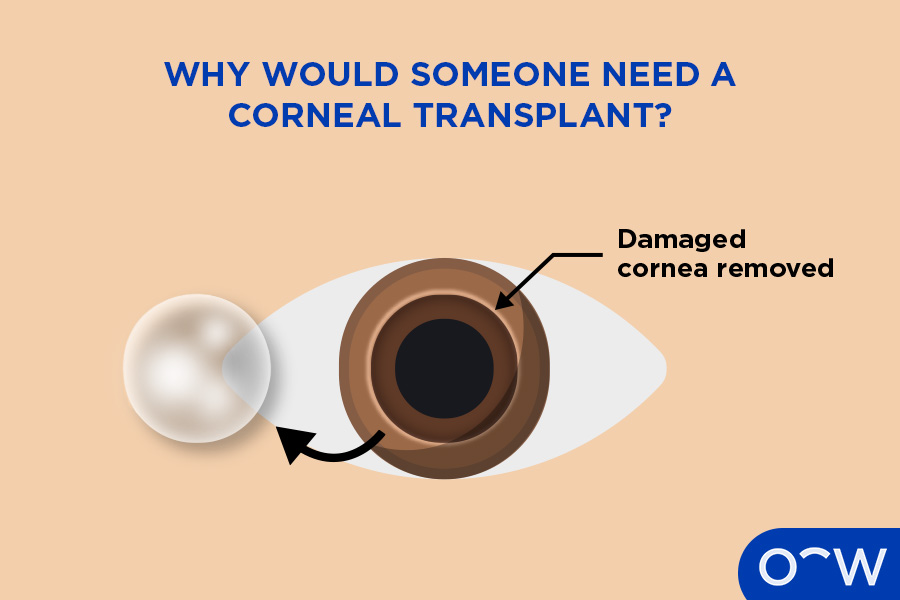
Someone may need a corneal transplant if they have an eye disease that causes the cornea to become cloudy, less clear or change shape. However, this will largely depend on the extent of your condition, according to the Centre for Eye Research Australia.
Which Eye Conditions Can Damage the Cornea?
The eye conditions that can damage the cornea may include keratoconus, corneal scarring, corneal dystrophies and corneal infections. The eye conditions that can potentially damage the cornea are listed below.
- Keratoconus: Keratoconus may damage the cornea as it can cause the collagen fibres to deteriorate, which can cause the cornea's shape to deform.
- Corneal Scarring: Corneal scarring refers to a collection of fibrous corneal tissue usually following injury, infection or disease. This can cause the cornea, the front of the eye, to become cloudy or opaque.
- Corneal Dystrophies: Corneal dystrophies are defined as a group of eye diseases that impact the cornea, which is the clear layer at the front of the eye. Corneal dystrophies are progressive and may worsen over time.
- Corneal Infections: Corneal infections can be defined as an infection of the cornea due to a bacterium, virus or parasite, which can lead to inflammation and damage to the tissue.
1. Keratoconus
Keratoconus may cause corneal damage from structural thinning and the cornea bulging towards the front, resulting in a ‘cone’ shaped cornea. Although the causes of keratoconus are unknown, it has been linked to aggressive eye rubbing as well as family history of keratoconus. These changes to the shape of the cornea ultimately causes distorted and blurry vision that may vary in severity depending on the stage of disease.
2. Corneal Scarring
Corneal scarring can impair the cornea when the eye tries to heal itself after injury, infection, or conditions like keratoconus. When the clear front layer of your eye gets damaged, the body replaces normal, transparent tissue with thick, opaque scar tissue. This cloudy tissue blocks or scatters light instead of letting it pass through smoothly, causing blurry vision, glare, and difficulty seeing in low light.
3. Corneal Dystrophies
Corneal dystrophies are a group of diseases, usually inherited, which affect the cellular function of the cornea. This can lead to a variety of presentations, including corneal deposits, scarring and inflammation, which all may affect the cornea's transparency, gradually reducing vision.
4. Corneal Infections
Corneal infections result from bacteria, viruses and/or parasites that breach healthy corneal tissue, leading to aggressive inflammation. Depending on the severity of the condition, the cornea may require medication in the form of eye drops. In some cases, once the infection has resolved, a scar may remain and therefore could affect the vision.
What are the Types of Corneal Transplant?
The types of corneal transplants can include penetrating keratoplasty, deep anterior lamellar keratoplasty (DALK), DSEK/DSAEK and descemet membrane endothelial keratoplasty (DMEK). The types of corneal transplants are listed below.
- Penetrating Keratoplasty: Penetrating keratoplasty is a surgical procedure carried out to treat corneal diseases and involves replacing a damaged cornea.
- Deep Anterior Lamellar Keratoplasty (DALK): A deep anterior lamellar keratoplasty is a partial-thickness form of a corneal transplant that removes the cornea's front layers, including the epithelium and stroma.
- DSEK/DSAEK: DSEK refers to partial-thickness descemet stripping endothelial keratoplasty and involves the ophthalmologist preparing the tissue manually by hand. DSAEK stands for Descemet's Stripping Automated Endothelial Keratoplasty and involves removing just the damaged cornea's inner layer using a machine called a microkeratome.
- Descemet Membrane Endothelial Keratoplasty (DMEK): A Descemet Membrane Endothelial Keratoplasty is defined as a partial-thickness type of corneal transplant that, while similar to DSEK and DSAEK, only removes the ultra-thin cell layer, the endothelium and Descemet's membrane.
1. Penetrating Keratoplasty
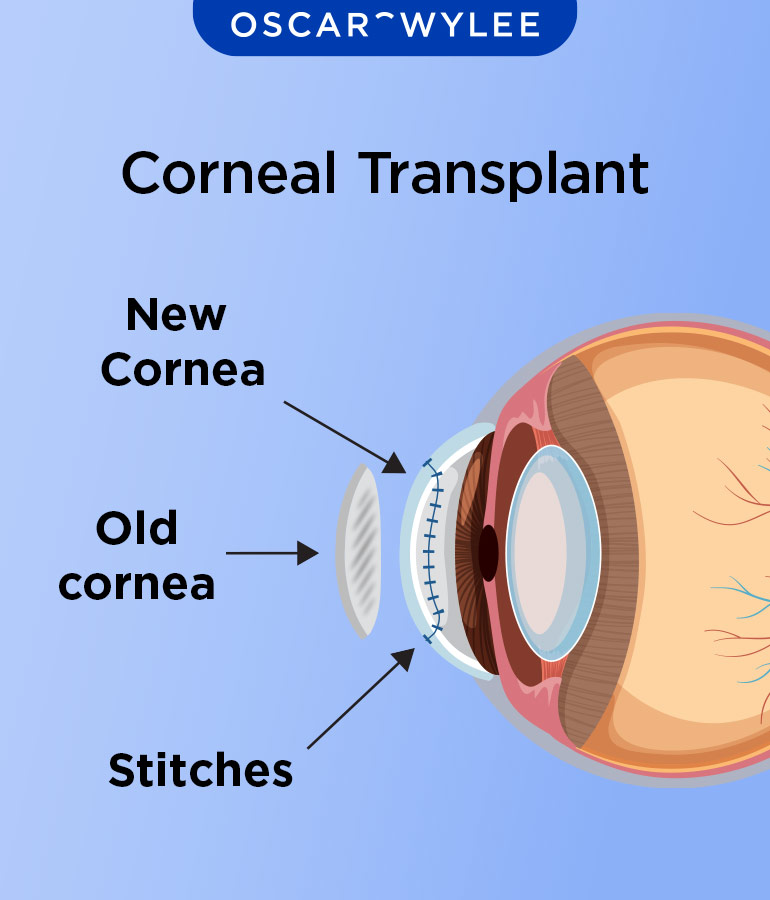
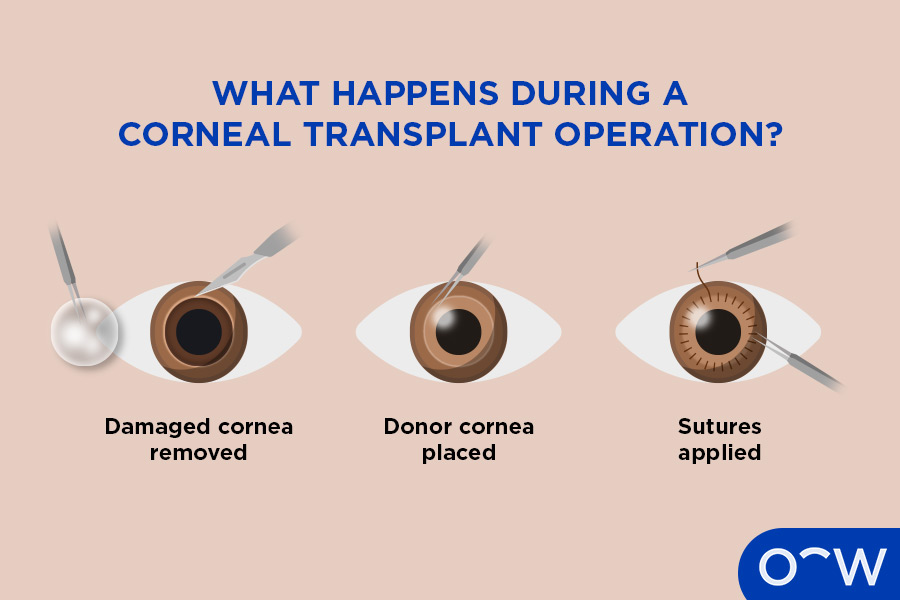
Penetrating keratoplasty is a procedure used to treat corneal diseases and involves replacing a damaged cornea. During the procedure, the surgeon will carefully take out the damaged tissue and stitch the donor tissue to replace it. Afterwards, they may patch your eye to protect it while it heals.
2. Deep Anterior Lamellar Keratoplasty (DALK)
Deep Anterior Lamellar Keratoplasty (DALK) is a type of corneal transplant for keratoconus, stromal dystrophies and scars. Deep Anterior Lamellar Keratoplasty helps replace the outermost layers of the cornea while maintaining the functioning inner layers.
3. DSEK/DSAEK
DSEK and DSAEK are partial corneal transplant types that help treat blurred vision caused by damage to the back layer of the eye. Instead of replacing the whole cornea, the surgeon may only replace the damaged inner layer with healthy donor tissue. It is most commonly used to treat eye conditions like Fuchs' dystrophy and corneal swelling.
4. Descemet Membrane Endothelial Keratoplasty (DMEK)
Descemet Membrane Endothelial Keratoplasty (DMEK) is an ultra-thin corneal transplant that replaces only the single, innermost cell layer of the eye with healthy donor tissue. DMEK may provide patients with the fastest visual recovery and lower risk of tissue rejection. It is widely considered the standard option for treating conditions like Fuchs' dystrophy and corneal swelling.
What Happens During a Corneal Transplant Operation?
During a corneal transplant operation, the surgeon will carefully replace a circular disc-shaped portion of a damaged or cloudy cornea with another healthy cornea from a donor of the same size. According to the Centre for Eye Research Australia, a cornea transplant is performed in a hospital and may only be recommended by an ophthalmologist according to your condition.
Is Corneal Transplant Surgery Performed Under Local or General Anaesthesia?
Corneal transplant surgery can be performed under either local or general anaesthesia. According to Health Direct, it is injected around your eye for numbing, and the operation lasts around 1-2 hours.
What is Recovery Like After a Corneal Transplant?
Recovery after a corneal transplant may take between one and three weeks. According to the Centre for Eye Research Australia, patients will be cared for in recovery post surgery till you are deemed safe for discharge. Most patients typically go home the same day of surgery with an eye patch and may require a follow-up review.
How Long Does Vision Take to Improve After Surgery?
It can vary from a few days, a few months or up to one year for vision to improve after surgery. It can also depend on the type of surgery that took place and the severity of your condition.
Does Vision Continue Improving For Months After a Corneal Transplant?
Yes and no. Vision can continue improving for months after a corneal transplant but may also start off good straight after surgery and then worsen, according to the National Keratoconus Foundation. The health of one's vision can vary significantly post-corneal transplant.
What are the Risks of Corneal Transplants?
The risks and success rates of corneal transplants can include graft rejection, infection, graft failure and vision changes. The risks of corneal transplants are listed below.
- Graft Rejection: Graft rejection is a possible risk of corneal transplants and refers to the body's immune system potentially attacking the donor tissue. However, timely medical intervention can aid in resolving this.
- Infection: An infection can be another risk of corneal transplants and may pose a serious threat to your new graft and may occur within 1 year of the procedure.
- Graft Failure: Graft failure refers to the irreversible stage where the new tissue loses clarity or function. A repeat corneal transplant may be required, as this cannot be corrected.
- Vision Changes: Vision changes can include gradual improvement with some initial blurring or vision starting off good and worsening later on. Vision condition significantly varies post corneal transplant and can take some time to get the final result.
What Can Cause Corneal Transplant Rejection or Failure?
The potential causes of corneal transplant rejection or failure can include an immune reaction, infection, graft dysfunction or an underlying disease. The causes that contribute to corneal transplant rejection or failure occurring are listed below.
- Immune Reaction: An immune reaction can cause corneal transplant rejection or failure when the patient's immune system falsely identifies the new tissue as foreign matter and attempts to eliminate it by attacking it.
- Infection: An infection can lead to corneal transplant rejection or failure due to the consequential inflammation, which can cause the abnormal growth of new blood vessels into the cornea. A normal and healthy cornea does not have any blood vessels, as its transparent nature helps light enter smoothly for clear vision.
- Graft Dysfunction: A graft dysfunction can result in corneal transplant rejection or failure when the corneal layers experience continuous damage and do not function as they should.
- Underlying Disease: An underlying disease may lead to corneal transplant rejection or failure, as it can often result in inflammation or continuous surface breakdown or stress on the corneal layers.
Can the Body Reject a Donor Cornea?
Yes, the body can reject a donor cornea. A corneal transplant rejection may occur when the body thinks the new tissue is foreign matter, triggering an immune response, according to the Vision Eye Institute. According to a 2021 paper titled Advances in Corneal Graft Rejection, around 17% of traditional full-thickness corneal grafts undergo at least one case of immune rejection.
How Long Does a Corneal Transplant Last?
A corneal transplant can last at least 10 or more years. According to Keratoconus Australia, the survival rate of grafts is over 90% after 10 years, and the average life of a transplant is around 15-20 years.
What Factors Can Affect the Longevity of a Corneal Transplant?
The factors that can affect the longevity of a corneal transplant can include underlying eye disease, rejection, graft health and postoperative care. The potential factors that can affect the longevity of a corneal transplant are listed below.
- Underlying Eye Disease: An underlying eye disease can affect the longevity of a corneal transplant, as it can impair the health of the eye's surface.
- Rejection: Rejection can largely influence the longevity of a corneal transplant. According to Reinprayoon et al. (2021), in their paper titled Survival Outcome and Prognostic Factors of Corneal Transplantation: A 15-Year Retrospective Cohort Study at King Chulalongkorn Memorial Hospital, cases with a previous rejection had a high survival rate in the first year, which declined after that.
- Graft Health: Graft health can be a factor in the longevity of a corneal transplant, as it directly affects the overall optimal function, structural integrity and cell density.
- Postoperative Care: Postoperative care is a crucial factor in a corneal transplant's longevity as it focuses on prevention steps for rejection, infection, and trauma. The use of post surgery eye drops can aid in preventing the body from attacking the donor tissue; frequent follow-up visits help ensure early detection of possible rejection signs.
Can a Person Have More Than One Corneal Transplant?
Yes, a person can have more than one corneal transplant. If the ophthalmologist deems that a repeat procedure will be effective in treating the patient's eye condition, they can have multiple. It will depend on whether it'll be effective and on the health of the patient's eye health.