


 1300 164 990
Charles Bonnet Syndrome: Hallucinations and Causes
Published on August 6th, 2026
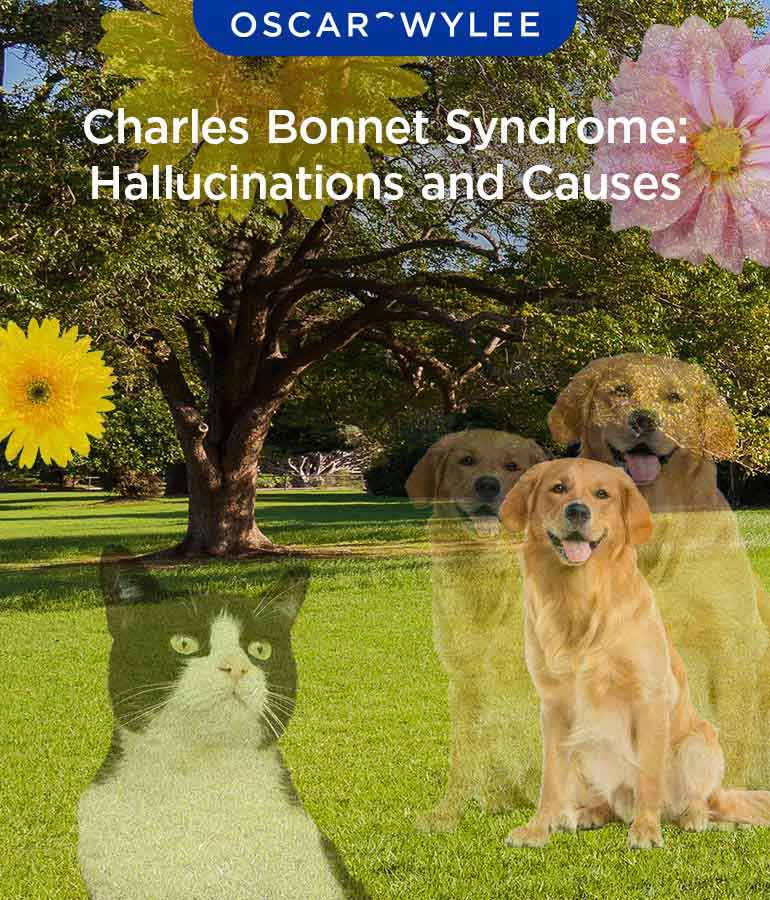
Charles Bonnet Syndrome (CBS) is a condition that causes mentally healthy people experiencing significant vision loss to experience vivid visual hallucinations. CBS occurs because the brain lacks sensory input and overcompensates by firing off stored or imagined visual images. Hallucinations can range from simple geometric images to detailed scenes, and, distinctly, patients are fully aware that the hallucinations are not real. CBS can be triggered by eye conditions such as age-related macular degeneration, glaucoma, or cataracts. People who experience vision loss later in life are more likely to get CBS.
It is important to note that Oscar Wylee offers optometry services only; this article is for educational purposes only and is not a substitute for professional medical advice, diagnosis, or treatment.
What is Charles Bonnet Syndrome?
Charles Bonnet Syndrome (CBS) is a condition that causes vivid, recurrent hallucinations in psychologically normal people living with a visual impairment, according to the Macular Disease Foundation, Australia. CBS is not a mental illness, and people living with the condition usually recognise that the images are not real.
What Causes Charles Bonnet Syndrome?
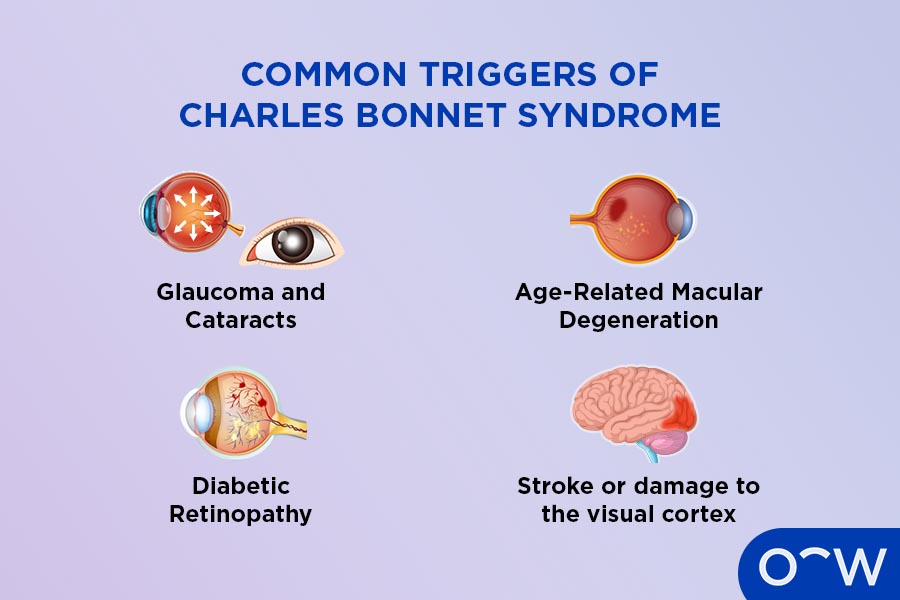
CBS is caused by significant vision loss that reduces sensory input to the brain, leading the brain to spontaneously generate phantom images and hallucinations, according to the Macular Disease Foundation, Australia. Common triggers of CBS include underlying eye conditions such as age-related macular degeneration, glaucoma, advanced cataracts, diabetic retinopathy, and stroke, according to Glaucoma Australia.
Is Charles Bonnet Syndrome Caused by Vision Loss?
Yes, CBS is caused by vision loss, according to the Macular Disease Foundation, Australia. When you lose your eyesight, your brain receives less visual input, which can cause it to try to fill in the gaps with phantom images or visual hallucinations. However, not everyone with vision loss will experience CBS.
What are the Symptoms of Charles Bonnet Syndrome?
The symptoms of CBS are vivid hallucinations, clear awareness that they are not real, recurring episodes, and no other senses affected, according to the Better Health Channel, Victoria. These symptoms of CBS are explained further below.
- Vivid Hallucinations: Vivid hallucinations are the main symptom of CBS. Patients often experience these hallucinations when they are alone in a quiet environment in a place well-known to them.
- Clear Awareness: Clear awareness that the hallucinations are not real is common in CBS, although a person may not realise at first that they are hallucinating, which can be frightening, according to the Better Health Channel, Victoria.
- Recurring Episodes: Recurring episodes of hallucinations are common in CBS patients. Episodes can last from a few seconds to several hours and happen repeatedly over days or years, according to Healthdirect Australia.
- No Other Senses Affected: No other senses affected refers to patients experiencing visual hallucinations only, with no associated sounds, smells, or physical feelings, according to Glaucoma Australia.
What Do Charles Bonnet Syndrome Hallucinations Look Like?
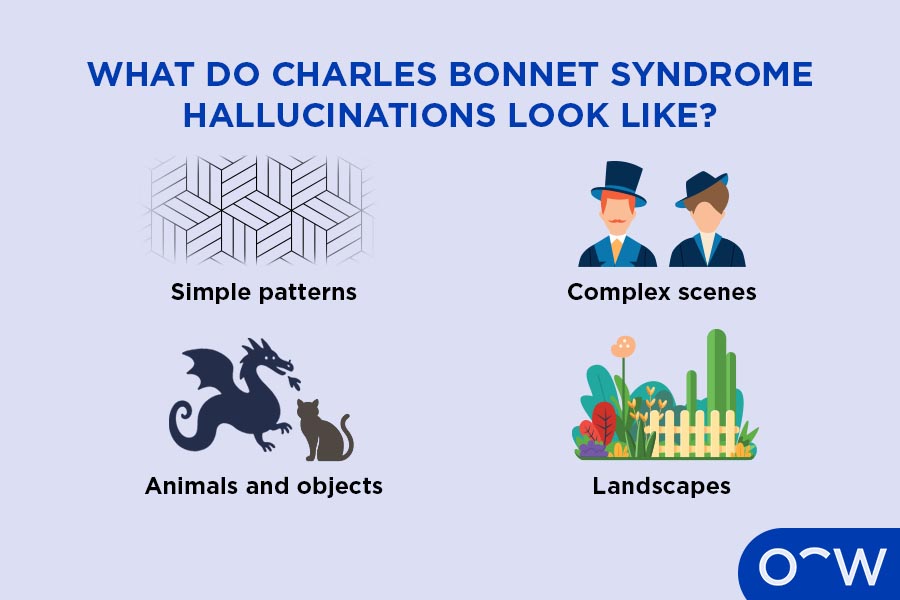
CBS hallucinations can be grouped into 2 distinct categories: simple hallucinations and complicated hallucinations, according to the Better Health Channel, Victoria. Simple hallucinations can include basic images such as geometric patterns, lines, or mosaics. Complicated hallucinations can include detailed scenes such as people, buildings, and landscapes. Complicated hallucinations are more common in people with severe vision loss, according to the Better Health Channel, Victoria.
Are the Hallucinations Only Visual?
Yes, CBS hallucinations are only visual, with no accompanying sounds, smells, or physical feelings, according to Glaucoma Australia. This is a main factor that separates CBS hallucinations from other causes of visual hallucinations, such as mental illness.
Who is Most Likely to Develop Charles Bonnet Syndrome?
The people most likely to develop CBS are older adults with age-related eye conditions resulting in significant vision loss, according to the Macular Disease Foundation, Australia. CBS can affect people at any age, but it is more likely to affect this age group, according to Healthdirect Australia. CBS is more common in those who lose their vision late in life compared to those born visually impaired, according to Vision Australia.
Why Does Charles Bonnet Syndrome Affect People With Eye Disease?
CBS affects people with eye disease because the brain reacts to a sudden or gradual decline in vision by creating phantom images, according to the Better Health Channel, Victoria. Eye diseases such as age-related macular degeneration, glaucoma, advanced cataracts, and diabetic retinopathy can all lead to vision impairment, and this is why it commonly affects people with these conditions.
How is Age Related Macular Degeneration (AMD) Linked to Charles Bonnet Syndrome?
Age related macular degeneration (AMD) is linked to CBS due to the vision impairment AMD can lead to, which can trigger CBS hallucinations, according to the Macular Disease Foundation, Australia. Age related macular degeneration damages the retina, leading to fewer visual signals reaching the brain.
How does Low Vision Increase the Risk of Charles Bonnet Syndrome?
Low vision increases the risk of CBS because it means the brain experiences fewer signals, which causes it to become overactive, according to Vision Australia. This can cause the brain to create phantom images to 'fill in the gaps' of what it should be receiving.
Can Charles Bonnet Syndrome Occur Without Blindness?
Yes, CBS can occur without blindness, according to Glaucoma Australia. People with low vision, severe field defects, and blind spots can experience CBS.
How is Charles Bonnet Syndrome Diagnosed?
CBS is diagnosed by a thorough examination by a doctor, an eye test, and the ruling out of brain or mental issues, according to Healthdirect Australia. There is no single test to diagnose CBS. A doctor will review a patient's medical history and current medication use to rule out drug-induced hallucinations. Testing will be done to make sure the patient's hallucinations do not stem from psychiatric illness, stroke, or brain injury, according to Healthdirect. A patient will also undergo an eye test, which can be performed by an optometrist, to assess the extent of vision loss.
How is Charles Bonnet Syndrome Different From Other Causes of Visual Hallucinations?
CBS is different from other causes of visual hallucinations because the patient is fully aware that the hallucinations are not real, the hallucinations are strictly visual, and they are triggered by physical sight loss, according to Glaucoma Australia. In other causes of visual hallucinations, such as mental illness and psychiatric disorders, individuals often believe their hallucinations to be part of their reality, and these hallucinations can extend to hearing voices, smells, or tactile sensations. Additionally, CBS is triggered by eye or pathway damage, whereas other causes of visual hallucinations are caused by brain or mental disorders.
Can Charles Bonnet Syndrome be Mistaken for Dementia?
Yes, CBS can be mistaken for dementia in older adults, according to the Charles Bonnet Syndrome Foundation, Australia. Unfortunately, older adults complaining of seeing things may be unfairly assumed to have a memory or brain disease, instead of CBS, according to the Charles Bonnet Syndrome Foundation, Australia. Individuals may also be too embarrassed to report their symptoms or worry that it means they are developing dementia. People with CBS retain sound minds and clear thinking compared with individuals with dementia.
How is Charles Bonnet Syndrome Treated?
There is no specific medical cure or treatment for CBS. Treatment for CBS focuses on reassuring patients that they do not have a mental illness and on simple sensory tricks for them to use when experiencing hallucinations, according to Healthdirect Australia. These techniques include rapid eye blinking, moving the head, or altering room lighting to distract an individual from the hallucinations.
What Helps Reduce Charles Bonnet Syndrome Hallucinations?
Simple physical actions such as rapid eye blinking, moving the head, or altering room lighting can reduce or interrupt CBS hallucinations, according to the Better Health Channel, Victoria. These distraction techniques are explained below.
- Rapid eye blinking: Rapid eye blinking, closing one eye, or looking somewhere else can make a CBS image disappear.
- Moving the head: Moving the head, or standing up and walking around, can interrupt CBS hallucinations.
- Altering room lighting: Altering room lighting, specifically making a room brighter, can change vision input to reduce hallucinations.
Does Charles Bonnet Syndrome Go Away?
Yes, CBS often goes away on its own within 12-18 months as an individual gets used to vision loss, according to Healthdirect Australia. The duration of CBS varies on a case-by-case basis, and some people experience it long-term.
What Triggers Charles Bonnet Syndrome Hallucinations?
CBS hallucinations can be triggered by sensory deprivation, rest, social isolation, and stress. These CBS triggers are explained below.
- Sensory Deprivation: Sensory deprivation refers to dim lighting, darkness, or closing one's eyes, which reduces visual stimulation and can trigger CBS hallucinations.
- Rest: Rest, sitting, or simply not being physical, can trigger CBS hallucinations.
- Social Isolation: Social isolation and loneliness can trigger CBS hallucinations and increase their frequency.
- Stress: Stress, anxiety, and tiredness are factors that can trigger CBS hallucinations as the brain is more vulnerable.
When Should You See an Eye Doctor for Charles Bonnet Syndrome?
You should consult a GP, ophthalmologist, or optometrist immediately after experiencing visual hallucinations, according to Healthdirect Australia. This is vital as a medical professional can rule out other conditions and any underlying eye diseases, as well as provide reassurance and support services.
What is the Outlook for People With Charles Bonnet Syndrome?
The outlook for people with CBS is generally positive, with hallucinations decreasing or disappearing completely within 12-18 months as the brain adjusts to vision loss, according to the Macular Disease Foundation Australia.
Can Charles Bonnet Syndrome Affect Daily Life?
Yes, CBS can affect daily life by causing emotional distress, physical safety risks, and social withdrawal. These effects on daily life caused by CBS are explained below.
- Emotional Distress: Emotional distress is not uncommon for patients experiencing CBS, as hallucinations can be startling and scary. Individuals may also worry about their health and believe they are developing dementia or poor mental health, according to the Better Health Channel, Victoria.
- Physical Safety Risks: Physical safety risks refer to individuals misjudging their footing or finding general navigation difficult due to visual hallucinations. Hallucinations can also make daily tasks such as bathing difficult, according to the Better Health Channel, Victoria.
- Social Withdrawal: Social withdrawal is an unfortunate but common experience of patients with CBS, as individuals may be embarrassed by their symptoms or afraid to experience them in public.