


 1300 164 990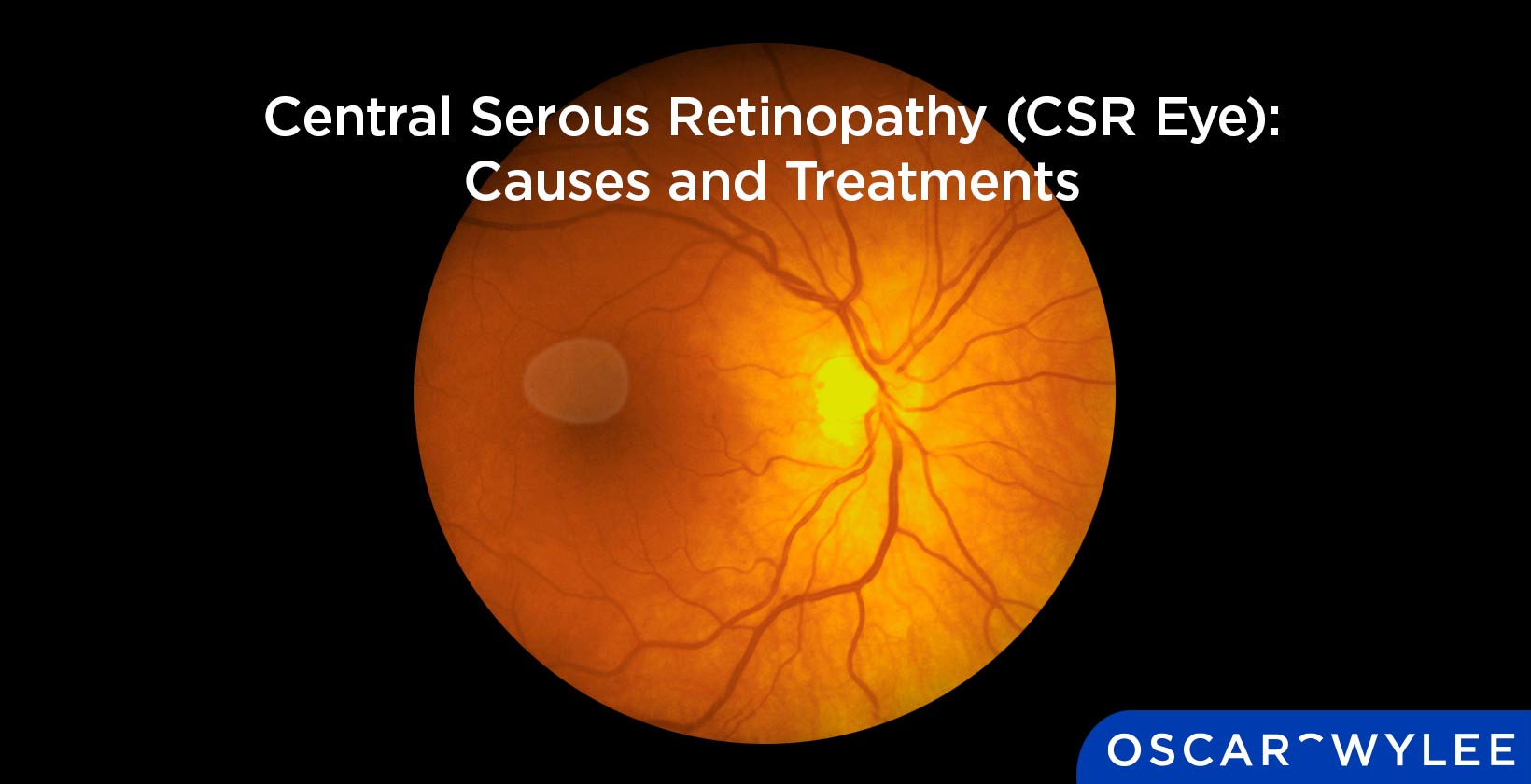
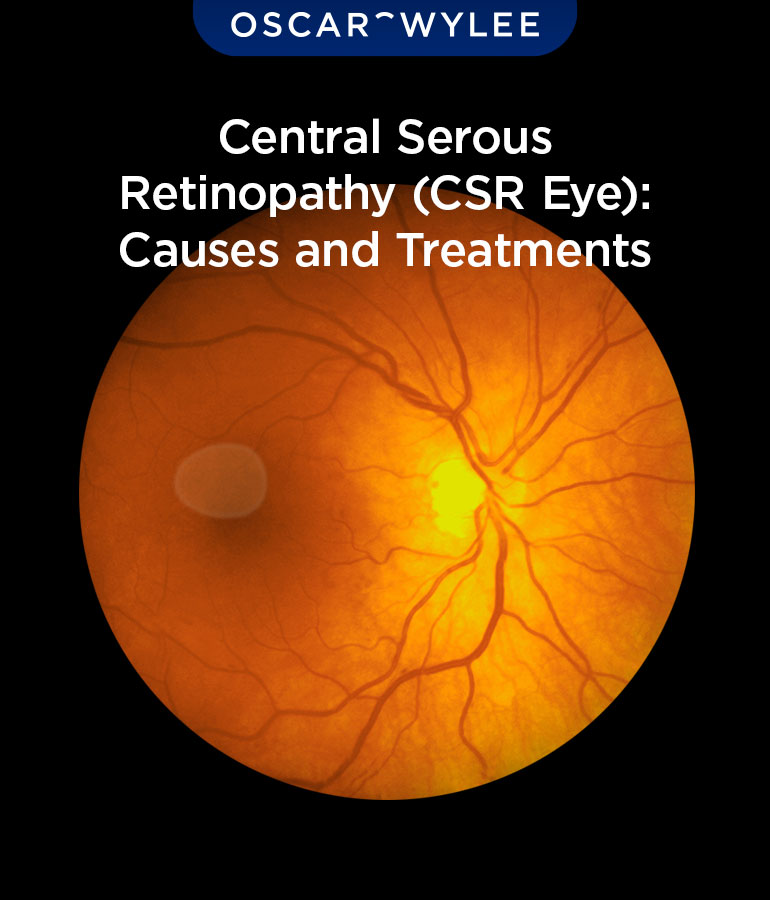
Central Serous Retinopathy (CSR): Causes and Treatment
Published on October 5th, 2026
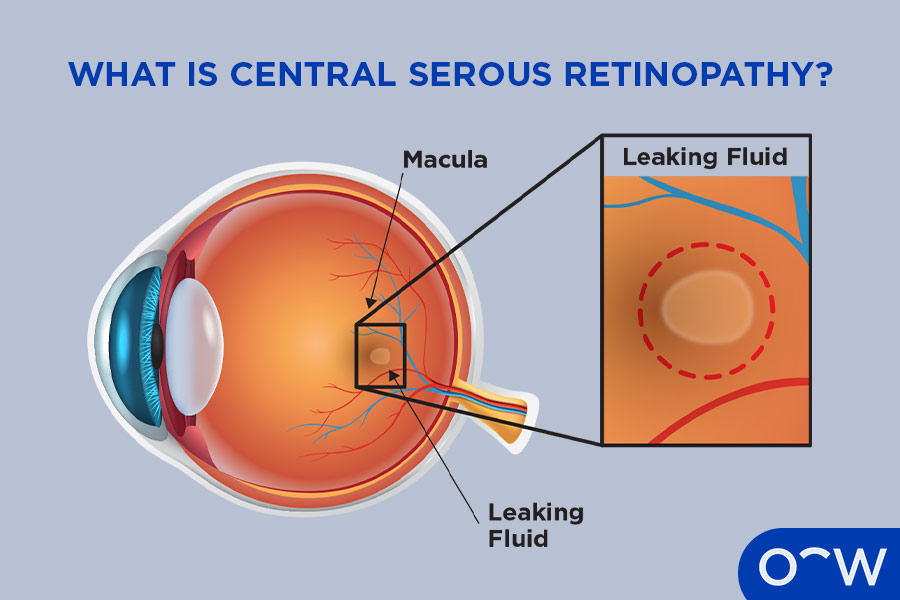
Central Serous Retinopathy, also known as central serous chorioretinopathy, is a condition where fluid leaks under the retina. This leakage occurs in the macula, the part of the retina responsible for detailed central vision, leading to reduced or distorted vision, according to the Macular Disease Foundation Australia. Central Serous Retinopathy is diagnosed through an eye test performed by an eye health professional. Read more about central serous retinopathy, including symptoms, treatment, and risk factors.
What is Central Serous Retinopathy?
Central Serous Retinopathy is a condition characterised by fluid buildup, caused by fluid leakage through the retinal pigment epithelium (RPE) layer. This can lead to symptoms such as blurred or decreased vision, scotoma, and objects appearing smaller than they are, according to Macular Disease Foundation Australia. It typically affects males between the ages of 20 and 50, according to Northern Beaches Cataract.
What does CSR Mean in Medical Terms?
CSR in medical terms means central serous retinopathy, but it can also be called central serous chorioretinopathy. Both can be used to describe the same condition.
Is Central Serous Retinopathy the Same as Central Serous Chorioretinopathy?
Yes, central serous retinopathy is the same as central serous chorioretinopathy. These names are used interchangeably to name the condition.
What Causes Central Serous Retinopathy?
The cause of central serous retinopathy is a fluid blister under the macula. This happens due to a disturbance within retinal pigment epithelial cells (RPE), which form a barrier between the retina and the underlying blood vessel layer, called the choroid, according to the Retinology Institute.
Can Stress Cause Fluid to Build Up Behind the Retina?
Yes, stress is known to cause fluid to build up behind the retina. This is because increased stress hormones can affect the blood vessels beneath the retina, leading to fluid build-up and leakage, according to Sydney Retina Clinic.
Can Stress Trigger Central Serous Retinopathy?
Yes, stress can trigger central serous retinopathy. Research has been done that links high-stress occupations and poor sleep quality to the onset of central serous retinopathy, according to Bright Sight Specialists.
What Symptoms Can Central Serous Retinopathy Cause?
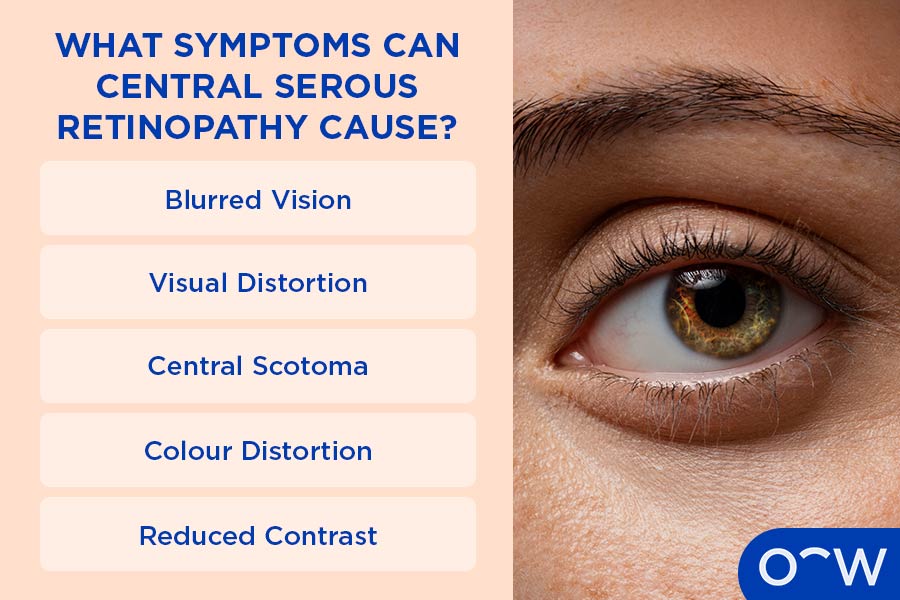
The symptoms that central serous retinopathy can bring about include blurred vision, visual distortion, central scotoma, micropsia, and reduced contrast. Read more about these symptoms of central serous retinopathy below.
1. Blurred Vision
Blurred vision is a common symptom of central serous retinopathy. The sharpness and clarity of your vision can be compromised as a result of central serous retinopathy.
2. Visual Distortion
Visual distortion refers to changes that can affect the shape, size, or colour of objects in your line of vision, according to Rowland. C and Lee. L’s paper titled ‘Ocular Causes of Visual Distortions’, published in the Australian Journal of General Practice in 2019. It is a common occurrence for those with central serous retinopathy.
3. Central Scotoma
A central scotoma is a gap in your visual field, typically a dark spot, that covers the central part of your line of sight. This blockage in vision can prevent you from seeing everything in your line of vision clearly and unimpeded.
4. Colour Distortion
Colour distortion can occur for those with central serous retinopathy. This typically appears as white objects appearing dull in colour or exhibiting a brownish hue, according to Singleton Eye Surgery.
5. Reduced Contrast
Reduced contrast between objects in the visual field is a common symptom amongst those who have central serous retinopathy. This can make it harder to differentiate between objects in your line of sight.
How is Central Serous Retinopathy Diagnosed?
Central serous chorioretinopathy is diagnosed during an eye test through tests such as an OCT scan and angiogram. An OCT scan will provide high-resolution cross-sectional images of the tissue layers of the retina where the condition can be detected. An angiogram may be used, in which dye is injected into the blood through a vein in your arm. The dye will then reach the eye through the bloodstream and circulate through the retina. The eye health professional attending to you will then use a special camera to take images of your retina.
What Does a CSR OCT Scan Show?
A CSR OCT scan will show the buildup of fluid beneath the retina.
Can OCT Detect Fluid Behind the Retina?
Yes, an OCT scan can detect fluid behind the retina. It is used to detect eye conditions such as CSR.
How does Central Serous Retinopathy Affect Vision?
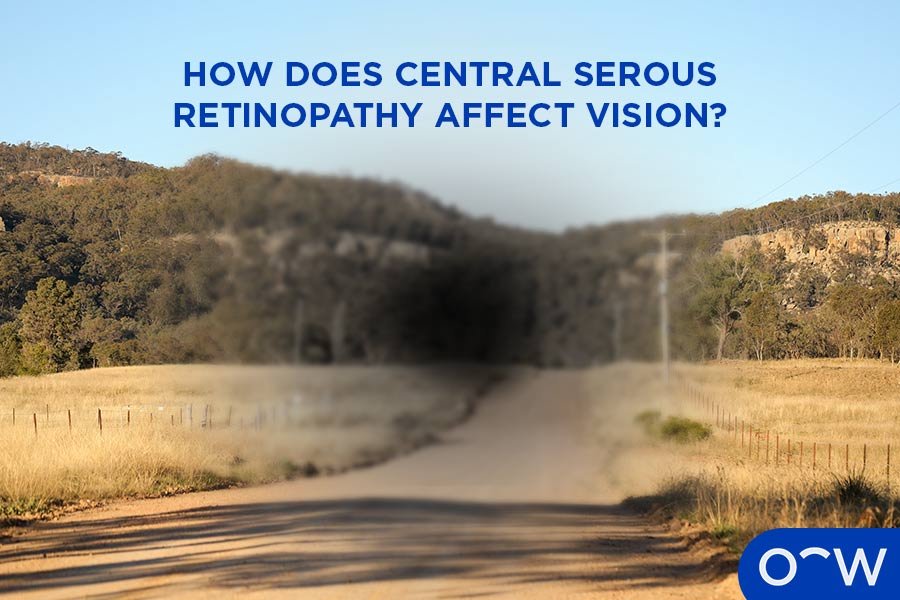
Central serous retinopathy affects vision as it leads to blurred or decreased sight, distortion, scotomas, inaccurate depth perception, and washed-out colour in the line of vision, according to Macular Disease Foundation Australia.
What Does Central Serous Retinopathy Look Like?
Central serous retinopathy looks like a dome-shaped elevation of the retina on an OCT scan.
Can CSR Affect One or Both Eyes?
CSR typically affects one eye; however, in some cases it can affect both eyes, according to Macular Disease Foundation Australia.
What Treatments are Used for Central Serous Retinopathy?
The treatments that are used for central serous retinopathy include professional observation, laser treatment, and photodynamic therapy, according to Sydney Eye Surgeons. Read more about these treatments used for central serous retinopathy below.
- Professional observation: Professional observation is the most common treatment for CSR. The condition should be monitored closely by an eye health professional; however, no actual treatment is often needed. The condition can resolve in a few months on its own.
- Laser treatment: Laser treatment may be considered for patients who still have symptoms after 4-6 months.
- Photodynamic therapy: Photodynamic therapy involves the infusion of a special dye followed by a laser, which activates the dye in the retina. It aims to drain the fluid leakage.
How is Central Serous Retinopathy Treated?
Central serous retinopathy is treated by one of three options: thermal laser, photodynamic therapy with Visudyne or anti-VEGF injections, according to the Terrace Eye Centre. The treatment plan will ultimately be determined by the health professional you consult.
Can CSR Go Away Without Treatment?
Yes, in many cases CSR can go away without treatment as the fluid can reabsorb into the body, according to The Eye Specialist Institute.
How Long Does Central Serous Retinopathy Last?
Typically, central serous chorioretinopathy lasts between one to four months, according to the Macular Disease Foundation Australia. If it lasts beyond this, treatment will be undertaken.
Can Central Serous Retinopathy Come Back?
Yes, central serous retinopathy can come back, most notably in people with risk factors such as stress or steroid use, according to Sydney Retina.