


 1300 164 990

Central Retinal Vein Occlusion (CRVO): Causes, Symptoms and Treatment
Published on March 20th, 2026
Central Retinal vein occlusion (CRVO) is a type of retinal vascular disease that commonly contributes to a loss of vision in older patients. The causes of central retinal vein occlusion can include blood clots, high blood pressure, smoking and glaucoma. Patients with retinal vein occlusion may experience symptoms such as blurred vision, floaters and gradual or sudden vision loss, according to the Eye Specialist Institute. The treatment for central retinal vein occlusion may involve anti-VEGF injections and laser treatment, according to Blair and Czyz (2023). Optometrists and other eye care professionals can diagnose central retinal vein occlusion through a routine eye test.
What Is Central Retinal Vein Occlusion (CRVO)?
Central retinal vein occlusion (CRVO) refers to a blockage in the primary retinal vein, causing blood and fluid to spill out into the retina, which can lead to swelling in the macula affecting central vision, according to Vemulakonda (2025). The disruption of blood flow can cause the nerve cells to die and worsen vision.
How Does Central Retinal Vein Occlusion (CRVO) Impact Retinal Blood Flow?
Central retinal vein occlusion (CRVO) impacts retinal blood flow as it hinders blood from draining from the retina. Blood flow becomes impeded due to a blocked vein, which can usually stem from a blood clot. Vein blockage would then cause a fluid leakage, potentially resulting in retinal ischaemia (lack of oxygen supply to the retina), depending on the severity.

Can Central Retinal Vein Occlusion (CRVO) Lead to Blindness?
Yes, central retinal vein occlusion (CRVO) may lead to blindness. Central retinal vein occlusion is considered one of the main causes of painless vision loss in older individuals and, in severe cases, can lead to blindness, according to Blair and Czyz (2023).
What are the Main Causes of Central Retinal Vein Occlusion (CRVO)?
The main causes of Central Retinal Vein Occlusion (CRVO) may include blood clots, high blood pressure, diabetes and other risk factors such as increasing age, glaucoma, high cholesterol, smoking and other conditions that increase the risk of blood clotting. The main causes of central retinal vein occlusion are listed below.
- Blood Clots: Blood clots can cause retinal vein occlusion (CRVO) as they can hinder the primary vein from draining blood from the retina. This can also result in blood and fluid accumulating, causing swelling in the macula.
- High Blood Pressure: High blood pressure may be considered one of the main causes of central retinal vein occlusion, as this can result in changes to the structure of the retinal blood vessels in the arteries. According to Berguig et al. (2023), hypertension was reported to be a primary risk factor seen in elderly patients, but was less prevalent in younger patients.
- Diabetes: Diabetes can be a risk factor for central retinal vein occlusion. Some studies reported that patients with diabetes had increased risks of retinal vein occlusion, according to Science Direct.
How do Systemic Health Conditions Contribute to Central Retinal Vein Occlusion (CRVO)?
Systemic health conditions may contribute to central retinal vein occlusion due to their impact on the eye's internal structures. Some systemic health conditions may increase the risk of developing blood clots, reduced blood flow or damage. According to Chen et al. (2020), the most commonly linked systemic diseases seen in older central retinal vein occlusion patients included hypertension, hyperlipidemia, diabetes, tobacco use, glaucoma and obesity. The most commonly linked systemic conditions seen in younger patients with central retinal vein occlusion included venous thrombosis, diabetes, tobacco use, hypertension, hypercoagulable states, glaucoma, and rheumatoid arthritis/collagen vascular diseases.
Does High Blood Pressure Increase the Risk of Central Retinal Vein Occlusion (CRVO)?
Yes, high blood pressure, also known as hypertension, can increase the risk of central retinal vein occlusion (CRVO). High blood pressure is generally considered a predominant risk factor for CRVO and is often seen in both young and older patients diagnosed with CRVO, according to Kim et al., (2023).
Is Obesity a Risk Factor for Central Retinal Vein Occlusion (CRVO)?
Yes, obesity may be a risk factor for central retinal vein occlusion (CRVO). Obesity may contribute to the potential development of central retinal vein occlusion (CRVO) due to its other commonly associated health conditions, such as increased blood pressure and diabetes.
What are the Symptoms of Central Retinal Vein Occlusion (CRVO)?
The symptoms of central retinal vein occlusion primarily include painless loss of vision. It is also often mentioned that blurry vision may also occur as a symptom. According to Blair and Czyz (2023), central retinal vein occlusion is one of the primary causes of sudden and painless loss of vision in adults.
How Does Central Retinal Vein Occlusion (CRVO) Affect Vision Clarity?
Central retinal vein occlusion (CRVO) may affect vision clarity by causing either a gradual or sudden loss of vision, depending on the severity. Central retinal vein occlusion can impact vision due to the resulting vein blockage, which, in turn, causes blood and fluid to leak out into the retina. This can then lead to the macula swelling from the fluid build-up. However, it may also be important to note that patients have historically complained of sudden distorted or blurry vision in one eye, according to Blair and Czyz (2023).
Can Central Retinal Vein Occlusion (CRVO) Cause Sudden Vision Loss?
Yes, central retinal vein occlusion (CRVO) can cause gradual or sudden vision loss, depending on the severity. Reduced blood flow or a blood clot can cause a blockage in the vein, preventing the blood from leaving the eye. The fluid backup can lead to macular edema (swelling) and hinder blood and oxygen flow in the eye, which can impair vision.
Is Blurred Vision a Common Symptom of Central Retinal Vein Occlusion (CRVO)?
Blurred vision can be a common symptom of central retinal vein occlusion (CRVO) due to its impact on the different structures in the eye, affecting vision clarity and, therefore, resulting in blurry vision and vision loss. Vein blockage from potential blood clots or reduced blood flow can hinder the retina from functioning properly.
How is Central Retinal Vein Occlusion (CRVO) Diagnosed?
Central retinal vein occlusion may be diagnosed through a standard eye test conducted by an optometrist. They will then refer you to an ophthalmologist for further evaluation and treatment, according to the Macular Disease Foundation. Optometrists are trained to diagnose a range of eye conditions, including central retinal vein occlusion, through a routine eye test. Sometimes a dilated fundus examination is performed secondary to the routine eye test to confirm the diagnosis, but an ophthalmologist will be the one to provide treatment solutions.
Which Eye Test Can Detect Central Retinal Vein Occlusion (CRVO)?
The eye tests that can detect retinal vein occlusion generally include all the standard components of a regular eye test; however, there may be other testing involved for further examination of your condition. The eye tests that detect central retinal vein occlusion may include a fundus exam, OCT scan and a fluorescein angiography. The eye tests that can detect central retinal vein occlusion (CRVO) are listed below.
- Fundus Exam: A fundus exam can help detect central retinal vein occlusion, as it helps eye care professionals to look at the structures in your eye more closely using an ophthalmoscope. A fundus exam allows eye care professionals to check the structures at the back of the eye, such as the blood vessels and retina.
- OCT Scan: An OCT scan, or optical coherence tomography, uses a special machine that works by capturing images of the retina and optic nerve. This can help eye care professionals identify any early signs of central retinal vein occlusion, glaucoma and diabetic eye disease.
- Fluorescein Angiography: A fluorescein angiography is typically used after a CRVO diagnosis to provide more information about its severity.
Is Optical Coherence Tomography (OCT) effective for diagnosing Central Retinal Occlusion (CRVO)?
Yes, optical coherence tomography can be effective for diagnosing central retinal occlusion (CRVO). An optical coherence tomography allows the eye care professional to capture high-resolution images of the retina, which can highlight any signs of swelling.
What Imaging Tests Provide the Most Accurate Detection of Central Retinal Vein Occlusion (CRVO)?
The imaging tests that can provide the most accurate detection of central retinal vein occlusion are the standard eye tests that are generally performed at the optometrist. Optometrists may also perform a dilated fundus examination in some cases to better view the retina for abnormalities. Your optometrist will be able to identify signs of swelling or issues with the blood vessels. When you are referred to an ophthalmologist, they will also conduct a regular eye test and may perform additional testing for further evaluation of your symptoms.
Can Fluorescein Angiography Help in Diagnosing Central Retinal Vein Occlusion (CRVO)?
Yes, a fluorescein angiography helps in diagnosing central retinal vein occlusion (CRVO). A fluorescein angiography can aid in detecting central retinal vein occlusion by injecting a special dye into the vein, usually in your arm, which then travels to the vessels in your eye and highlights your blood vessels, allowing the ophthalmologist to see any problems. They will need to use eye drops to dilate your pupils.
How can Glasses Help Patients With Central Retinal Vein Occlusion (CRVO)?
Glasses may not help patients with central retinal vein occlusion (CRVO) if their vision impairment or vision loss is caused by CRVO. Glasses are designed to help correct refractive errors, such as myopia, hyperopia or astigmatism, by bending light correctly onto the retina, whereas central retinal vein occlusion relates to a problem with the blood vessels in the eye.
What Treatments are Available for Central Retinal Vein Occlusion (CRVO)?
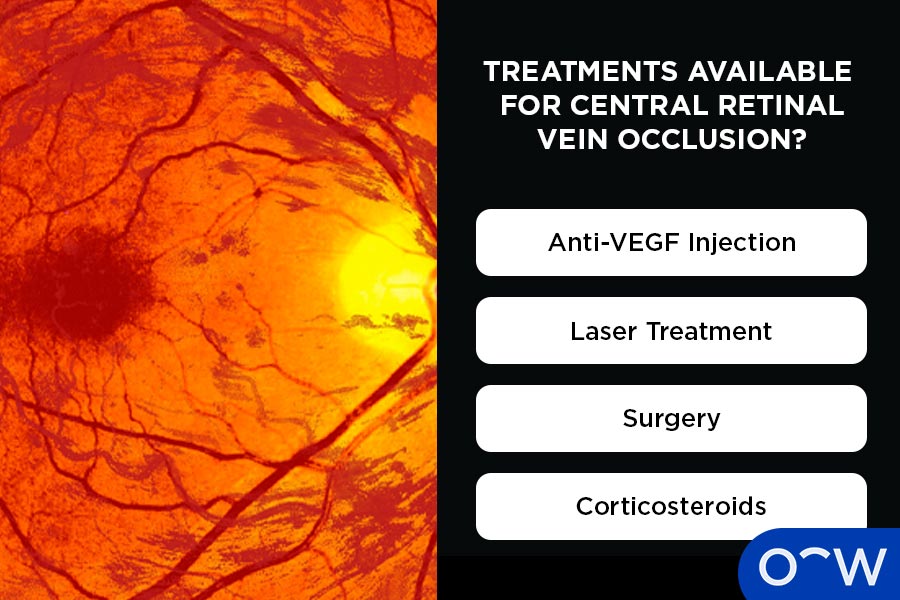
The treatments available for central retinal vein occlusion can include anti-VEGF injections, laser treatment, corticosteroids and surgery. It is important to note that there is no cure for central retinal vein occlusion; however, the treatment options available focus on reducing swelling and preventing the abnormal vessel growth. The treatments available for central retinal vein occlusion are listed below.
- Anti-VEGF Injections: Anti-VEGF injections are often the first line of treatment for central retinal vein occlusion, as it helps with reducing retinal swelling and stop any abnormal growth of blood vessels.
- Laser Treatment: Laser treatment can be a treatment option for central retinal vein occlusion, as it aids in preventing abnormal blood vessel growth.
- Corticosteroids: Corticosteroids can be injected into the eye to treat swelling and can be commonly used to help central retinal vein occlusion using forms such as dexamethasone implant (Ozurdex) and triamcinolone acetonide.
- Surgery: Surgery may be reserved for central retinal vein occlusion patients who have severe bleeding in the eye (vitreous hemorrhage), high pressure in the eye or continuous swelling.
How do Anti-VEGF Injections Improve Vision in Central Retinal Vein Occlusion (CRVO) Patients?
Anti-VEGF injections may improve vision in central retinal vein occlusion patients as it helps alleviate swelling and prevent abnormal blood vessels from growing. However, this may depend on the severity of your condition.
Are Corticosteroid Implants an Effective Option for Central Retinal Vein Occlusion (CRVO)?
Yes, corticosteroid implants may be an effective option for central retinal vein occlusion as they are meant to manage swelling, target inflammation and are typically a second line of treatment. Corticosteroids may be a second-choice treatment option if the patient's condition does not improve in response to anti-VEGF treatments. According to Ashraf and Souka (2015), corticosteroids have a higher incidence rate of side effects, making anti-VEGF the first line of treatment.
What are the Potential Complications of Central Retinal Vein Occlusion (CRVO)?
The potential complications of central retinal vein occlusion include macular edema, neovascularisation and vision loss. The potential complications of central retinal vein occlusions are listed below.
- Macular Edema: Macular edema can be a complication of retinal vein occlusion and can occur when fluid builds up from damaged blood vessels.
- Neovascularisation: Neovascularisation refers to the growth of new blood vessels that are weak or leaky in response to injury or low oxygen. They can cause vision loss, severe bleeding or tissue damage.
- Vision Loss: Vision loss can be a serious complication of central retinal vein occlusion due to the vein blockage that occurs from a blood clot or reduced blood flow. Vision loss from CRVO is painless and gradual to sudden, depending on the severity.
How Can Central Retinal Vein Occlusion (CRVO) Lead to Neovascularisation?
Central retinal vein occlusion can lead to neovascularisation when there is a lack of oxygen, chronic inflammation or injury. However, this can depend on the severity of your condition and may not occur in all cases of CRVO. The newly grown blood vessels are often susceptible to leaking and/or fragile, which can cause damage or, in severe cases, vision loss.
Can Central Retinal Vein Occlusion (CRVO) Cause Secondary Eye Diseases?
Yes, central retinal vein occlusion (CRVO) may cause secondary eye disease, depending on the extent of your condition. The primary eye condition that can arise from central retinal vein occlusion may be vision loss. Patients who have CRVO may also already have other eye diseases, such as glaucoma.
How does Central Retinal Vein Occlusion (CRVO) Compare to Branch Retinal Vein Occlusion (BRVO)?
Central retinal vein occlusion (CRVO) can differ from branch retinal vein occlusion as it may be considered more severe. Central retinal vein occlusion is associated with the main retinal vein, resulting in widespread damage, whereas branch retinal vein occlusion affects a smaller retinal vein. However, both types of retinal vein occlusion can lead to vision loss.
Is Central Retinal Vein Occlusion (CRVO) Generally More Severe Than Branch Retinal Vein Occlusion (BRVO)?
Yes, central retinal vein occlusion is generally more severe than branch retinal vein occlusion. Central Retinal Vein Occlusion affects the main retinal vein, whereas Branch Retinal Vein Occlusion affects one of the tributaries of the main retinal vein, according to Blair and Czyz (2023). Central Retinal Vein Occlusion is more severe because Branch Retinal Vein Occlusion affects a smaller branch of the retinal vein, and therefore leads to better visual outcomes for patients and increased rates of natural improvement. Vision loss and further complications are often greater in patients with Central Retinal Vein Occlusion, and it is generally more common.
How to Prevent Central Retinal Vein Occlusion (CRVO)?
To prevent central retinal vein occlusion, you should manage your cardiovascular health, which includes practising a healthy lifestyle and receiving regular check-ups from your doctor. It is important to note that, while there are generally recommended habits to maintain overall health, central retinal vein occlusion cannot necessarily be prevented through such methods. The main recommended strategies include managing blood pressure, controlling diabetes risk, eating a healthy diet, regular exercise, quitting smoking, limiting or quitting alcohol consumption, and receiving regular eye checks. Exercise helps to keep blood circulating well in your body, which can help prevent clotting and blockages in the veins. It also reduces obesity risk, which can be a major factor in the development of central retinal vein occlusion. This ties in with maintenance of a healthy diet, which keeps your heart healthy and weight stable, reducing your risk of developing the disease. By quitting smoking and limiting and/or quitting alcohol consumption, vascular disease risk is lowered significantly, including the development of Central Retinal Vein Occlusion. It is vital to receive regular eye checks to maintain the health of your eyes, and ophthalmologists are able to detect early signs of the disease.
Which Lifestyle Habits Can Reduce the Risk of Central Retinal Vein Occlusion (CRVO)?
There are lifestyle habits you can practice to reduce the risk of Central Retinal Vein Occlusion, including exercise, consuming a healthy diet, quitting smoking, limiting alcohol intake, keeping your blood pressure controlled, and receiving regular eye exams. The lifestyle habits you can follow to reduce your risk of Central Vein Occlusion are explained below.
- Exercise: Getting enough exercise ensures good circulation in the body, lowering the likelihood of vein blockages. It also helps to manage blood pressure and keep your weight healthy, which is also important as obesity can lead to hypertension and diabetes, both of which are known to be causes of Central Retinal Vein Occlusion.
- Healthy Diet: Maintaining a heart-healthy diet supports vascular health and can reduce your risk of developing Central Retinal Vein Occlusion. Focus on a diet rich in fruits, vegetables, and fibre.
- Quitting smoking: Quitting smoking is one of the most important lifestyle changes to make to reduce your risk of Central Retinal Vein Occlusion. Smoking damages blood vessels and increases the risk of cardiovascular conditions such as Central Retinal Vein Occlusion.
- Limit alcohol: Limiting or quitting alcohol helps to manage cholesterol and blood pressure, which is important if you want to limit your possibility of developing Central Retinal Vein Occlusion.
- Blood Pressure Control: It is important to keep your blood pressure healthy and receive regular checks to prevent vascular damage.
- Regular Eye Exams: Regular eye exams help with the early detection of Central Retinal Vein Occlusion. It is recommended to get your eyes checked at least every 2 years.
Can Protective Eyewear Contribute to Central Retinal Vein Occlusion (CRVO) Prevention?
Protective eyewear does not play a direct role in Central Retinal Vein Occlusion prevention. Central Retinal Vein Occlusion is a vascular disease; it is not caused by external environmental factors such as UV light or debris. Protective glasses can also not prevent the disease, as it is an internal eye disease caused by thrombosis or retinal vein compression. The best ways to prevent Central Retinal Vein Occlusion are by managing your blood pressure, controlling your diabetes risk, plenty of exercise, consuming a healthy diet, quitting smoking, limiting alcohol intake, keeping your blood pressure controlled, and receiving regular eye exams.