


 1300 164 990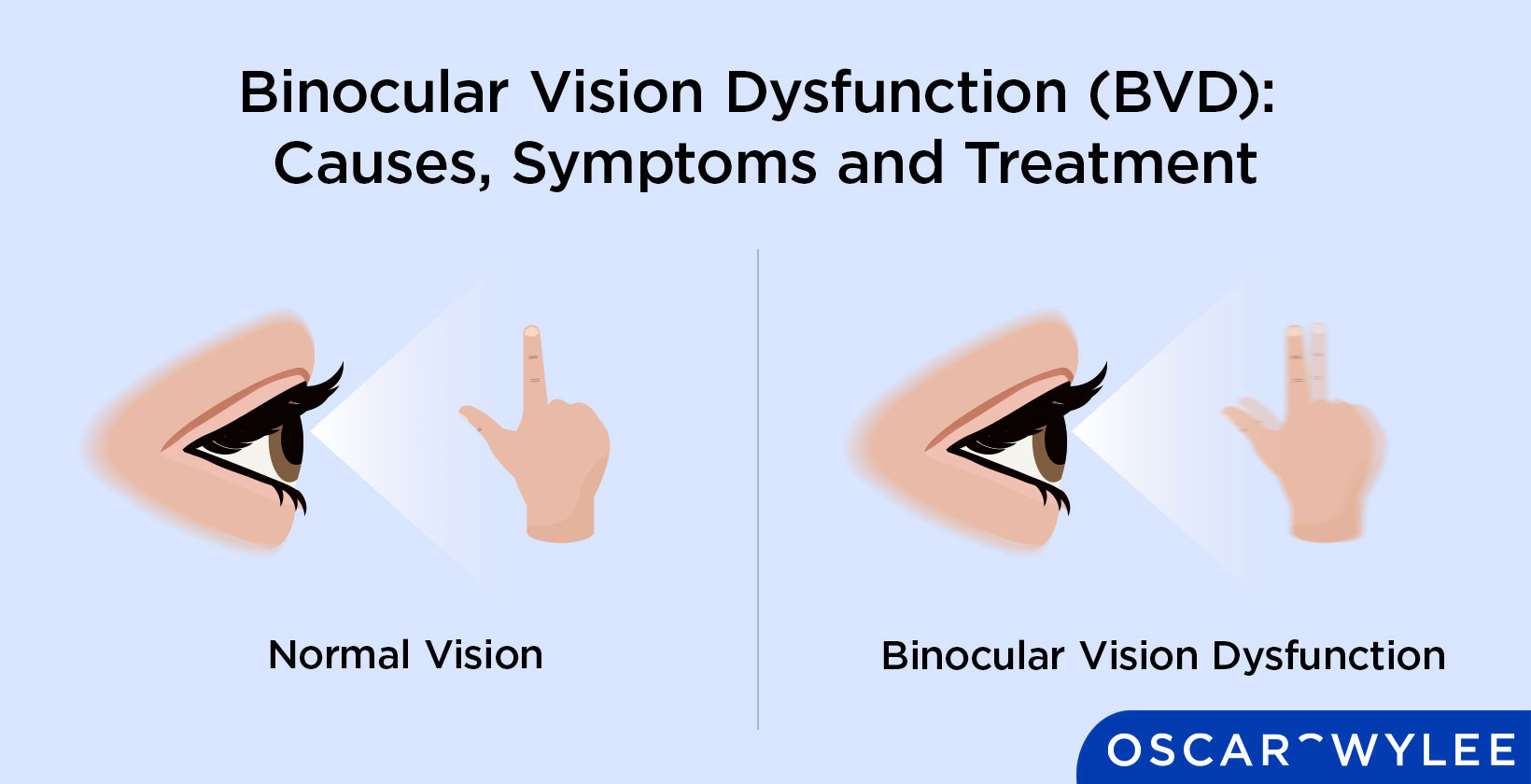
Binocular Vision Dysfunction (BVD): Causes, Symptoms and Treatment
Published on August 6th, 2026
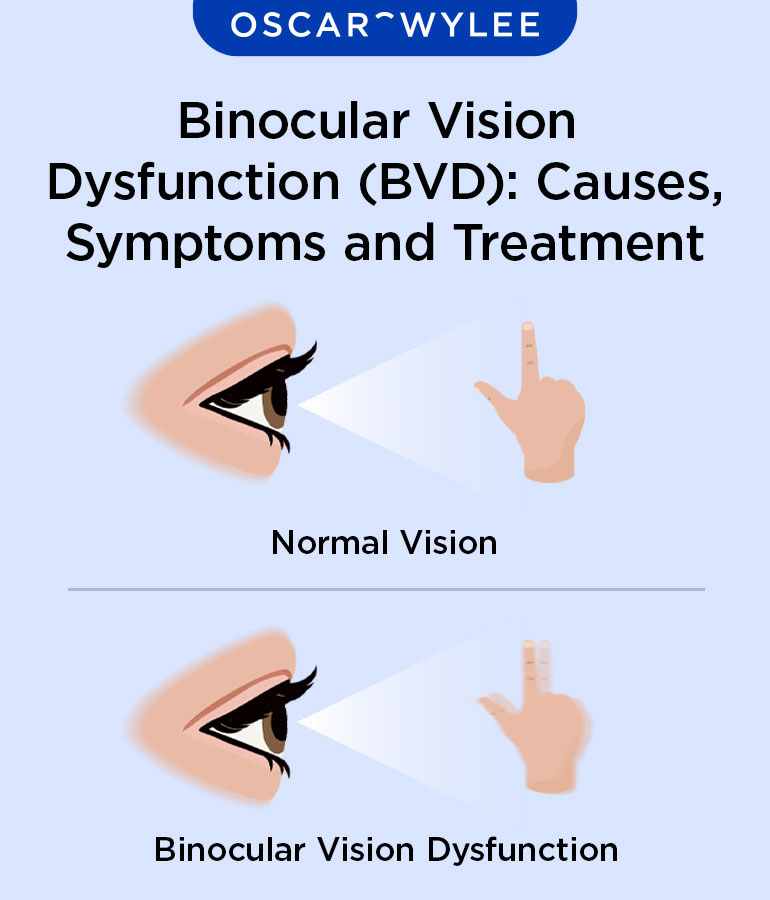
Binocular Vision Dysfunction (BVD) is a condition that causes misaligned eyes hindering your ability to see one clear image. Binocular Vision Dysfunction can stem from neurological or brain conditions that implicate the visual system, such as a brain injury, concussion, stroke and multiple sclerosis, according to Healthline. An optometrist can diagnose this condition during your routine eye test. Symptoms of binocular vision dysfunction that may affect individuals visually can include blurred or double vision, eye strain or fatigue, trouble maintaining focus and light sensitivity. Prism lenses can aid with redirecting light that enters the eye to correct the view of images as well as other therapies depending on the extent of your condition.
It is important to note that Oscar Wylee offers optometry services only; this article is for educational purposes only and is not a substitute for professional medical advice, diagnosis, or treatment.
What is Binocular Vision Dysfunction (BVD)?
Binocular vision dysfunction is a condition that causes eye misalignment that may result in blurry or double vision. Binocular vision dysfunction can be caused by several different factors; however, it may more commonly develop from a concussion, brain injury, multiple sclerosis or a stroke. While it can largely impact clear vision, it may also result in symptoms such as blurred or double vision, eye strain or fatigue, trouble maintaining focus and light sensitivity.
What Makes Binocular Vision Possible?
Binocular vision is made possible by three main components working together, which include your eyes, your eye muscles, and your brain. Due to the position of your eyes; on the front of your face and slightly apart, each eye sees a slightly different angle of the same image. The muscles in each eye work together to keep both eyes pointed at the exact same spot at the same time. Your brain takes the two flat pictures sent from your eyes, merges them into one single image, and uses the small differences between them to create a 3D image of the object.
Is Binocular Vision Dysfunction the Same as Poor Eyesight?
No, binocular vision dysfunction is not the same as poor eyesight. Binocular vision dysfunction is when the eyes cannot coordinate and work together. Poor eyesight likely refers to an individual who has nearsightedness or farsightedness.
What Causes Binocular Vision Dysfunction?
The causes of binocular vision dysfunction can include having vision problems, eye problems and brain problems, according to Healthline. Vision problems can be a cause of binocular vision dysfunction and include issues such as presbyopia, farsightedness, nearsightedness and astigmatism. The eye problems that may contribute to binocular vision dysfunction developing can include strabismus (crossed eyes) and amblyopia (lazy eye). Brain conditions that may also cause binocular vision dysfunction include migraines or strokes and nerve-related problems such as sixth nerve palsy.
How Do Eye Misalignment Problems Lead to BVD?
Eye misalignment problems may lead to BVD as they cause the eyes to point in different directions, hindering both eyes from working together at the same time. Misaligned eyes or crossed eyes (strabismus) can prevent the eyes from sending one clear image to the brain.
What are the Symptoms of Binocular Vision Dysfunction?
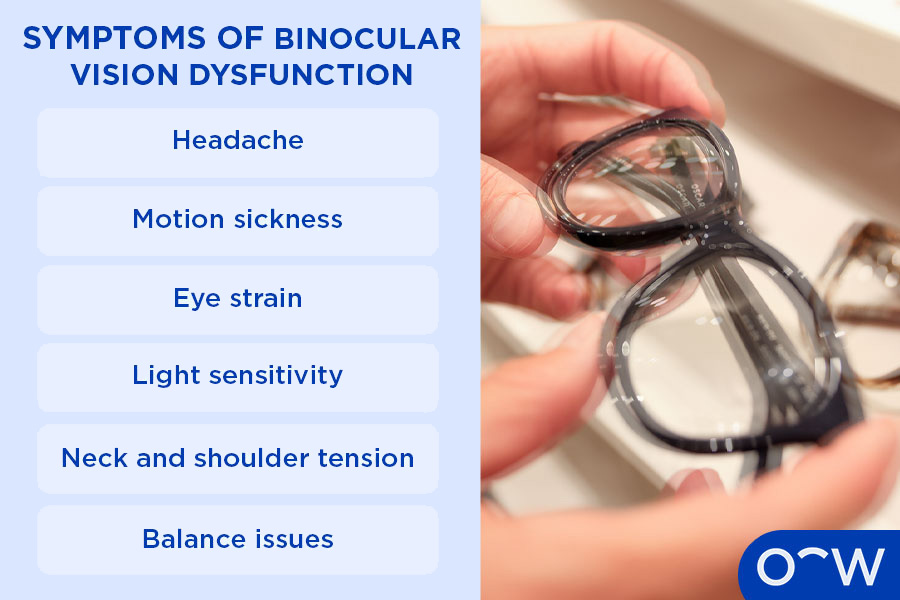
- Blurred Vision: Blurred vision is a symptom of binocular dysfunction, which can be a result of both eyes not working together to create one clear picture.
- Double Vision: Double vision is a symptom of binocular vision dysfunction due to the misalignment of the eyes, preventing them from pointing in the same direction.
- Eye Strain: Eye strain is a symptom of binocular vision dysfunction as the eye muscles exert effort trying to merge the two images together to create one clear image.
- Headaches: Headaches are a symptom of binocular vision dysfunction due to the eye strain that can occur from the eyes overworking to see clearly.
Can BVD Cause Blurred Vision?
Yes, BVD can cause blurred vision. Binocular vision dysfunction can result in blurry vision due to the eyes being misaligned and therefore not being able to coordinate together to create a single clear image for the brain.
How is Binocular Vision Dysfunction Diagnosed?
Binocular vision dysfunction may be diagnosed through a standard eye test with an optometrist. When examining your eyes and vision, the optometrist will be able to assess how well your eyes work together and see whether they are misaligned or not.
What Tests are Used to Diagnose BVD?
The tests that may be used to diagnose BVD can include eye movement testing and an eye alignment assessment. An eye health professional may assess how smooth your eyes move, how they move and evaluate the position of your eyes. It is important to get regular eye tests to stay on top of any potential issues and ensure a better chance of early detection.
How is Binocular Vision Dysfunction Treated?
Binocular vision dysfunction may be treated through different methods depending on the underlying cause and condition. Some treatment options can include prism lenses, vision therapy and treating underlying conditions.
What Treatment Options Are Available for BVD?
The treatment options that may be available for BVD include prism lenses, vision therapy and treating underlying conditions. The treatment options available for BVD are listed below.
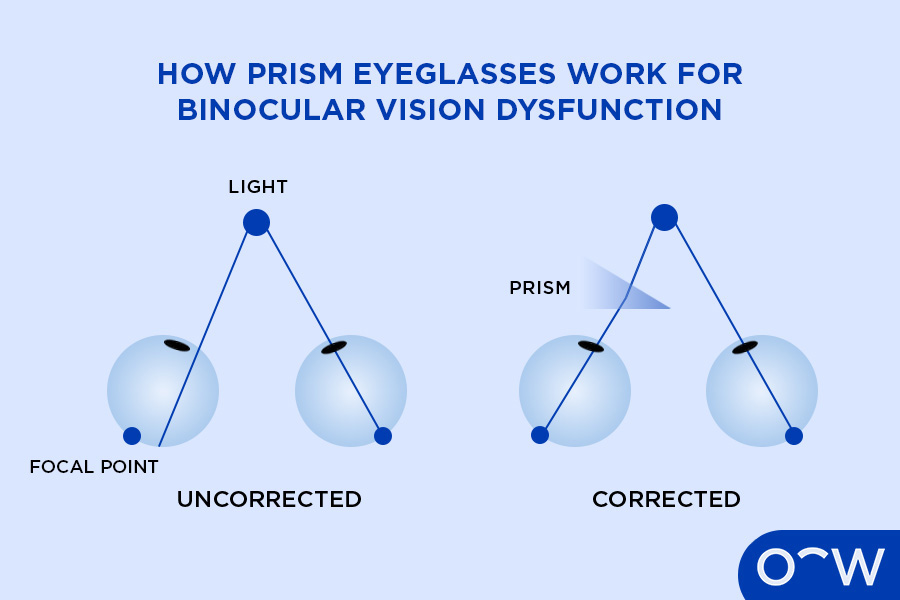
- Prism Lenses: Prism lenses may be used to help treat or more so manage BVD by bending incoming light so it aligns with the direction your eyes are pointed. It may be important to note that prism is a specific measurement that is added to your glasses prescription and will be displayed as a number such as 0.5 or 2.0.
- Vision Therapy: Vision therapy may involve specific exercises to help improve communication between your brain and eyes.
- Treating Underlying Conditions: Treating underlying conditions may be important in managing BVD, as there are many types of conditions that can contribute to the development of BVD. Addressing brain and nerve conditions, especially, may aid in reducing BVD symptoms.
How Do Prism Eyeglasses Help Treat Binocular Vision Dysfunction?
Prism eyeglasses can help treat binocular vision dysfunction by changing the direction of incoming light so it reaches the correct position on the retina. An optometrist will add prism to your glasses prescription
How does BVD Compare With Other Vision Problems?
BVD may compare differently with other vision problems as the issue lies in the coordination and movement of the eyes rather than visual clarity. Other vision problems such as nearsightedness or farsightedness, for example, are related to the irregular shape of the cornea or lens. BVD can present symptoms that are similar to many other common eye conditions.
What Is the Difference Between BVD and Astigmatism?
The difference between BVD and astigmatism is primarily their cause. BVD is characterised by the misalignment of the eyes, which can cause double vision, blurry vision, eye strain and headaches. Astigmatism can arise from having an abnormally shaped cornea, leading to blurry vision.
What Is It Like to Live With Binocular Vision Dysfunction?
Living with binocular vision dysfunction may mean regularly dealing with blurry or double vision, fatigue, and eye strain. Receiving care from an eye care professional may provide relief for symptoms and general advice on managing day-to-day living.
Does Binocular Vision Dysfunction Affect Driving or Reading?
Yes, binocular vision dysfunction may affect driving or reading. Individuals with binocular vision dysfunction may find it difficult to assess distances or see optimally in low light situations. Words or images on pages likely appear blurry and affect concentration on tasks, especially for children.