


 1300 164 990
10 Eye Health Myths
Published on November 23rd, 2026
There are plenty of eye myths we all have heard over the years, and even believe. Whether from parents, friends or the internet, eye myths we learn about can stick with us, despite their unproven nature. From the power of carrots in improving eyesight, the effects of digital devices and the appropriate times to wear sunglasses, read more on the truth behind some of the biggest eye health myths.
1. Eating Carrots Can Improve Your Eyesight
Eating carrots can contribute to eyesight health as they help your body produce vitamin A, which is necessary for maintaining healthy eye function, according to Westside Eye Clinic. It is important to have carrots to keep up healthy levels of vitamin A, however, it will not be able to improve your eyesight, night vision, or keep it from deteriorating solely by itself. This myth actually has its origins during World War II as the British government ordered blackouts to conduct air raids aided by technology that allowed them to target German aircraft in dark conditions. To cover up this technology, the British government said soldiers were consuming carrots to acquire optimal night vision, according to Kind Sight Eye Specialists.
2. Reading in Dim Light Can Permanently Damage Your Eyes
Reading in dim light is sometimes believed to permanently damage your eyes. Reading in dim light can cause eye strain and headaches and is not recommended. However, there is no evidence to suggest it will permanently damage your eyesight and eye health.
3. Wearing Glasses Makes Your Eyesight Weaker
The myth that wearing glasses makes your eyesight weaker has become a popular one. Many believe that constant use of glasses can weaken your visual clarity and increase the prescription in your glasses over time, leading to overreliance on glasses. Prescription glasses correct refractive errors in your eyes. Without them, you are more likely to experience other symptoms such as discomfort, eye strain and headaches. If you believe your current prescription is too strong or incorrect, it is important to consult an optometrist and take an eye test.
4. Sitting Too Close to the TV Can Damage Your Eyes
Sitting too close to the TV does not damage the eyes. This is a common myth and there is no evidence to support it. However, if you are finding yourself sitting closer to the TV to see better, it could be a sign of shortsightedness, where distant objects appear blurry.
5. Crossing Your Eyes Can Make Them Stay Crossed
No, crossing your eyes will not make them stay crossed. This is a misconception. While your eyes may likely experience strain and fatigue after crossing them, particularly for a prolonged period of time, they will not stay crossed forever.
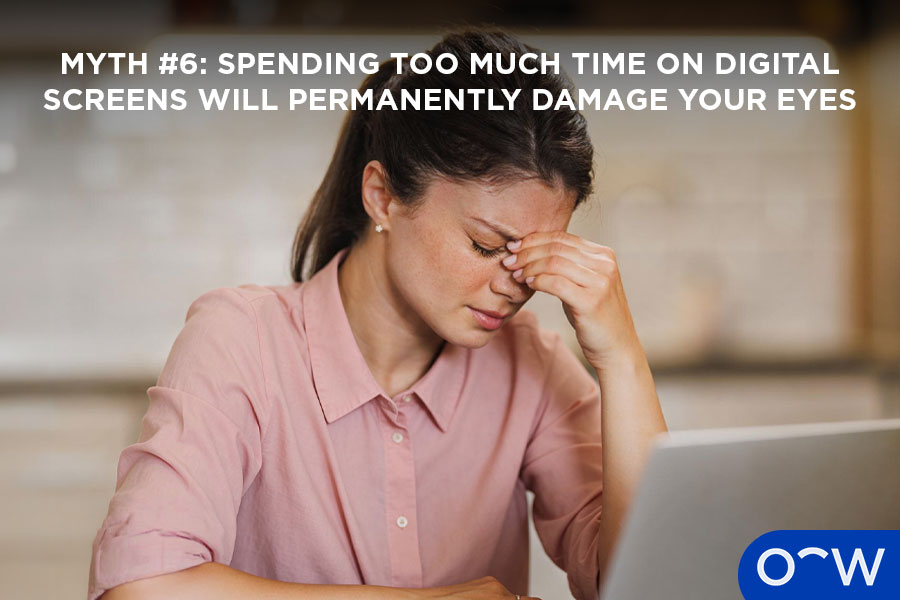
6. Spending Too Much Time on Digital Screens Will Permanently Damage Your Eyes
No, spending too much time on digital screens will not permanently damage your eyes. Rather, excess screen use will potentially lead to eye strain, dryness and irritation. Some studies show that the blue light emitted from digital screens has been linked to negatively affected circadian rhythms. However,there has been no evidence of blue light exposure through digital devices causing serious or permanent damage to your eyes.
7. Having 6/6 Vision Means Your Eyes Are Completely Healthy
No, having 6/6 vision does not mean your eyes are completely healthy. 6/6 vision refers to the visual acuity level that signals normal distance vision, according to the Australian Disability Clearinghouse on Education and Training. However, this normal level of visual acuity is not an indication of completely healthy eyes. You can still be susceptible to eye conditions and issues.
8. You Only Need an Eye Test When You Notice Vision Problems
No, you do not only need an eye test when you notice vision problems. It is recommended that adults have an eye test once every two years, which will allow for regular monitoring of eye issues that can potentially go undetected with no visible symptoms.
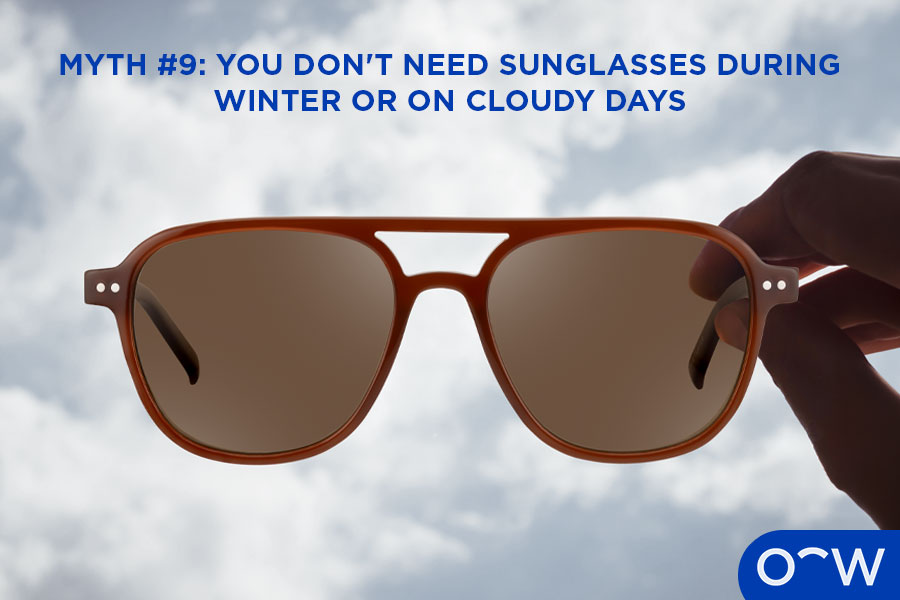
9. You Don't Need Sunglasses During Winter or on Cloudy Days
Many assume that you do not need to wear sunglasses during winter or on cloudy days. UV radiation can penetrate through clouds and can even be more intense due to this reflection off the clouds, according to Cancer Council Australia. This means that sunglasses can still be beneficial on days we can’t see the sun, as they will provide UV protection for the eyes.
10. Contact Lenses Are Safe to Wear Without Regular Optometrist Check-Ups
No, contact lenses are not advised to be worn without regular optometrist checkups. An eye test and contact lens fitting by an optometrist is important for those who decide to wear contact lenses, as well as regular annual checkups to monitor any vision changes, according to Better Health Channel.
Does Sleeping With Contact Lenses Increase the Risk of Eye Infections?
Yes, sleeping with contact lenses can increase the risk of eye infections. In fact, it can increase the risk for contact lens–related eye infections by six to eight times, according to research done by the CDC. It is not recommended to sleep with contact lenses in.
How does Overnight Lens Wear Affect Corneal Oxygen Supply?
Overnight lens wear can negatively affect corneal oxygen supply. Generally, overnight lens wear is strongly advised against. Corneal swelling is a notable consequence of overnight lens wear, a condition that is correlated with limited oxygen supply to the eyes, according to Cooper Vision Australia.
Can Sleeping in Contact Lenses Increase the Risk of Corneal Ulcers?
Yes, sleeping in contact lenses can increase the risk of corneal ulcers. Sleeping in contact lenses or longer than recommended is a common cause of corneal ulcers, according to HealthDirect Australia.
Can Cataracts be Treated Without Surgery?
No, cataracts cannot be treated without surgery. Surgery is the only treatment option for cataracts currently available. Generally, an ophthalmologist will advise whether your cataract should be removed, according to Better Health Channel.
How do Cataracts Affect the Eye's Natural Lens?
Cataracts affect the eye’s natural lens, as it results in the lens becoming cloudy, making it harder to focus light clearly on the retina, leading to reduced visual acuity, according to Armadale Eye Clinic.
Can Cataracts be Reversed With Medication?
No, cataracts cannot currently be reversed with medication. They are typically removed through cataract surgery.
Is Vision Loss an Unavoidable Part of Aging?
In most cases, vision loss to varying degrees is an unavoidable part of aging. An estimated 73% of people living with avoidable vision impairment are aged 50 and over, according to The Fred Hollows Foundation. While some vision reduction is common, complete vision loss is not an inevitable part of aging for everyone. Reduced vision can happen to various degrees depending on each individual.
Which Age-Related Eye Diseases Can Affect Older Adults?
The age-related eye diseases that can affect older adults include macular degeneration, cataracts and presbyopia. Read more about these age-related eye diseases affecting older adults below.
- Macular degeneration: Age-related macular degeneration happens when the cells of the macula start to deteriorate, leading to central vision loss, according to Health Direct.
- Cataracts: Cataracts are an eye condition where the eye lens becomes cloudy. If cataracts significantly affect your vision, they can be treated with surgery.
- Presbyopia: Presbyopia is an eye condition where it becomes more difficult to read things close up and you need to hold things further away to see them clearly. Almost all people will experience this after 40 years old, according to Healthdirect.
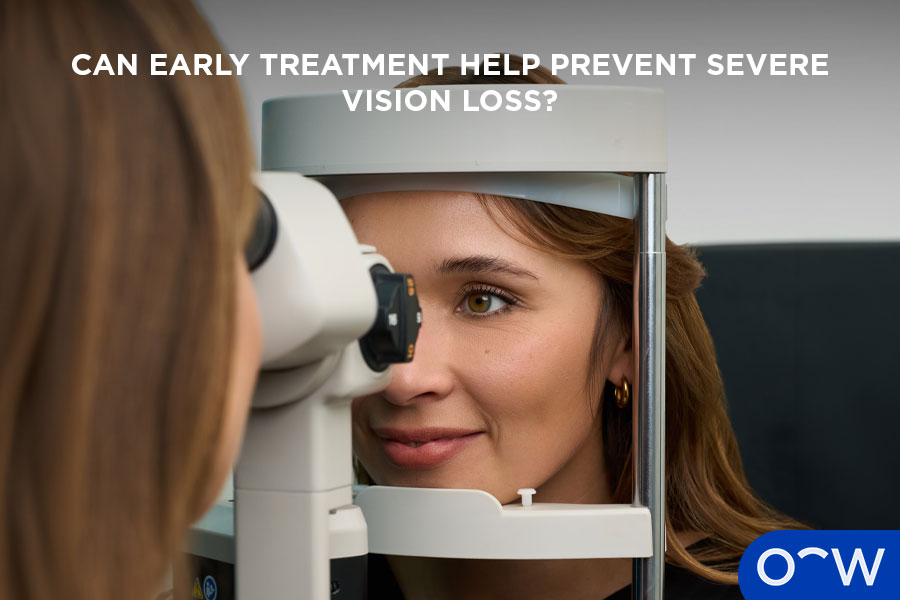
Can Early Treatment Help Prevent Severe Vision Loss?
Yes, early treatment can help prevent severe vision loss. Eye tests at least once every two years, or whenever you are experiencing vision changes, allow for early detection of potential vision problems such as severe vision loss.
Does Watery Eyes Mean Your Eyes are Properly Hydrated?
No, watery eyes do not mean your eyes are properly hydrated. In fact, watery eyes are often a telltale sign that your eyes are not hydrated enough. If your eyes are dry and are not receiving the moisture they require, they overcompensate by forming tears, leading to watery eyes, according to Cooper Vision Australia.
What are the Common Causes of Excessive Tearing?
The common causes of excessive tearing include dry eyes, allergies and the presence of foreign objects. Read more about these common causes of excessive tearing below.
- Dry eyes: Dry eyes can commonly lead to excessive tearing as the eyes instinctively release watery tears to compensate for lack of hydration.
- Allergies: Allergies, such as pollen or dust allergies, can lead to allergic reactions such as a runny nose, dry eyes and itchy skin.
- Presence of foreign objects: The presence of foreign objects such as dust particles, tiny sticks or leaves and sand can lead to irritated, watery eyes.
Can Dry Eye Syndrome Cause Watery Eyes?
Yes, dry eye syndrome can cause watery eyes. Dry eye syndrome occurs when the eyes don’t produce enough regular tears to stay lubricated, and in response to this dryness, the eyes produce watery tears, according to SA Eye Specialists.
Can Serious Eye Diseases Develop Without Pain?
Yes, serious eye diseases can develop without pain. Conditions such as glaucoma and age-related macular degeneration can be relatively painless and may only become noticeable once the disease has progressed to an advanced stage.
Can Routine Eye Screening Detect Silent Eye Diseases?
Yes, routine eye screening can detect silent eye diseases. That is why it is recommended that adults undergo eye tests once every two years so that even asymptomatic eye conditions and diseases can be detected.
Do Eye Vitamins Guarantee Better Vision?
No, eye vitamins do not guarantee better vision. It is important to have sufficient intake of vitamins such as Vitamin A, E, and zinc, as these can help maintain and strengthen various aspects of vision. However, they are not a guarantee for healthy vision as factors such as lifestyle habits, age and genetics play a role in vision health.
Which Nutrients Support Macular Health?
The nutrients that support macular health are lutein and zeaxanthin. Healthy maculas have a high concentration of these nutrients, as they help protect your eyes, according to Macular Disease Foundation Australia. Foods with high levels of lutein and zeaxanthin include spinach, kale, and silverbeet.
Can Supplements Prevent All Forms of Vision Loss?
No, supplements cannot prevent all forms of vision loss. However, there can be some benefits to taking certain eye supplements for certain diseases. For example, AREDS2 supplements are not a cure for AMD but can be beneficial depending on the stage in which you take them. These are best taken during the intermediate stage of AMD in one or both eyes to help lower your risk of progression, or during late-stage AMD in one eye, to help lower your risk of developing it in the other eye, according to Macular Disease Foundation Australia. There has been no research proving that macular supplements are beneficial in preventing macular degeneration in individuals with healthy eyes.